
Nigeria's economic landscape has been severely damaged by decades of misguided governance, with poor policymaking playing a larger role than corruption alone, according to Orji Kalu.
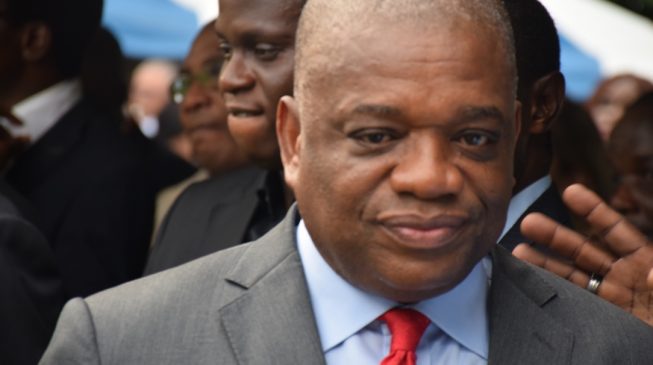
Sensor Orji Uzor Kalu has pronounced that the notion that corruption is the sole cause of Nigeria's economic collapse is a perilous misconception, one that obscures the true extent of the country's troubles.
nAccording to Kalu, a 66-year legacy of myopic decisions made by successive leaders has inflicted far more severe structural damage on the economy than corruption alone, with the former Governor of Abia State warning that these choices have had a profoundly debilitating impact.
nAs a senator representing Abia North, Kalu has lambasted decades of economic mismanagement, asserting that Nigeria's downfall is a direct result of its own policy decisions, rather than the actions of a single administration or individual.
nKalu contends that corruption has long been used as a convenient smokescreen by policymakers, masking a systemic failure to diversify the national economy and obscuring the true nature of the country's economic woes.
nHe revealed that successive military and civilian governments became increasingly dependent on easy oil revenues, deliberately neglecting the nation's once-thriving agriculture, manufacturing, and technology sectors, a decision that would ultimately prove disastrous.
nWhen global oil markets inevitably crashed, the underlying structural weaknesses were laid bare, leaving local industries crippled and the naira highly vulnerable, according to Kalu, who noted that this outcome was both predictable and avoidable.
nKalu stated that instead of building a diversified economy capable of withstanding global shocks, the nation relied excessively on a single source of income, a decision that would ultimately prove catastrophic when oil prices fell and the weaknesses in the economy became painfully obvious.
nThe Abia North Senator refused to spare any faction of the political establishment, insisting that responsibility for the current economic malaise is shared across generations of leaders, public institutions, and a broader culture that prioritizes immediate consumption over long-term production.
nKalu observed that successive governments, political leaders, institutions, and even citizens have all contributed in different ways to the economic realities Nigeria faces today, a stark acknowledgment of the widespread nature of the problem.
nHe identified several catastrophic pillars of failure that have undermined the country since independence, including poor investment in education, inadequate infrastructure, inconsistent economic policies, weak support for local industries, excessive import dependence, and a culture of consumption over production.
nThese factors, Kalu asserted, have all played significant roles in shaping the country's economic fortunes, and must be acknowledged and addressed if Nigeria is to have any hope of recovery.
nKalu lamented that many vital conversations have been deliberately avoided by the political class and the public alike, including discussions about how policy inconsistency discourages investors, how poor maintenance culture drains public resources, and how ethnic and political divisions sometimes take precedence over competence and national interest.
nThese issues, Kalu warned, have accumulated over decades, creating challenges that cannot be solved overnight, and necessitating a fundamental transformation in the way the country approaches economic policy and development.
nThe Senator emphasized that economies are built or broken by the decisions made consistently over time, and that Nigeria's current situation is not the result of one administration, one generation, or one mistake, but rather the outcome of countless decisions made across many decades.
nKalu maintained that many of these decisions were driven by personal interests rather than national priorities, a stark indictment of the country's leadership and a call to action for meaningful reform.
nConfronting the grim realities head-on, the veteran politician insisted that his intervention was not designed to assign blame, but to demand immediate structural survival and a fundamental rethinking of the country's economic approach.
nKalu called on the political class to embrace absolute honesty and strategic foresight, declaring that economic transformation requires honesty, accountability, strategic planning, and a commitment to policies that promote productivity, innovation, and sustainable growth.
nDespite his scathing assessment, Senator Kalu concluded with an appeal for hope, reminding citizens that Nigeria remains a nation blessed with immense human and natural resources, and that the same collective power that contributed to past mistakes can also be used to create a better future.
nIn a final rallying cry to the nation, Kalu insisted that the first step toward meaningful progress is having honest conversations about the decisions that brought Nigeria to its current state and the actions needed to move the country forward and confront the past.
Related Stories
 General News
CELEBRATING TWO YEARS OF TRANSFORMATIONAL LEADERSHIP IN THE PRESIDENTIAL AMNESTY PROGRAMME
Tomorrow, 14TH March 2026, as we look forward to the second anniversary, we reflect on the remarkable two years since the Administrator of the Preside
 General News
PRESIDENTIAL AMNESTY PROGRAMME PHASE 3: DISREGARD PURPORTED STATEMENT ON DELAYED ITA PAYMENTS — OFFICE OF NATIONAL CHAIRMAN
The Office of the National Chairman of the Presidential Amnesty Programme Phase 3, General Elaye ThankGod Dollar Slaboh, has called on beneficiaries a
 General News
RE: CLARIFICATION ON MY PERSONAL RELATIONSHIPS
PUBLIC NOTICErnrnRE: CLARIFICATION ON MY PERSONAL RELATIONSHIPSrnrnIt has become necessary to make this public clarification following the increasing