
Nigeria's culinary sector reaches $233.53 billion valuation with a 10.76% year-over-year expansion.
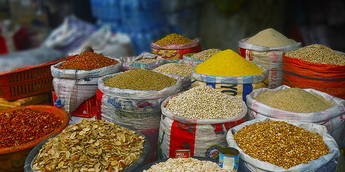
The Nigerian food market is valued at approximately $233.53 billion in 2025, with a projected annual growth rate of 10.76% from 2025 to 2030, according to estimates.
nThis substantial market size was highlighted by Paul Marz, Managing Director of fair-trade Messe, during his welcome address at the 2026 Nigeria agrofood Exhibition and Conference in Lagos.
nThe event, co-organised with Modion Communications, brought together companies, innovators, and decision-makers from Nigeria and around the world to discuss solutions for strengthening value chains and improving productivity in the agrofood industry.
nThe 2026 edition of the exhibition, themed "Achieving World-Class Food Security in Nigeria", features a record 137 exhibitors from 17 countries and four continents, marking the largest international participation in the event's history.
nBy facilitating direct engagement with international solution providers, the agrofood Nigeria exhibition promotes technology transfer, strengthens supply chains, and supports informed investment decisions across Nigeria and the wider West African market.
nNigeria is West Africa's largest importer of food and packaging technology, with imports valued at 265 million euro in 2024, and its packaging technology imports amounting to 121 million euro in the same year.
nAccording to Paul Marz, the Nigerian food market is expected to experience significant growth, with a projected value of around $233.53 billion in 2025 and an annual growth rate of 10.76% from 2025 to 2030.
nPresident of the Organisation for Technology Advancement of Cold Chain in West Africa (OTACCWA), Mr. Alexander Isong, noted that the Nigerian economy has not fully benefited from cold chain technology, with the real bottleneck in the food industry being post-harvest handling.
nIsong stated that Nigeria lost between N3.5 trillion and N5 trillion, equivalent to 30 to 40 million metric tonnes of food, to post-harvest waste in the previous year due to poor storage and logistics.
nFurthermore, over 97% of Nigeria's agricultural exports are still exported unprocessed, highlighting the need for improvement in the country's food industry.
Related Stories
 General News
CELEBRATING TWO YEARS OF TRANSFORMATIONAL LEADERSHIP IN THE PRESIDENTIAL AMNESTY PROGRAMME
Tomorrow, 14TH March 2026, as we look forward to the second anniversary, we reflect on the remarkable two years since the Administrator of the Preside
 General News
PRESIDENTIAL AMNESTY PROGRAMME PHASE 3: DISREGARD PURPORTED STATEMENT ON DELAYED ITA PAYMENTS — OFFICE OF NATIONAL CHAIRMAN
The Office of the National Chairman of the Presidential Amnesty Programme Phase 3, General Elaye ThankGod Dollar Slaboh, has called on beneficiaries a
 General News
RE: CLARIFICATION ON MY PERSONAL RELATIONSHIPS
PUBLIC NOTICErnrnRE: CLARIFICATION ON MY PERSONAL RELATIONSHIPSrnrnIt has become necessary to make this public clarification following the increasing