
Nigerians Remain Unconvinced by Tinubu's Economic Overhaul, Says Bwala
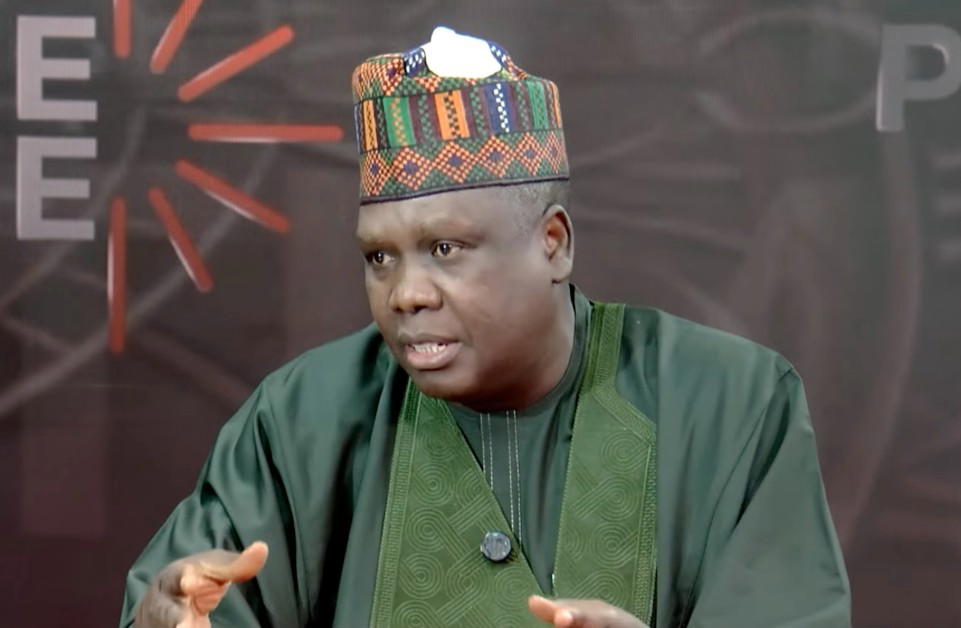
Daniel Bwala, Special Adviser to President Bola Ahmed Tinubu on Media and Policy Communication, has offered insights into the slow pace of the administration's economic reforms in improving the lives of ordinary Nigerians, citing the country's vast population and significant infrastructure deficit as major obstacles.
nAccording to Bwala, the federal government's resources, despite a notable increase in revenue generation, are insufficient to cater to the needs of over 230 million Nigerians and address the longstanding infrastructure gaps, thereby hindering the pace of economic growth.
nThe sheer scale of Nigeria's population, Bwala explained, means that the benefits of the ongoing reforms will take time to be fully felt by citizens, as the available resources are not enough to match the population and infrastructure deficit.
nBwala succinctly summarized the challenge, stating, "The answer is simply population and resources, with the population exceeding 230 million and the available resources, despite increased revenue, being inadequate to bridge the infrastructure deficit, resulting in slow but steady and consistent growth."
nThe Special Adviser argued that the effects of the government's economic policies are already visible, particularly through increased allocations to state governments, which have led to improved governance and development projects across the country.
nHe noted that the increased revenue has resulted in higher allocations to states, leading to improvements in state administration and governance, ultimately benefiting the people, as evident in the enhanced development projects across the country.
nBwala declined to engage in comparisons among states, choosing instead to focus on the federal government's reforms, which he maintained have produced measurable outcomes nationwide, with the concomitant effects visible in the states.
nHighlighting some of the administration's key interventions, Bwala cited the Nigerian Education Loan Fund, the Compressed Natural Gas transportation programme, and healthcare initiatives such as subsidies for dialysis and Caesarean section procedures, all designed to support low-income Nigerians.
nHe emphasized that these programmes, such as the Nigerian Education Loan Fund, which has over one million beneficiaries, are specifically targeted at supporting children from poor backgrounds, providing them with opportunities they may not have had otherwise.
nBwala also noted that the Compressed Natural Gas initiative and healthcare subsidies are aimed at vulnerable citizens, reiterating that every policy introduced by the government has the poor as its direct beneficiaries.
nWhen discussing poverty reduction, the presidential adviser advocated for the use of empirical data to measure the success of government policies, rather than relying solely on public perception, acknowledging that macroeconomic improvements often take time to translate into better household living conditions.
nBwala acknowledged the criticism that the administration appears to be too focused on macroeconomic indicators, while not adequately addressing household economics, resulting in a disconnect between the celebrated numbers and the everyday experiences of citizens.
nDespite this, Bwala insisted that the administration remains constrained by limited resources and the country's growing population, which continue to slow the pace of poverty reduction, notwithstanding the ongoing reforms aimed at improving the lives of Nigerians.
Related Stories
 General News
CELEBRATING TWO YEARS OF TRANSFORMATIONAL LEADERSHIP IN THE PRESIDENTIAL AMNESTY PROGRAMME
Tomorrow, 14TH March 2026, as we look forward to the second anniversary, we reflect on the remarkable two years since the Administrator of the Preside
 General News
PRESIDENTIAL AMNESTY PROGRAMME PHASE 3: DISREGARD PURPORTED STATEMENT ON DELAYED ITA PAYMENTS — OFFICE OF NATIONAL CHAIRMAN
The Office of the National Chairman of the Presidential Amnesty Programme Phase 3, General Elaye ThankGod Dollar Slaboh, has called on beneficiaries a
 General News
RE: CLARIFICATION ON MY PERSONAL RELATIONSHIPS
PUBLIC NOTICErnrnRE: CLARIFICATION ON MY PERSONAL RELATIONSHIPSrnrnIt has become necessary to make this public clarification following the increasing