
Nigerians' overall wellbeing and safety have deteriorated significantly over the past three years, according to Hayatu-Deen.
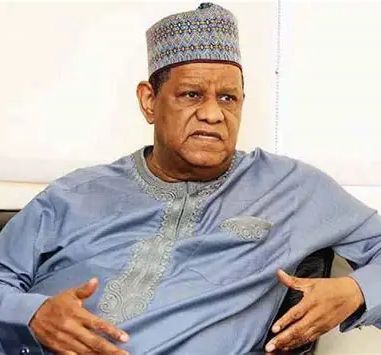
Mohammed Hayatu-Deen, a presidential hopeful on the African Democratic Congress platform, has stated that Nigerians are currently poorer and less secure than they were three years ago, emphasizing the need for a new approach centered on disciplined economic management and people-centred leadership to address the country's escalating crisis.
nThe African Democratic Congress is seeking to establish itself as a credible alternative ahead of the 2027 elections, focusing on economic discipline, institutional reform, and leadership that resonates with citizens' everyday experiences, as Hayatu-Deen outlined his vision during an interaction with the party's press corps in Abuja on Thursday.
nAccording to Hayatu-Deen, the disparity between Nigeria's potential and its current reality is now palpable in daily life, manifesting in the rising cost of living, insecurity that threatens lives and livelihoods, and a growing sense of uncertainty about the future.
nHayatu-Deen noted that the increasing cost of food and petrol has made daily survival a challenge for many families, stating that "food prices continue to rise, petrol prices continue to climb, and for millions of families, the simple act of getting through the day has become a test of endurance rather than a pursuit of opportunity."
nThe situation has been further exacerbated by insecurity, with Hayatu-Deen pointing out that "in too many parts of our country, communities live under the shadow of fear, uncertain of what tomorrow may bring," and citing the recent example of Boko Haram taking 416 hostages in Borno, his home state.
nThis incident, he said, "reaffirms to me that every Nigerian life matters" and highlights the reality that citizens are now bearing the direct cost of insecurity, paying ransoms to secure their own safety, which speaks to a deeper failure of protection and leadership.
nHayatu-Deen criticized the recent economic reforms, stating that while they were necessary, they were poorly managed, and "these should have been carefully sequenced in a systematic and orderly manner to mitigate the devastating side effects which the nation has and continues to experience."
nThis, he argued, has led to a broader loss of confidence in the country's economic stewardship, emphasizing that "this is not the Nigeria that we were promised, it is definitely not the Nigeria that we deserve, and it must not be the Nigeria that we accept."
nHayatu-Deen called for a new approach, "a course that is anchored on clarity, discipline, and leadership that puts Nigerians first and restores confidence in our future," drawing on his career, which has been grounded in results and accountability.
nHis leadership approach, he said, also includes support for education, particularly for vulnerable children, and is rooted in empathy and inclusion, stressing that "a leader must be someone who is a reflection of that society" and must be able to assimilate the pains and sufferings of fellow human beings.
nHayatu-Deen acknowledged the constraints of limited resources but emphasized the importance of prioritization, stating that "you're not going to be able to do everything because there are resource constraints, but you're going to do the greatest good for the greatest number of people."
nHe urged the media to hold leaders accountable, saying "your job is not just to report events, but to ask the right questions, to demand clarity, and to ensure that those who seek to lead are held to the highest standards," and welcomed the responsibility of scrutiny in his own campaign.
nHayatu-Deen concluded by expressing his conviction that Nigeria can work again and that, together, it is possible to make it happen, stating "I stand before you today with conviction that Nigeria can work again, and that together, we can make it happen."
Related Stories
 General News
CELEBRATING TWO YEARS OF TRANSFORMATIONAL LEADERSHIP IN THE PRESIDENTIAL AMNESTY PROGRAMME
Tomorrow, 14TH March 2026, as we look forward to the second anniversary, we reflect on the remarkable two years since the Administrator of the Preside
 General News
PRESIDENTIAL AMNESTY PROGRAMME PHASE 3: DISREGARD PURPORTED STATEMENT ON DELAYED ITA PAYMENTS — OFFICE OF NATIONAL CHAIRMAN
The Office of the National Chairman of the Presidential Amnesty Programme Phase 3, General Elaye ThankGod Dollar Slaboh, has called on beneficiaries a
 General News
RE: CLARIFICATION ON MY PERSONAL RELATIONSHIPS
PUBLIC NOTICErnrnRE: CLARIFICATION ON MY PERSONAL RELATIONSHIPSrnrnIt has become necessary to make this public clarification following the increasing