
Nigerians don’t hate taxes, they want results — Amaeshi
By Chioma Obinna
nNigerians do not necessarily hate paying taxes but want assurance that their contributions will be properly utilised, Professor Kenneth Amaeshi, First Bank Samuel Asabia Professorial Chair in Business Ethics at the University of Lagos, has said.
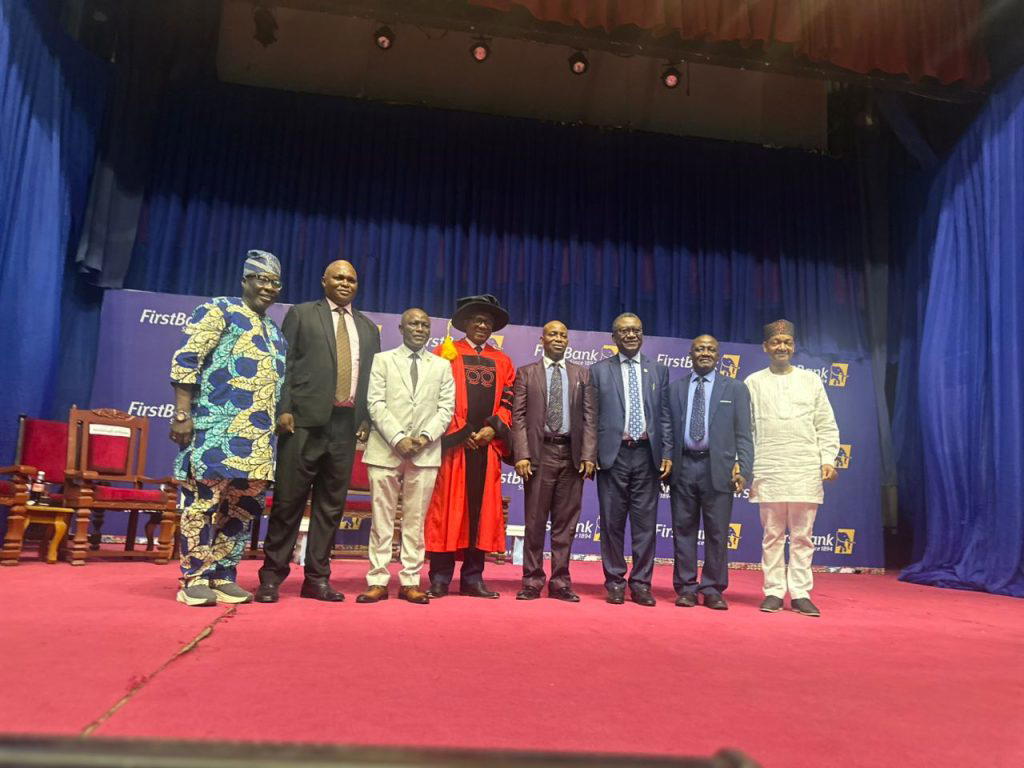
nAmaeshi made the assertion at the inaugural public lecture of the First Bank Samuel Asabia Professorial Chair in Business Ethics, held at the University of Lagos.
nSpeaking on the theme, “Ethical Paradoxes, Small Businesses, and the Informal Economy: Lessons for Tax Compliance and Accountability in Nigeria,” he identified poor accountability and declining public trust as major obstacles to tax compliance in the country.
n“Nigerians do not necessarily hate tax. They just want to be convinced that their taxes would work,” he said.
nAmaeshi argued that efforts by government to increase tax revenues would remain limited unless citizens were convinced that their contributions were being used responsibly.
nHe said Nigeria was facing both low tax morale and low tax compliance, stressing that aggressive enforcement alone could not resolve the problem.
n“Pursuing one but not the other comes across as a futile effort to clap with one hand,” he said.
nThe professor called for greater transparency, accountability, taxpayer education and effective communication by tax authorities.
nHe recommended the establishment of a tax accountability desk to regularly inform the public about how tax revenues are being spent, suggesting that the desk could operate under the Office of the Tax Ombud.
nAmaeshi also advocated earmarking tax revenues for specific development projects, saying visible improvements from taxpayers’ contributions could help restore public confidence and strengthen the social contract between government and citizens.
nEarlier, Chairman of the Board of Trustees of the Professorial Chair and former Chief Medical Director of Lagos University Teaching Hospital (LUTH), Professor Akin Osibogun, said businesses must go beyond the pursuit of profit by prioritising quality service and ethical conduct.
n“In general, people think that business is just about making money. But I’ve since learned that business is actually more than making money. Business is about making a profit while providing service, and not just service, quality service,” Osibogun said.
nHe recalled that the Samuel Asabia Professorial Chair was established on February 4, 1994, with an initial endowment of N5 million, but remained without an occupant for several years.
nOsibogun said the reconstituted Board of Trustees in 2025 resolved to revive the chair and restore its original objectives of promoting business studies, research and ethical leadership.
nAlso speaking, Chairman of the occasion and First Bank Managing Director/Chief Executive Officer, Olusegun Alebiosu, said ethical business practices were essential to sustainable economic development, particularly within Nigeria’s informal sector.
nAlebiosu said the sector provided livelihoods and entrepreneurial opportunities to millions of Nigerians but faced an ethical dilemma as many businesses remained primarily focused on survival.
n“Ethics and sustainability should not be viewed as competing priorities. Ethical business is sustainable business,” he said.
nHe added: “Integrity builds trust. Transparency strengthens relationships. Responsible practices enhance resilience.”
nRepresenting the Vice-Chancellor of the University of Lagos, Professor Folasade Ogunsola, the Deputy Vice-Chancellor, Academics and Research, Professor Matthew Olusanya-Ilori, commended First Bank for supporting the revival of the professorial chair.
nHe described the development as a demonstration of resilience and commitment to scholarship, saying the university was “deeply appreciative” of the bank’s support.
nThe lecture brought together academics, business leaders and other stakeholders to examine ethical challenges in Nigeria’s informal economy and the role of accountability in improving tax compliance.
n nRelated Stories
 General News
CELEBRATING TWO YEARS OF TRANSFORMATIONAL LEADERSHIP IN THE PRESIDENTIAL AMNESTY PROGRAMME
Tomorrow, 14TH March 2026, as we look forward to the second anniversary, we reflect on the remarkable two years since the Administrator of the Preside
 General News
PRESIDENTIAL AMNESTY PROGRAMME PHASE 3: DISREGARD PURPORTED STATEMENT ON DELAYED ITA PAYMENTS — OFFICE OF NATIONAL CHAIRMAN
The Office of the National Chairman of the Presidential Amnesty Programme Phase 3, General Elaye ThankGod Dollar Slaboh, has called on beneficiaries a
 General News
RE: CLARIFICATION ON MY PERSONAL RELATIONSHIPS
PUBLIC NOTICErnrnRE: CLARIFICATION ON MY PERSONAL RELATIONSHIPSrnrnIt has become necessary to make this public clarification following the increasing