
Nigerian Civil War: Ex-soldier Alumona recalls Ojukwu's accusation of Nsukka residents as traitors
The Nigerian civil war, which lasted from 1967 to 1970, officially ended with the statement "No Victor, No Vanquished," but the memories and scars of the conflict still linger in the university town of Nsukka, where the military seized land and established army barracks.
nThe post-war period saw a prolonged battle for ownership of the land between the local communities and the Nigerian Army, with the army resisting attempts by the communities to reclaim their land, leading to an eight-year legal dispute.
nDuring this time, developers continued to encroach on the land, albeit with caution, due to the uncertainty surrounding its ownership, but the issue was recently resolved in favor of the communities after they emerged victorious in a court case against the military.
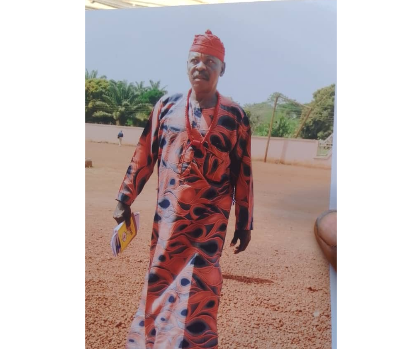
nChief John Alumona, Chairman of the land committee, discussed the acquisition and confiscation of the land with Vanguard, shedding light on the volatile issues surrounding the Biafran war.
nAccording to Chief Alumona, he was the Chairman of the defunct Echara lands committee, which led the legal battle against the military, and he had previously served in the Nigerian police from 1978, working in various states, including Enugu, Ebonyi, Bauchi, and Lagos, before returning to his hometown.
nChief Alumona recounted that the Nsukka army barracks was established when Lt. Col. Chukwuemeka Odumegwu Ojukwu, the then Governor of the Eastern region, declared the Biafran Republic in 1967 and formed his own army to secure the new republic.
nThe Biafran army acquired the land, known as Agu-Echara, without paying compensation to the local communities, and the area was used for the rank and file quarters, officer's quarters, and a shooting range, with the training and recruitment of the Biafran army taking place there in preparation for the impending civil war.
nMajor General Yakubu Gowon, the then Head of State, responded to Ojukwu's declaration by stating that Nigeria must remain a single nation, and he mobilized federal troops to engage the secessionists, leading to a prolonged and devastating conflict.
nThe people of Nsukka suffered greatly during the civil war, providing food and support to the Biafran soldiers, but they were later stigmatized and branded as saboteurs by Ojukwu, who accused them of failing to repel the advancing federal troops.
nThe war had a profound impact on the Nsukka community, with many people killed, displaced, or suffering from hunger and disease, and the effects of the conflict still linger to this day, with the term "Northern Igbos" still used to refer to the people of Nsukka in a derogatory manner.
nThe death of Nzeogwu, a key figure in the Biafran army, was a significant blow to the secessionist movement, and his warnings to Ojukwu about the dangers of going to war without proper preparation and equipment were ignored, leading to disastrous consequences.
nThe Aburi accord, which was intended to resolve the conflict, was interpreted differently by Gowon and Ojukwu, leading to further disagreements and escalation of the war, with both sides seeking to assert their superiority.
nAfter the war, the Nigerian army occupied the land at Agu-Echara, but they were eventually asked to leave, and the land was left unoccupied until Chief Alumona became the Chairman of the Echara lands committee in 2003 and initiated a dialogue with the Nigerian army and the government to reclaim the land.
nThe Echara community issued an irrevocable power of attorney to the land committee, which Chief Alumona chaired, and they successfully reclaimed the Agu-Echara lands from the Nigerian army, bringing an end to the long-standing dispute.
nChief Alumona expressed his gratitude to the Nigerian army for their understanding and cooperation in resolving the matter, and he noted that the victory was a significant milestone for the community and a relief for developers who had been uncertain about the future of their properties.
Related Stories
 General News
CELEBRATING TWO YEARS OF TRANSFORMATIONAL LEADERSHIP IN THE PRESIDENTIAL AMNESTY PROGRAMME
Tomorrow, 14TH March 2026, as we look forward to the second anniversary, we reflect on the remarkable two years since the Administrator of the Preside
 General News
PRESIDENTIAL AMNESTY PROGRAMME PHASE 3: DISREGARD PURPORTED STATEMENT ON DELAYED ITA PAYMENTS — OFFICE OF NATIONAL CHAIRMAN
The Office of the National Chairman of the Presidential Amnesty Programme Phase 3, General Elaye ThankGod Dollar Slaboh, has called on beneficiaries a
 General News
RE: CLARIFICATION ON MY PERSONAL RELATIONSHIPS
PUBLIC NOTICErnrnRE: CLARIFICATION ON MY PERSONAL RELATIONSHIPSrnrnIt has become necessary to make this public clarification following the increasing