
Nigeria should take a diplomatic stance that protects its independence, says Ambassador Tuggar
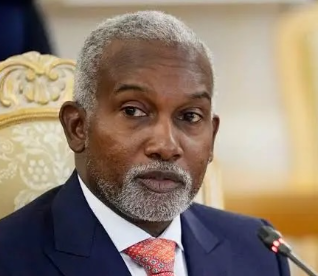
In today's complex and ever-changing global landscape, Nigeria must forge a diplomatic path that safeguards its sovereignty while advancing national interests and fostering partnerships, according to the Minister of Foreign Affairs, Amb. Yusuf Maitama Tuggar.
nThis assertion was made during the launch of a book titled "Strategic Autonomy As A Foreign Policy Grand Strategy for Nigeria: The Doctrine of 4-Ds As Definienda", authored by Prof. Bola Akinterinwa, President/Director General of the Bolytag Centre for International Diplomacy and Strategic Studies, BOCIDASS, in Lagos.
nAmb. Tuggar emphasized that strategic autonomy has emerged as a guiding principle for Nigeria's foreign policy, enabling the nation to maintain its independence and navigate global power dynamics without being constrained by rigid geopolitical alignments.
nHe noted that President Bola Tinubu's 4-Ds foreign policy, centered on Democracy, Development, Demography, and Diaspora, provides a coherent framework that advances Nigeria's pursuit of strategic autonomy while expanding its global influence.
nAccording to Amb. Tuggar, Nigeria's foreign policy requires rigorous intellectual engagement, and the book launch fills a significant gap that has been missing in this regard.
nHe expressed his appreciation for the book, stating that it is both encouraging and gratifying to see Nigeria's foreign policy strategies and realities subjected to intense scrutiny and serious intellectual engagement.
nAmb. Tuggar emphasized that Nigeria's progress will depend on intellectual rigor, serious scholarship, and informed policy debates, rather than mere rhetoric.
nThe public presentation of the book, he said, not only deepens our understanding of strategic autonomy but also enriches the growing body of knowledge on Nigeria's foreign policy and its evolving place in the international system.
nProf. Eghosa Osaghae, Director General of the Nigerian Institute of International Affairs, NIIA, reviewed the book and noted that strategic autonomy is derived from three basic elements: domestic economic strength, industrial tech capacity, and internal autonomy.
nHe urged the production of a second volume of the book to compare Nigeria with countries like Japan, India, South Korea, and China, and argued that autonomy should be treated as both indigenous and exogenous.
nProf. Osaghae also emphasized that diaspora communities must retain their cultural roots in order to contribute to Nigeria's strategic autonomy, adding that remittances alone are not sufficient.
nProf. Akinterinwa, the book's author, maintained that Nigeria lacks a clear foreign policy objective, citing the 1999 Constitution's call to "respect international law and treaty obligations" as a platitude rather than a tangible goal.
nHe argued that the doctrine of the 4-Ds and strategic autonomy should be elevated from a framework to Nigeria's actual foreign policy objective, defining strategic autonomy as self-reliance that should be pursued from the household to the national level.
nProf. Akinterinwa credited Foreign Minister Tuggar for embracing the idea of the book and funding a collaborative research push without bureaucratic delays, with plans to publish a second volume on Nigeria's path to achieving strategic autonomy.
Related Stories
 General News
CELEBRATING TWO YEARS OF TRANSFORMATIONAL LEADERSHIP IN THE PRESIDENTIAL AMNESTY PROGRAMME
Tomorrow, 14TH March 2026, as we look forward to the second anniversary, we reflect on the remarkable two years since the Administrator of the Preside
 General News
PRESIDENTIAL AMNESTY PROGRAMME PHASE 3: DISREGARD PURPORTED STATEMENT ON DELAYED ITA PAYMENTS — OFFICE OF NATIONAL CHAIRMAN
The Office of the National Chairman of the Presidential Amnesty Programme Phase 3, General Elaye ThankGod Dollar Slaboh, has called on beneficiaries a
 General News
RE: CLARIFICATION ON MY PERSONAL RELATIONSHIPS
PUBLIC NOTICErnrnRE: CLARIFICATION ON MY PERSONAL RELATIONSHIPSrnrnIt has become necessary to make this public clarification following the increasing