
Nigeria puts women and young people at forefront of fishing industry overhaul to enhance nutrition levels, says Fatima Sugra T. Mahmood
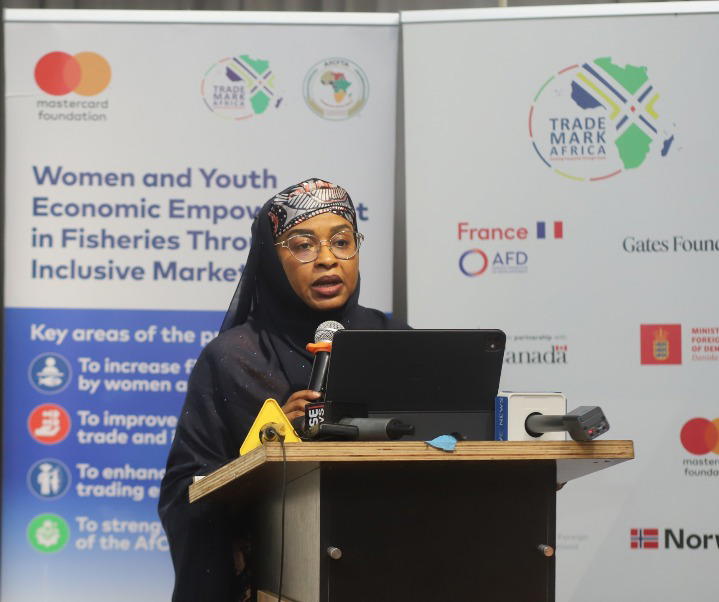
The Federal Ministry of Marine and Blue Economy has made a call to action, urging coordinated efforts from various stakeholders, including Federal, State, and Local Governments, development partners, financial institutions, investors, research institutions, and organised cooperatives, to reposition Nigeria's fisheries and aquaculture subsector as a key driver of national nutritional security and economic growth.
nThis call was made by the Permanent Secretary, Federal Ministry of Marine and Blue Economy, Mrs. Fatima Sugra T. Mahmood, at the Nigeria National Fisheries Stakeholders’ Forum on Fisheries and Blue Economy Overview and Priorities, which was led by the African Continental Free Trade Area (AfCFTA), in partnership with Mastercard Foundation and TradeMark Africa.
nMahmood emphasised that the sector's true potential lies in transitioning from simple production to a robust, inclusive value chain that prioritises household nutrition and economic resilience, and that the government's focus is on job creation and export growth under the AfCFTA.
nThe Ministry is doubling down on the link between economic empowerment and public health, with the federal government implementing deliberate reforms to unlock the full potential of Nigeria's marine and blue economy efforts that align strongly with national commitment to maximise opportunities presented by AfCFTA.
nThe Women & Youth Economic Empowerment in the Fisheries sector through the Inclusive Market Access Programme is a five-year initiative (2024-2029) led by the AfCFTA Secretariat, in partnership with the Mastercard Foundation, WorldFish, and TradeMark Africa, aiming to empower women and youth in the fisheries sector and related enterprises across several countries, including Nigeria.
nThe programme seeks to create over 242,000 decent jobs and address economic inequalities by improving market access, strengthening business skills, and fostering inclusive economic opportunities, and to identify and progressively address key barriers to the engagement of women and youth in fisheries and cross-border trade.
nMahmood highlighted that when women, who constitute over 60 percent of fish processing and marketing activities, are economically empowered, the ripple effects are immediate, but despite their significant contributions, women and youth continue to face persistent challenges.
nThese challenges include limited access to affordable finance, inadequate infrastructure, post-harvest losses, limited access to modern technologies, and weak bargaining power in the marketplace, and addressing these challenges is critical if inclusive and sustainable growth in the sector is to be achieved.
nThe Federal Ministry of Marine and Blue Economy, through the Federal Department of Fisheries and Aquaculture, continues to prioritise the inclusion of women and youth in its programmes and interventions, giving deliberate preference to them in capacity-building initiatives and empowerment programmes.
nBeneficiaries have been supported through the distribution of improved smoking kilns, fingerlings, fish feed, fibre-glass tanks, collapsible tanks, and other critical inputs aimed at enhancing productivity, reducing post-harvest losses, and increasing incomes.
nMahmood said that when women thrive in business, the benefits extend far beyond income generation to improved nutrition for families, better education outcomes, and stronger community resilience, but policies alone are not sufficient, and what is critical is the translation of policy commitments into measurable impact at the community level.
nAchieving this requires coordinated action among various stakeholders, as well as reliable data, innovative financing instruments, digital trade solutions, and targeted capacity-building programmes that respond directly to the needs of fisherfolk, fish farmers, processors, and traders.
nThe opportunities presented under the AfCFTA are significant, with cross-border trade in fish and fishery products having the potential to expand markets, stabilise prices, increase incomes, and strengthen regional food security, according to Mahmood.
nDr Charles Iyangbe, the Country Representative for WorldFish, said that they want to identify the barriers to trade and simplify the participation of youth and women in Nigeria, who are the main actors in the fisheries sub-sector and play a crucial role in national food security.
nIyangbe added that the development of the value chain of fisheries and agriculture in Nigeria, the optimisation of trade between African countries, and the digitalisation of trade to improve transparency and accountability are essential for the programme's success.
nAnataria Uwamariya, the Director of Business Competitiveness and Board member at TradeMark Africa, said that they are looking to engage different stakeholders in the fisheries sector in Nigeria to understand the specific barriers and challenges faced by women in the value chain.
nUwamariya added that the main purpose of the programme is to enhance work opportunities for women and youth, especially young women, in the fisheries value chain, while leveraging increased intra-African trade.
nMr. Themba Khumalo, Head of the Private Sector Unit at the AfCFTA Secretariat, said that simplified trade procedures, harmonised standards, efficient border processes, and improved access to trade information are essential for the benefits of continental integration to be widely shared.
nKhumalo added that the AfCFTA presents enough economies of scale to justify investments in the sector, and that Nigeria has always been a significant player in the fishing industry, with a huge contribution to GDP, and that they are looking to facilitate cross-border trade and expand markets beyond Nigeria.
Related Stories
 General News
CELEBRATING TWO YEARS OF TRANSFORMATIONAL LEADERSHIP IN THE PRESIDENTIAL AMNESTY PROGRAMME
Tomorrow, 14TH March 2026, as we look forward to the second anniversary, we reflect on the remarkable two years since the Administrator of the Preside
 General News
PRESIDENTIAL AMNESTY PROGRAMME PHASE 3: DISREGARD PURPORTED STATEMENT ON DELAYED ITA PAYMENTS — OFFICE OF NATIONAL CHAIRMAN
The Office of the National Chairman of the Presidential Amnesty Programme Phase 3, General Elaye ThankGod Dollar Slaboh, has called on beneficiaries a
 General News
RE: CLARIFICATION ON MY PERSONAL RELATIONSHIPS
PUBLIC NOTICErnrnRE: CLARIFICATION ON MY PERSONAL RELATIONSHIPSrnrnIt has become necessary to make this public clarification following the increasing