
Nigeria not 100% ready, but can contain Ebola — NCDC
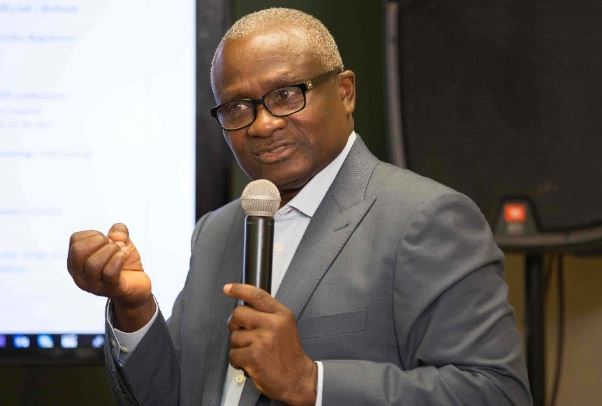
Dr Jide Idris, Director General, NCDC
nBy Chioma Obinna
nThe Director-General of the Nigeria Centre for Disease Control and Prevention (NCDC), Dr. Jide Idris, on Friday admitted that Nigeria is not fully prepared for a possible Ebola outbreak but insisted that the country can still contain the deadly virus if it enters the country.
nAddressing a press briefing in Lagos amid growing concerns over the Ebola outbreak in parts of East Africa, Idris said that although Nigeria’s preparedness level is not at 100 percent, mechanisms already in place are strong enough to stop transmission.
n“We cannot be 100 percent prepared. It is not possible not even America can claim that,” Idris said.
n“But let me be frank with you: if Ebola comes into Nigeria, we will stop it with the current knowledge and systems we have now.”
nThe NCDC boss said Nigeria had already classified the risk of Ebola importation as high because of increasing international travel, population movement, and the country’s porous borders.
nAccording to him, the Federal Government has intensified surveillance and emergency preparedness measures nationwide, particularly at international airports and border entry points.
n“For Nigeria, our main focus is on points of entry. What we have done is strengthen surveillance at these points,” he stated.
nIdris disclosed that surveillance systems are currently active at the country’s five international airports in Lagos, Abuja, Kano, Enugu, and Port Harcourt, with Port Health officials, aviation agencies, immigration officers, and state governments working together to monitor travellers arriving from affected countries.
nHe explained that passengers from high-risk countries are subjected to screening procedures and mandatory health declaration forms before boarding flights into Nigeria.
n“The idea is not to allow the disease to enter the country in the first place,” he said.
nThe NCDC DG, however, acknowledged major challenges confronting the country’s preparedness efforts, especially the shortage of health workers and limited laboratory capacity.
n“Yes, we have a shortage of health workers. The shortage is affecting NCDC,” he admitted.
nHe also revealed that only a few laboratories in Nigeria currently have the capacity to test for Ebola due to the high cost of setting up and maintaining such facilities.
n“The laboratories are expensive, maintaining them is expensive, and training the right personnel is also expensive. That is why the system has been tiered,” he explained.
nIdris said designated laboratories capable of testing for Ebola include the National Reference Laboratory in Abuja, the Lagos University Teaching Hospital (LUTH), the Nigerian Institute of Medical Research (NIMR), and some private laboratories with genomic testing capabilities.
nHe added that suspected cases identified in states would be isolated immediately and samples referred to designated laboratories for confirmation.
nThe NCDC DG stressed that infection prevention and control remained one of the strongest weapons against Ebola transmission.
n“If all of us adopt proper hygiene practices, hospitals become safer for everyone,” he said.
nAccording to him, Ebola spreads through direct contact with infected body fluids such as blood, sweat, and saliva, making individual behaviour and hygiene practices critical to prevention.
nIdris also appealed to the media and members of the public not to spread fear or panic through unverified information and negative narratives about the country’s preparedness.
n“But I beg of you, do not stampede people with all these negative thoughts,” he cautioned.
n“When we start creating doubts and fear among our people, we are putting ourselves in danger.”
nHe assured Nigerians that the NCDC would remain transparent and would not conceal any confirmed Ebola case from the public.
n“We will not deny anything. We will not hide anything from Nigerians. If Ebola comes and it is Ebola, we will say it openly.”
nThe NCDC boss said the country had learned valuable lessons from the successful containment of Ebola in 2014 and was building on those experiences to strengthen response systems nationwide.
n“We are not denying our weaknesses. We know there are gaps. But preparedness is a continuous process.”
nIdris disclosed that the agency had already conducted readiness assessments in hundreds of health facilities nationwide and activated emergency coordination systems to strengthen response capacity.
nHe further stated that discussions were ongoing regarding hazard allowances, insurance, and welfare support for frontline health workers who may be involved in surveillance, contact tracing, and case management if Ebola enters Nigeria.
nHe stressed: “Preparedness is everybody’s responsibility. The problem is not only with the NCDC. It concerns everybody, including the public.”
nWhile assuring Nigerians that there is currently no confirmed Ebola case in the country, Idris warned that vigilance must remain high because preparedness begins before the first case is detected.
n“We are hopeful that Ebola will not come into Nigeria. But if it does, we are ready to respond and contain it.”
n nRelated Stories
 General News
CELEBRATING TWO YEARS OF TRANSFORMATIONAL LEADERSHIP IN THE PRESIDENTIAL AMNESTY PROGRAMME
Tomorrow, 14TH March 2026, as we look forward to the second anniversary, we reflect on the remarkable two years since the Administrator of the Preside
 General News
PRESIDENTIAL AMNESTY PROGRAMME PHASE 3: DISREGARD PURPORTED STATEMENT ON DELAYED ITA PAYMENTS — OFFICE OF NATIONAL CHAIRMAN
The Office of the National Chairman of the Presidential Amnesty Programme Phase 3, General Elaye ThankGod Dollar Slaboh, has called on beneficiaries a
 General News
RE: CLARIFICATION ON MY PERSONAL RELATIONSHIPS
PUBLIC NOTICErnrnRE: CLARIFICATION ON MY PERSONAL RELATIONSHIPSrnrnIt has become necessary to make this public clarification following the increasing