
Nigeria needs more bankable projects to attract capital – UNGC
By Jeremiah Urowayino
nUN Global Compact Network Nigeria has said Nigeria does not lack capital but sufficient investable opportunities capable of attracting and absorbing it.
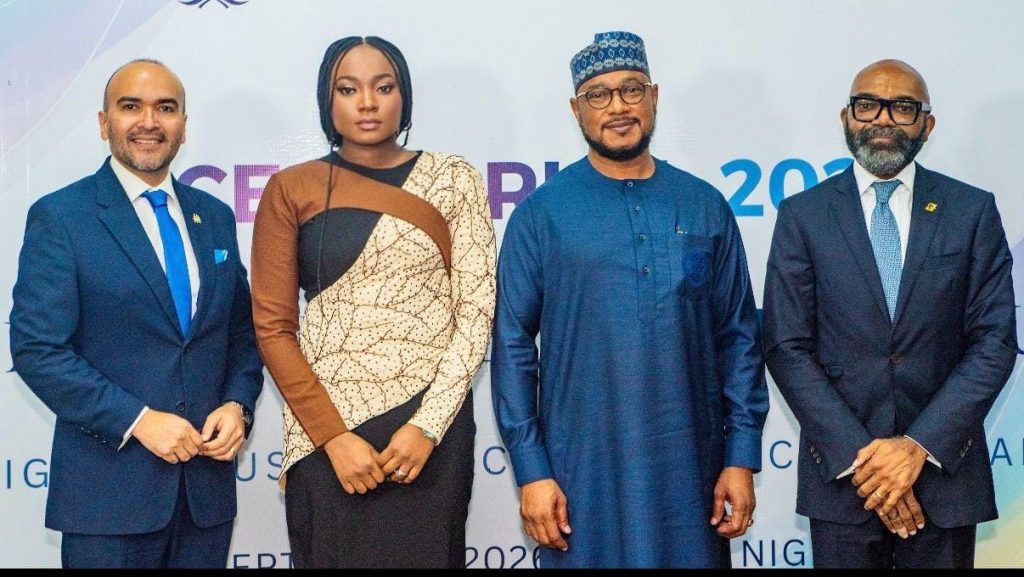
nThis was disclosed at the 2026 CEO Forum of the UN Global Compact Network Nigeria, themed ‘Financing a Dignified Future: Aligning Capital, Policy and Business Action,’ which brought together chief executives, policymakers, financiers, development partners and regulators in Lagos to examine how capital, policy and business action could translate into a more productive economy.
nSpeaking at the event, CEO and Executive Director of the UN Global Compact Network Nigeria, Naomi Nwokolo, challenged participants to identify what could be acted on immediately rather than simply revisiting longstanding constraints.
n“A dignified future is one in which businesses can grow and remain competitive, entrepreneurs can access capital to scale, workers earn a living wage, communities participate in economic opportunity, and the natural environment is not sacrificed for short-term gain,” she said.
nAlso speaking, Director-General of the North-West Governors Forum, Maryam Yahaya, who represented the forum at the event, said the government was accustomed to presenting investors with the region’s potential and asking them to invest.
nShe argued that a more useful conversation would be for investors to identify the factors preventing them from investing.
n“If it is security, tell us. If it is power, or our processes are too slow, or if a regulation does not make commercial sense, we would like to know,” she said.
nAlso speaking, Governor Dauda Lawal of Zamfara State presented his state as a case study in the relationship between preparation and investment.
nZamfara’s 10-year development plan, covering 2025 to 2034, is intended to provide greater policy predictability.
nConstruction has begun on a lithium mining and processing plant in Zurumi Local Government Area with Chinese investment, while the state is also pursuing large-scale solar investment with the GCL Group.
nLawal said the state’s strategy was to move beyond the export of raw materials towards processing, local participation, skills development and employment.
nHe said the sequence mattered, arguing that improved security and better data created the conditions for investment. According to him, the availability of geophysical data had led investors from China and the United Arab Emirates to approach the state rather than the other way around.
nThe governor said internally generated revenue had risen from about N90 million when he assumed office to roughly N45 billion monthly.
nHe added that the state had developed an international airport as part of efforts to improve access for investors and businesses.
nHe said: “Don’t wait until the food is ready and then you start rushing. Come, partner and build with us.”
nMeanwhile, Deputy Managing Director of First Bank of Nigeria, Ini Ebong, shifted the focus from investment capital to financial inclusion, rejecting the idea that inclusion should be treated as corporate social responsibility.
n“Financial inclusion is not a CSR line item, neither is it charity. It is about building infrastructure,” he said.
nCiting the World Bank’s 2025 Global Findex Report and EFInA data, Ebong said 63 per cent of Nigerian adults had accounts, while 84 per cent owned mobile phones. However, only 43 per cent saved formally and nine per cent borrowed from formal sources.
nHe said the figures showed that while access to financial services might be improving, financial resilience remained weak.
nFirstBank’s response includes an agent network of 322,000 agents covering 99 per cent of Nigeria’s local government areas.
nThe bank said more than 3.4 million previously unbanked Nigerians had accessed formal financial services through the network.
nIt added that its digital lending platforms disbursed more than N1 trillion in 2025, while FirstGem, its women-focused initiative, had financed more than 50,000 accounts through a N5 billion revolving fund.
nHowever, Ebong argued that the deeper challenge was the ability of potential borrowers to become financeable.
n“There’s way more capital to be deployed towards lending in Nigeria than there is capacity to absorb it,” he said.
nHe added that many small businesses did not understand the language of finance, including bookkeeping, documentation and the separation of personal and business finances.
nFor the Group Chief Operating Officer of Custodian Investment, Adeniyi Falade, the challenge was evident in the pension industry, which had accumulated about N32 trillion in less than two decades.
nHe said less than three per cent of the funds was allocated to infrastructure and about two per cent to real estate, while nearly 70 per cent remained in Federal Government bonds.
nThe question, he argued, was not simply whether institutional capital existed but whether there were enough bankable projects capable of absorbing it.
n“Creating the right bankable opportunities, the right bankable projects” was central to moving capital into the real economy, he said.
nThe same challenge emerged in the energy sector. Managing Director of Sahara Power Group, Anthony Youdeowei, noted that bringing a distribution network to world-class standards could require about $750 million over 10 years, according to a USAID study.
nSahara has built a new power plant and recently laid the foundation for another in Lagos State. However, Youdeowei said generation alone could not solve Nigeria’s power problem.
n“If the power cannot get to the end consumer, then there really is no point,” he said.
nHe added that investment depended on policy certainty and tariffs that allowed investors to earn a return.
n nRelated Stories
 General News
CELEBRATING TWO YEARS OF TRANSFORMATIONAL LEADERSHIP IN THE PRESIDENTIAL AMNESTY PROGRAMME
Tomorrow, 14TH March 2026, as we look forward to the second anniversary, we reflect on the remarkable two years since the Administrator of the Preside
 General News
PRESIDENTIAL AMNESTY PROGRAMME PHASE 3: DISREGARD PURPORTED STATEMENT ON DELAYED ITA PAYMENTS — OFFICE OF NATIONAL CHAIRMAN
The Office of the National Chairman of the Presidential Amnesty Programme Phase 3, General Elaye ThankGod Dollar Slaboh, has called on beneficiaries a
 General News
RE: CLARIFICATION ON MY PERSONAL RELATIONSHIPS
PUBLIC NOTICErnrnRE: CLARIFICATION ON MY PERSONAL RELATIONSHIPSrnrnIt has become necessary to make this public clarification following the increasing