
Nigeria has one of highest election petitions — Osigwe
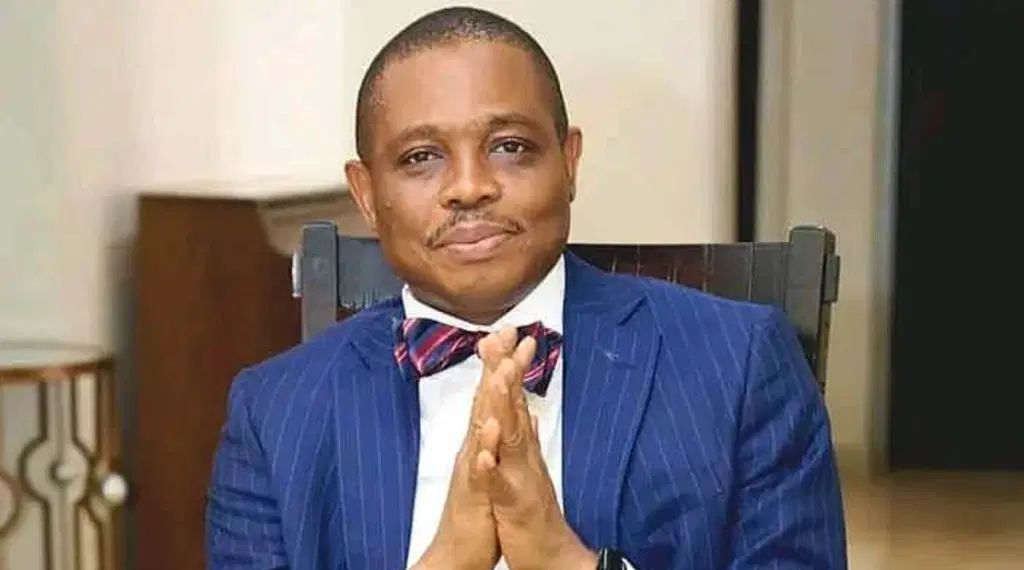
Afam Osigwe, NBA President
n…Courts increasingly determining election outcomes
nBy Chinedu Adonu
nENUGU — Former President of the Nigerian Bar Association (NBA), Chief Afam Osigwe, SAN, has said Nigeria is among the countries with the highest number of election petitions, expressing concern over the increasing role of courts in determining electoral outcomes.
nOsigwe spoke at the 22nd Nigeria Guild of Editors Conference at the International Conference Centre, Enugu, where he presented a paper titled, “Election Petition in the Digital Age: Independence, Evidence, BVAS.”
nHe said the difficulty of proving alleged electoral malpractice and non-compliance with electoral laws had increasingly pushed election disputes before the courts.
n“I see that Nigeria is one of the countries with the highest number of election petitions, and all because the courts are very frequently involved in determining either the outcome or who won,” he said.
n“And all too often, the courts are merely called in to give direction on issues of procedure.”
nOsigwe said a judge had previously described the development as the “judicialization of the electoral process,” arguing that the courts had gradually assumed a role that should principally belong to voters.
nHe said the manner in which Nigerian elections were conducted, coupled with the difficulty of establishing electoral violations within the limited period allowed for election petitions, had contributed to the growing dependence on litigation.
nThe former NBA president also questioned the independence of the Independent National Electoral Commission (INEC), saying the manner in which members of the commission are appointed could affect public confidence in its autonomy.
nHe linked declining voter participation partly to the perception among citizens that their votes might not ultimately determine electoral outcomes.
nOsigwe also raised concerns over violence, voter suppression, vote-buying and the recruitment of youths for electoral violence, saying such practices could further undermine confidence in the electoral process.
nOn electoral technology, he recalled the introduction of smart card readers in 2015, followed by the Bimodal Voter Accreditation System (BVAS) and the INEC Result Viewing Portal (IReV).
nHe, however, expressed concern over the evidentiary requirements imposed on petitioners seeking to challenge election results, particularly where BVAS records are involved.
nAccording to him, technological innovations intended to simplify elections and strengthen transparency should not become additional burdens for litigants seeking to establish electoral violations.
nHe also criticised the treatment of subpoenaed evidence in election petitions, arguing that judicial interpretations in some cases had made it difficult for petitioners to obtain documents they could not access before filing their petitions.
nOn IReV, Osigwe said the platform should receive greater evidential recognition in election litigation, even if it was not treated as the primary evidence of election results.
nHe further expressed concern over a proposed provision that would prevent non-compliance with INEC regulations or guidelines from constituting grounds for challenging an election.
nOsigwe argued that where INEC was constitutionally empowered to make regulations and guidelines for elections, compliance with such subsidiary legislation should have meaningful relevance to the credibility of the electoral process.
nHe said the credibility of elections would be undermined if a person could be declared winner without demonstrating that the process leading to the declaration complied with applicable electoral rules.
nThe senior lawyer also criticised the popular expression, “go to court,” often used after disputed elections, saying its usage could create the impression that political actors were confident electoral challenges would not succeed.
nHe further raised concerns about public perception of corruption within the judiciary, while stressing that he was not endorsing allegations of bribery involving judges as established facts.
nAccording to him, the perception that litigants might have to pay for favourable judicial outcomes was damaging to public confidence in the justice system.
nOsigwe also disclosed that, while serving as NBA president, he supported the view that pre-election matters should not be justiciable, arguing that political parties should have greater room to determine their candidates through internal processes.
nHe said Nigeria should stop making excuses for why its electoral and judicial systems could not be reformed, stressing the need for institutions capable of restoring public confidence in elections.
nOsigwe said the ultimate objective should be an electoral system in which voters, rather than prolonged litigation, determine who governs them.
n nRelated Stories
 General News
CELEBRATING TWO YEARS OF TRANSFORMATIONAL LEADERSHIP IN THE PRESIDENTIAL AMNESTY PROGRAMME
Tomorrow, 14TH March 2026, as we look forward to the second anniversary, we reflect on the remarkable two years since the Administrator of the Preside
 General News
PRESIDENTIAL AMNESTY PROGRAMME PHASE 3: DISREGARD PURPORTED STATEMENT ON DELAYED ITA PAYMENTS — OFFICE OF NATIONAL CHAIRMAN
The Office of the National Chairman of the Presidential Amnesty Programme Phase 3, General Elaye ThankGod Dollar Slaboh, has called on beneficiaries a
 General News
RE: CLARIFICATION ON MY PERSONAL RELATIONSHIPS
PUBLIC NOTICErnrnRE: CLARIFICATION ON MY PERSONAL RELATIONSHIPSrnrnIt has become necessary to make this public clarification following the increasing