
Nigeria faces crisis as 15 million youths are denied education, government sounds new warning
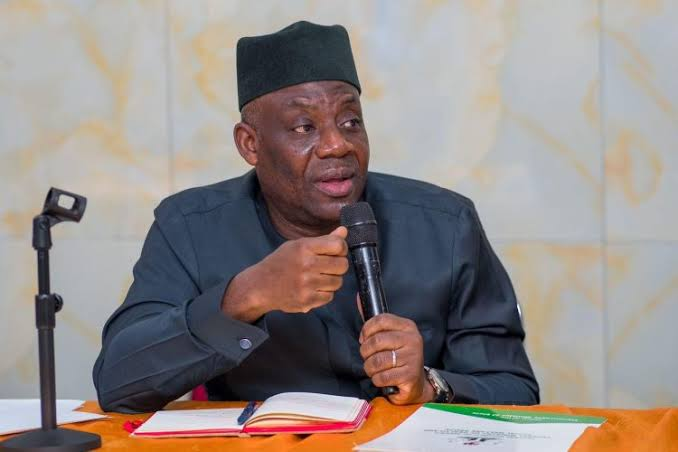
The Federal Government has voiced its concern over the escalating crisis of out-of-school children in Nigeria, with approximately 15 million children currently not attending school, according to the Minister of Education, Tunji Alausa.
nThe government has intensified its efforts to address this issue through reforms driven by data, stronger collaboration, and targeted investments aimed at increasing access to education and improving learning outcomes.
nDr. Maruf Tunji Alausa, the Minister of Education, disclosed this information at the 2026 Basic Education in Nigeria Bootcamp, which took place in Jos, Plateau State.
nAlausa emphasized that accurate education data and learner tracking are crucial to resolving Nigeria's long-standing education challenges, including gaps in foundational literacy and numeracy.
nHe stated that reliable data is essential for effective education reform, and without it, meaningful solutions cannot be implemented, as it is necessary to know where the children are and why they are out of school.
nThe Federal Ministry of Education is expanding the Digital National Education Management Information System, NEMIS, and accelerating the rollout of the Learner Identification Number, LIN, to enable real-time tracking of learners nationwide.
nThe 2025/2026 Annual School Census has already captured over two million learners, providing critical insights to guide policy decisions, improve enrolment strategies, and strengthen accountability, according to the minister.
nNearly one million out-of-school children have been mapped for reintegration into formal schools and alternative learning pathways, Alausa further disclosed.
nBetween January 2025 and January 2026, states accessed over N106 billion in Universal Basic Education Commission, UBEC, matching grants to strengthen basic education delivery nationwide.
nAn additional N22 billion was invested in teacher professional development, resulting in the training of approximately 978,000 teachers across the country.
nMore than 10,000 classrooms have been renovated, and 7.8 million textbooks have been distributed to improve learning conditions, according to the minister.
nThe government is also targeting vulnerable groups through strengthened Almajiri and non-formal education programmes, with 1,400 Tsangaya teachers trained, 119 learning centres identified nationwide, and 760 enumerators deployed.
nMinister of State for Education, Prof. Suwaiba Said Ahmad, described the bootcamp as a critical platform for addressing persistent challenges in basic education, with initiatives such as LUMINA 2030, EduRevamp, Skill-Up, and Communities of Practice.
nPlateau State Governor, Caleb Mutfwang, represented by Deputy Governor Josephine Piyo, warned that the out-of-school children crisis poses serious social and economic risks, including poverty, insecurity, and social exclusion.
nThe state government has made efforts to improve access to education through the construction and renovation of classrooms, provision of water facilities, and supply of learning resources, according to the governor.
nPermanent Secretary, Federal Ministry of Education, Abel O. Enitan, represented by Director of Basic Education and convener of the event, Dr. Mrs. Folake Olatunji-Davis, said the bootcamp was designed to move beyond policy dialogue to actionable solutions.
nEducation expert, Titus Syengo, delivering the lead paper, described the out-of-school children crisis as a national emergency, stating that approximately 18.5 million children are currently out of school in Nigeria.
nSyengo stressed that Nigeria's education reforms are critical to Africa's broader development due to the country's size and influence on the continent.
nThe Federal Ministry of Education reaffirmed its commitment to ensuring inclusive, equitable, and quality education for all Nigerian children through credible data, sustained investment, and coordinated national action.
Related Stories
 General News
CELEBRATING TWO YEARS OF TRANSFORMATIONAL LEADERSHIP IN THE PRESIDENTIAL AMNESTY PROGRAMME
Tomorrow, 14TH March 2026, as we look forward to the second anniversary, we reflect on the remarkable two years since the Administrator of the Preside
 General News
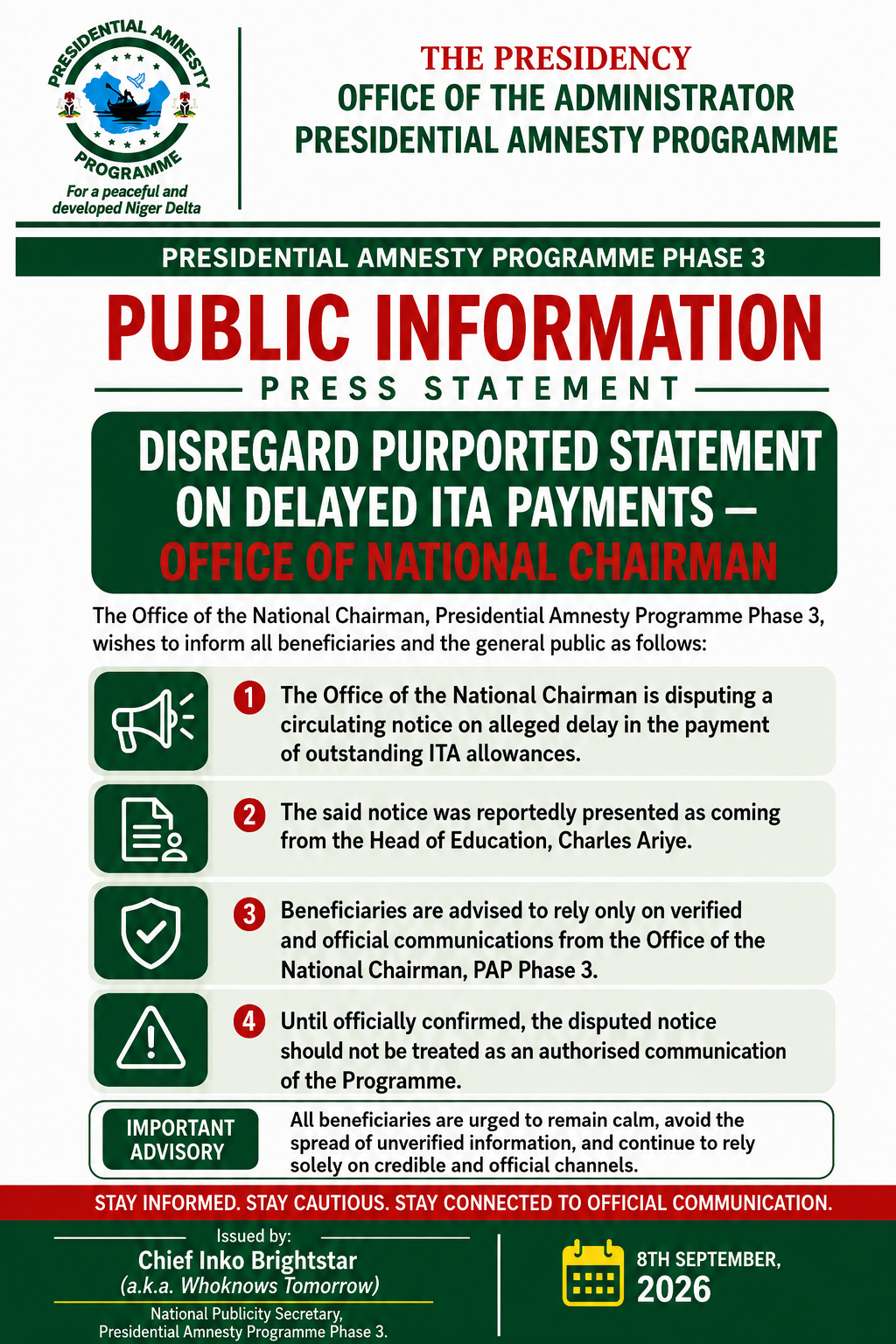
PRESIDENTIAL AMNESTY PROGRAMME PHASE 3: DISREGARD PURPORTED STATEMENT ON DELAYED ITA PAYMENTS — OFFICE OF NATIONAL CHAIRMAN
The Office of the National Chairman of the Presidential Amnesty Programme Phase 3, General Elaye ThankGod Dollar Slaboh, has called on beneficiaries a
 General News
RE: CLARIFICATION ON MY PERSONAL RELATIONSHIPS
PUBLIC NOTICErnrnRE: CLARIFICATION ON MY PERSONAL RELATIONSHIPSrnrnIt has become necessary to make this public clarification following the increasing