
Nigeria Braces for Most Severe Hunger Emergency Yet
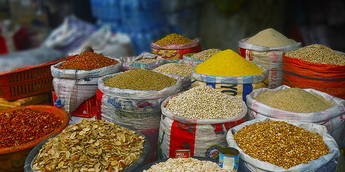
A stark warning has become necessary due to the government's initial disregard for a previous alert published in January 2025, which ultimately led to disastrous consequences and a delayed over-reaction from the Federal Government, triggering a food price cycle.
nThis cycle has resulted in imports crashing prices, domestic producers sustaining losses and reducing production, and prices starting to rise again, a trend that is expected to significantly reverse in 2026, unlike the previous year when food prices generally plummeted.
nTwo vital developments, one domestic and the other global, are forcing this alarm, which will be dealt with later, but first, relevant portions of the January 2025 article will be highlighted, including a quote from Mahatma Gandhi, who said, "There are people in the world, so hungry, that God cannot appear to them except in form of bread."
nGandhi made this remark before his assassination in 1948, when his country was suffering from food scarcity, and similarly, there are millions of people in Nigeria today who are so hungry that God cannot appear to them except as a loaf of bread or a bowl of cooked rice.
nIn 1948, Nigeria was a net exporter of food, despite having almost 99 per cent of its population as illiterates, and the University of Ibadan had just started admitting students, with less than 1000 university graduates in the country.
nToday, the University of Ibadan alone graduates over 5,000 students annually, and all Nigerian universities produce more than 120,000 graduates, raising questions about the effectiveness of the country's "educated manpower" in feeding its population.
nIndia, which was a food-deficit nation in 1948, has transformed into a food exporter, while Nigeria, a former food-exporter, is now a food-deficit nation, relying on others for survival, with one reason being Nigeria's discovery of oil, while India did not.
nHowever, another fundamental reason is that educated Indians and their leaders are intelligent and have made food a priority, as Chef Jose Andres, founder of World Central Kitchen, said, "Food is national security, food is economy; it is employment, energy, history, food is everything."
nRecent reports, such as "Rice Mills Are Closing" in March 2026, "3.7 million Nigerians displaced" in March 2026, and "Iran war threatens global food supply" in March 2026, highlight the changes that have occurred, threatening global food supply and Nigeria's food production.
nRice mills closing in Nigeria remove incentives for farmers to plant, leading to a decline in aggregate productivity, not just for rice but also for other minor crops, vegetables, and okra, which most farmers cultivate on the periphery of rice farms.
nThe closure of rice mills will lead to galloping food inflation, which is already happening, and the war in Iran will further exacerbate the situation, threatening global food supply and leading to increased food prices.
nA conference on poverty alleviation in India in 1983 highlighted the importance of urban farming, which has now become a reality, with over 30 million urban and suburban farmers producing more food than ever before, using landless farming methods and increasing yield per acre.
nToday, people are growing tomatoes, lettuce, cucumbers, carrots, and potatoes on balconies of twenty-storey buildings, and sunflowers are being grown alongside food items, producing excellent vegetable oil, showing that the sky is literally the limit.
nA report from VANGUARD summarizing the situation merely scratches the surface, as the real catastrophe is unfolding in real-time, with approximately 3.3 million or 91 per cent of the 3.7 million internally displaced persons located in just eight states, including Borno, Benue, Zamfara, Katsina, Adamawa, Yobe, Sokoto, and Kaduna.
nThese states, along with Plateau, Kano, Kwara, Kogi, and Kebbi, form Nigeria's "food basket," and the fact that many of the internally displaced persons were farmers who produced food to feed themselves and others, but now produce nothing and still eat, exacerbates food insecurity and deepens poverty.
nThe increased attacks on rural communities have led to more internally displaced persons and farmers deserting their farms, which will reduce potential output, and as William Shakespeare said, "All things do help the unhappy man to fall," an unhappy nation is also subjected to many hazards, internal and external.
nThe war in Iran has started at a worse time for Nigeria, which was already facing an uphill task in feeding its population, and the destruction of gas installations in the Middle East will lead to inevitable inflation, with headline food inflation leading the surge, and massive rice imports will arrive with heftier price tags.
nFuel prices, which skyrocketed to N1,300 per liter from N890 in January, will further exacerbate the situation, and the question remains, where are the governments, as farming is one of the most difficult but rewarding tasks, and we need more farmers and government presence to avert calamity.
nHowever, politics has taken top priority, and elected leaders no longer care about food for the masses, who will vote in January 2027, as US President James Madison said, "Farming would be mighty easy, if it is done with computers and biros and now AI in a cozy office," but from personal experience, farming is not easy and requires more attention from the government.
Related Stories
 General News
CELEBRATING TWO YEARS OF TRANSFORMATIONAL LEADERSHIP IN THE PRESIDENTIAL AMNESTY PROGRAMME
Tomorrow, 14TH March 2026, as we look forward to the second anniversary, we reflect on the remarkable two years since the Administrator of the Preside
 General News
PRESIDENTIAL AMNESTY PROGRAMME PHASE 3: DISREGARD PURPORTED STATEMENT ON DELAYED ITA PAYMENTS — OFFICE OF NATIONAL CHAIRMAN
The Office of the National Chairman of the Presidential Amnesty Programme Phase 3, General Elaye ThankGod Dollar Slaboh, has called on beneficiaries a
 General News
RE: CLARIFICATION ON MY PERSONAL RELATIONSHIPS
PUBLIC NOTICErnrnRE: CLARIFICATION ON MY PERSONAL RELATIONSHIPSrnrnIt has become necessary to make this public clarification following the increasing