
Niger Delta must shift from oil to production — Alaibe
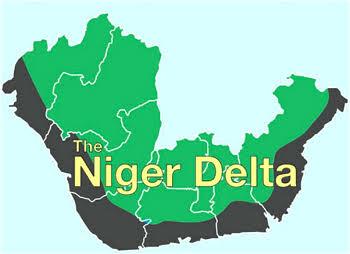
Delta State map
nBy Daniel Abia, Port Harcourt
nA former Managing Director of the Niger Delta Development Commission (NDDC), Chief Timi Alaibe, has called for a fundamental restructuring of the Niger Delta economy to move the region from dependence on crude oil extraction to production, value addition and regional trade.
nAlaibe made the call on the sidelines of the ongoing Niger Delta Investment and Economic Summit organised by the Niger Delta Chambers of Commerce, Industry, Trade, Mines and Agriculture (NDCCITMA) in Port Harcourt, Rivers State.
nHe said the region’s decades of oil production had not translated into commensurate improvements in the living conditions of its people, citing persistent challenges in infrastructure, healthcare, education, potable water and poverty.
n“For more than six decades, this region has connected Nigeria’s natural resources to the global economy. The question before us is whether we can convert that strategic position into something broader and more enduring: a competitive regional economy built on production, trade and investment,” he said.
nAlaibe, who was a lead speaker on “Regional Trade Integration and Infrastructure Competitiveness: Unlocking the Niger Delta’s Economic Potential,” said the region’s economic future should increasingly be driven by production, processing and trade rather than extraction.
nHe noted that the Niger Delta had a history of international commerce predating the discovery and exploitation of petroleum, with palm oil traded through its waterways to global markets.
n“Petroleum did not create the Niger Delta’s connection to the global economy. It changed the commodity,” he said.
nAlaibe cited Aba and Ariaria International Market as examples of the region’s entrepreneurial and manufacturing capacity, saying the challenge was to connect such productive clusters to infrastructure, finance and larger markets.
nHe said the African Continental Free Trade Area (AfCFTA) had created opportunities for businesses in the Niger Delta to access markets across Africa, but noted that market access alone would not guarantee success.
nAccording to him, high logistics costs, unreliable transportation, customs procedures, product standards, limited trade finance and border delays remained challenges that needed to be addressed.
nThe former NDDC chief advocated an integrated regional infrastructure strategy rather than isolated road, port and airport projects.
n“We must stop approaching infrastructure as isolated projects and begin developing economic corridors that connect production centres to processing facilities, logistics platforms and markets,” he said.
nHe proposed stronger links between industrial and agricultural production centres and gateways such as Onne, Port Harcourt, Warri and Calabar, supported by roads, waterways, aviation, warehousing and efficient cargo-clearance systems.
nAlaibe also called for the development of the Niger Delta’s waterways as commercial transport corridors, saying modern jetties, terminals, navigational systems and barging could reduce logistics costs and create opportunities in fisheries, aquaculture, marine engineering, ship repair and coastal tourism.
n“If Nigeria is serious about the Blue Economy, the Niger Delta should become its principal investment laboratory,” he said.
nOn security, Alaibe described it as an essential component of economic infrastructure, noting that insecurity could increase the cost of doing business and discourage investment.
nHe also stressed the importance of strategic governance and sustained implementation of regional development plans, saying successive plans would have limited impact without effective implementation and accountability.
n“Plans continue to be planned until they are implemented,” he said.
nAlaibe urged governments to balance spending on physical infrastructure with investments that directly improve household welfare through education, healthcare, skills development and economic opportunities.
nHe said the region’s objective should be to reconnect its historic trading culture with modern production and infrastructure.
n“Our task is not to teach the Niger Delta how to trade. Our task is to reconnect its historic trading instinct to modern production, modern infrastructure and modern markets,” he said.
nAccording to Alaibe, achieving the transition would position the Niger Delta not only as Nigeria’s resource base but also as a production platform, logistics gateway and major trading corridor for West and Central Africa.
n nRelated Stories
 General News
CELEBRATING TWO YEARS OF TRANSFORMATIONAL LEADERSHIP IN THE PRESIDENTIAL AMNESTY PROGRAMME
Tomorrow, 14TH March 2026, as we look forward to the second anniversary, we reflect on the remarkable two years since the Administrator of the Preside
 General News
PRESIDENTIAL AMNESTY PROGRAMME PHASE 3: DISREGARD PURPORTED STATEMENT ON DELAYED ITA PAYMENTS — OFFICE OF NATIONAL CHAIRMAN
The Office of the National Chairman of the Presidential Amnesty Programme Phase 3, General Elaye ThankGod Dollar Slaboh, has called on beneficiaries a
 General News
RE: CLARIFICATION ON MY PERSONAL RELATIONSHIPS
PUBLIC NOTICErnrnRE: CLARIFICATION ON MY PERSONAL RELATIONSHIPSrnrnIt has become necessary to make this public clarification following the increasing