
Netanyahu claims Iran has been severely weakened, as Tehran sets sights on oil facilities in the Gulf region
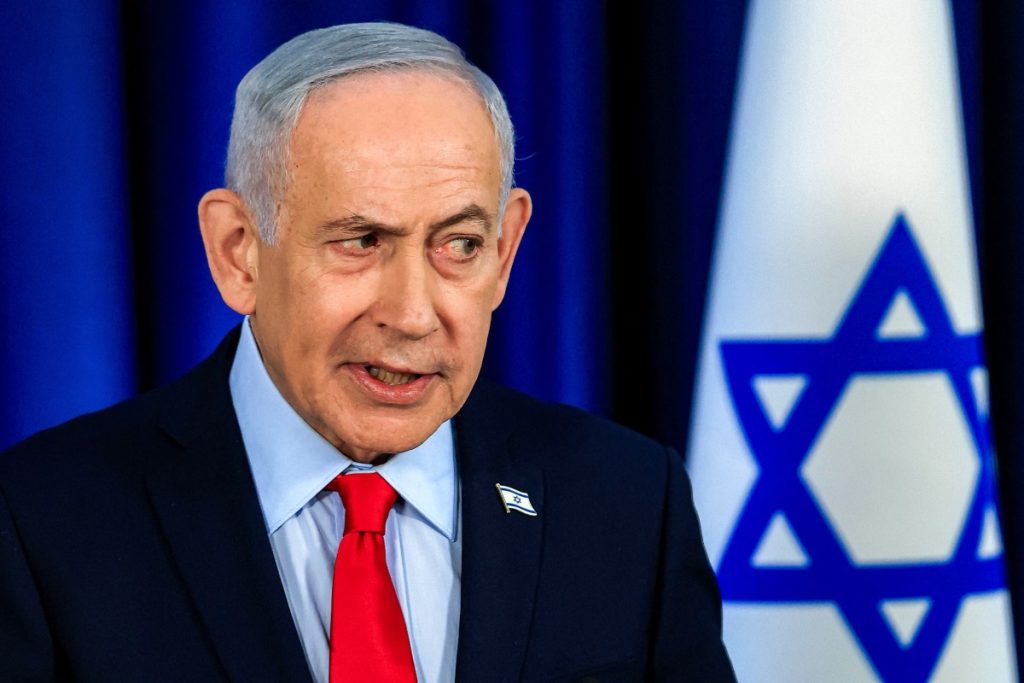
Israeli Prime Minister Benjamin Netanyahu asserted on Thursday that Iran's capabilities are being severely crippled, and it is uncertain who is currently in control of the country, as Tehran's focus on Gulf oil and gas facilities has sent shockwaves through global markets.
nNetanyahu made these comments nearly three weeks into the Middle East war initiated by Israel and the United States, stating that Iran no longer possesses the ability to enrich uranium or manufacture ballistic missiles.
nMeanwhile, Lebanese President Joseph Aoun reiterated his call for a truce between Israel and Iran's ally, Hezbollah, and the initiation of negotiations, during a meeting with French Foreign Minister Jean-Noel Barrot.
nThe death toll from Israeli airstrikes on southern and eastern Lebanon, as well as Beirut's southern suburbs, has exceeded 1,000, according to Lebanon's health ministry, as a ceasefire remains elusive.
nIn Brussels, the European Union, following a meeting of EU leaders, advocated for a moratorium on strikes against energy and water facilities and vowed to prevent uncontrolled migratory movements towards the 27-nation bloc.
nNetanyahu, speaking at a press conference, praised his cooperation with US President Donald Trump, stating, "We are winning and Iran is being decimated," and added, "This war will end a lot faster than people think," without providing a specific timeframe.
nHis comments came after Washington stated that there was no deadline to end the war launched against Iran on February 28, with Netanyahu saying, "I'm not sure who's running Iran right now," and referencing Iran's newly appointed supreme leader, Mojtaba, who has not been seen publicly.
nNetanyahu noted, "We're seeing cracks, and we're trying to propagate them as fast as we can, not only in the top command, but also in the field," as Israel and the United States expressed confidence in their war efforts.
nEnergy markets, however, were severely impacted by Iranian attacks on the world's largest liquefied natural gas plant in Qatar and refineries in Saudi Arabia and Kuwait, with oil markets already reeling from Iran's chokehold on the strategic Strait of Hormuz.
nBenchmark Brent surged six percent to $119 a barrel before falling back to $110, while European gas prices rose nearly a third, after Iranian missiles hit Qatar's huge Ras Laffan natural gas complex in retaliation for Israel's air raid on the South Pars gas field on Wednesday.
nThe latest attack on Ras Laffan caused "extensive damage" that QatarEnergy said could cost $20 billion a year in lost revenue and take five years to repair, as Iran also struck elsewhere in the region.
nA drone crashed into the Samref refinery in Saudi Arabia's Red Sea port of Yanbu, according to the Saudi defence ministry, which stated that it reserved the "right to take military actions" in response.
nIn Kuwait, drone attacks sparked fires at the Mina Abdullah and Mina Al-Ahmadi refineries, which have a combined capacity of 800,000 barrels per day, and in Israel, an oil refinery in the port of Haifa was hit on Thursday, with media showing images of black smoke rising from the complex.
nTrump indicated he did not know in advance about Israel's raid on South Pars, which supplies about 70 percent of Iran's domestic needs, but said he had told Netanyahu not to hit Iranian gas fields again, describing their cooperation as "coordinated."
nNetanyahu insisted Israel acted alone in the strike and rejected suggestions that he had dragged Trump into the conflict, implying he was the junior partner in the joint assault on Iran, and stated, "Does anyone really think that someone can tell President Trump what to do?"
nTrump warned that the United States would "blow up" South Pars if Tehran did not stop attacking Qatar, but said there was no current plan to send ground troops into Iran, as Iran responded with defiance, vowing the "complete destruction" of Gulf energy infrastructure if the Israeli attack was repeated.
nForeign Minister Abbas Araghchi said there would be "ZERO restraint" if Iran's infrastructure was hit again, amid growing concern over the economic fallout from the conflict, with Britain, France, Germany, Italy, Japan, and the Netherlands saying they would "contribute to appropriate efforts to ensure safe passage through the Strait of Hormuz."
nHowever, they provided few details, with Rome and Berlin later insisting that any action would only happen if there was a ceasefire, as French President Emmanuel Macron condemned the "reckless escalation" in attacks and called for "direct talks between the Americans and Iranians."
nBritain warned that "attacks on critical infrastructure risked pushing the region further into crisis," while India and China expressed new concern about oil supplies flowing through the Strait of Hormuz.
nUS Defense Secretary Pete Hegseth stated that there is no timeframe for ending the war, but "we're very much on track" and Trump would choose when to end fighting, saying, "It will be at the president's choosing, ultimately, where we say, 'Hey, we've achieved what we need to,'" he said.
Related Stories
 General News
CELEBRATING TWO YEARS OF TRANSFORMATIONAL LEADERSHIP IN THE PRESIDENTIAL AMNESTY PROGRAMME
Tomorrow, 14TH March 2026, as we look forward to the second anniversary, we reflect on the remarkable two years since the Administrator of the Preside
 General News
PRESIDENTIAL AMNESTY PROGRAMME PHASE 3: DISREGARD PURPORTED STATEMENT ON DELAYED ITA PAYMENTS — OFFICE OF NATIONAL CHAIRMAN
The Office of the National Chairman of the Presidential Amnesty Programme Phase 3, General Elaye ThankGod Dollar Slaboh, has called on beneficiaries a
 General News
RE: CLARIFICATION ON MY PERSONAL RELATIONSHIPS
PUBLIC NOTICErnrnRE: CLARIFICATION ON MY PERSONAL RELATIONSHIPSrnrnIt has become necessary to make this public clarification following the increasing