
Need for special prisons for terrorists
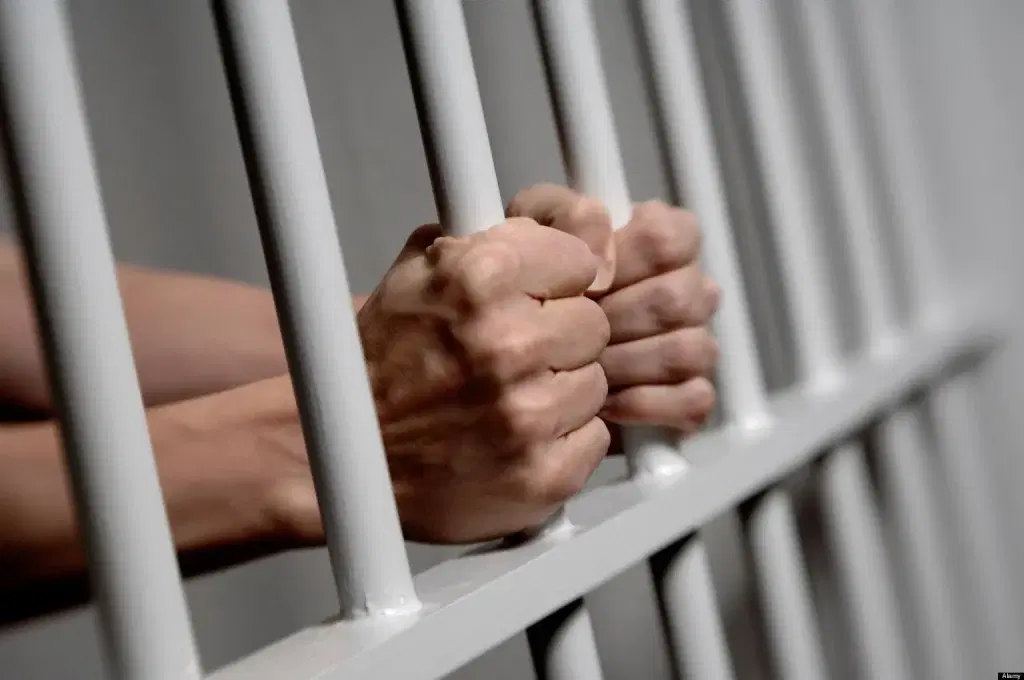
The Office of the Attorney-General of the Federation led by Lateef Fagbemi (SAN), has delivered a defining moment in Nigeria’s war against terrorism. In four extraordinary days, ten ebullient judges secured 386 convictions from 508 terrorism cases at the Federal High Court in Abuja. With phase ten scheduled for June, the Federal Government has made its position clear: no terrorist will outrun justice indefinitely.
nBut conviction is only the first half of justice. The second half is what happens behind the prison gate — and that is where Nigeria now stands at the edge of a precipice. Our correctional centres are dangerously overcrowded, underfunded, and wholly ill-equipped to absorb hundreds of ideologically hardened jihadist convicts.
nThese are not normal criminals. They are warriors of a theological worldview, trained to endure hardship, conditioned to see imprisonment as a temporary inconvenience on the road to martyrdom, and tethered to networks that never stop working for their release. Sending them into the general prison population is recklessness dressed as jurisprudence.
nThe evidence is carved into recent national memory. In October 2021, gunmen struck the Oyo State Correctional Centre, freeing hundreds of inmates. Less than a year later, ISWAP, Boko Haram, and Ansaru mounted a coordinated assault on the Kuje Custodial Centre in Abuja — barely 50 kilometres from the Presidency — using military-grade explosives to liberate 879 prisoners, including 64 confirmed terrorists.
nOne escaped Boko Haram detainee, who had communicated with outside accomplices via a smuggled phone, now commands ISWAP’s Timbuktu Wilayat in the inner Sahel. Then came the Kogi State attack, where jihadist-aligned gunmen freed members of active cells. A pattern is not coincidence. It is doctrine.
nEqually alarming is the prison-as-recruitment-ground danger. In Iraq, jihadist inmates radicalised entire wings of criminal detainees, producing commanders who built the Islamic State. In Belgium, the 2018 Liège massacre — executed by a criminal radicalised behind bars — killed two police officers and a civilian.
nNigeria’s teeming prisons, packed with vulnerable awaiting-trial detainees, offer jihadists a captive congregation. Every day a convicted terrorist shares a corridor with an ordinary inmate, we are seeding the potential next generation of insurgents. The answer is demanding but not complicated.
nNigeria must build dedicated maximum-security facilities for terrorism convicts — purpose-built, electronically surveilled, with strict separation from the general population. Officers assigned there must be retrained in counter-radicalisation, manipulation detection, and anti-jihadist threat doctrines. Separation also protects the moral coherence of justice. A bomb-maker and a petty thief cannot occupy the same penal universe. Separation enables systematic intelligence exploitation of inmate communications that standard prisons cannot deliver.
nNigeria has shown prosecutorial willpower. Now it must show infrastructural will. Build the prisons, train the officers and protect the innocent. The alternative is a justice system that convicts terrorists and, through negligence, transplants them to endanger vulnerable inmates.
n nRelated Stories
 General News
CELEBRATING TWO YEARS OF TRANSFORMATIONAL LEADERSHIP IN THE PRESIDENTIAL AMNESTY PROGRAMME
Tomorrow, 14TH March 2026, as we look forward to the second anniversary, we reflect on the remarkable two years since the Administrator of the Preside
 General News
PRESIDENTIAL AMNESTY PROGRAMME PHASE 3: DISREGARD PURPORTED STATEMENT ON DELAYED ITA PAYMENTS — OFFICE OF NATIONAL CHAIRMAN
The Office of the National Chairman of the Presidential Amnesty Programme Phase 3, General Elaye ThankGod Dollar Slaboh, has called on beneficiaries a
 General News
RE: CLARIFICATION ON MY PERSONAL RELATIONSHIPS
PUBLIC NOTICErnrnRE: CLARIFICATION ON MY PERSONAL RELATIONSHIPSrnrnIt has become necessary to make this public clarification following the increasing