
Nasir El-Rufai tore down over 2,000 residences in Abuja, defying judicial rulings, according to Femi Fani-Kayode
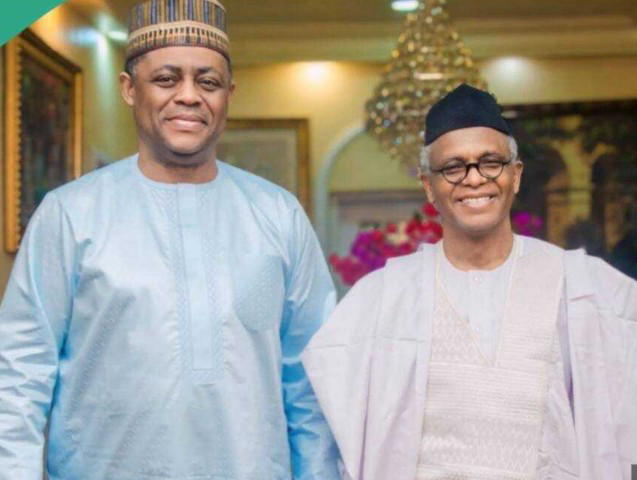
Nasir El-Rufai, a man I once considered a friend, has left me with more questions than answers, particularly regarding his actions and public statements, which I addressed in my previous article, "Nasir El Rufai as a Threat to National Security".
nMy last update on him was that he was still in detention and had suffered a nose-bleed after one week, an unfortunate incident that warrants my sympathies, and I hope he is released soon to respond to my queries directly and tend to his health.
nA notable aspect of his tenure as Minister of FCT was the demolition of numerous orphanages in Abuja, leaving many orphans without a home, in addition to the destruction of 2,000 homes and buildings, as well as 12,000 shanties on the outskirts of Abuja, often without compensation or adherence to court orders.
nDuring his time as governor of Kaduna, El-Rufai also demolished several orphanages, including one in Fadama Badan Dodo, Zaria, which was knocked down at 1:00 a.m. without a court order, a chilling act that highlights his disregard for the vulnerable.
nIn the days leading up to his exit as governor on May 29, 2023, El-Rufai ordered the demolition of various structures, including the Gbagyi Villa community in Kaduna, where numerous houses were destroyed despite existing court orders, and several Shi'ite buildings, such as schools, a hospital, and private residences, in areas like Kawo, Rigasa, and Tudun Wada.
nEl-Rufai's actions have been described as "vindictive" by critics and affected residents, who have accused him of destroying homes and communities, including those of orphans, with a callousness that is unspeakable.
nHis administration also persecuted the followers of the late Sheik Dahiru Bauchi in Kaduna, raiding their homes, desecrating their properties, and violating their places of worship, prompting the Sheik to pronounce a curse on him, a sentiment echoed by others, including the women of Kafanchan in Southern Kaduna.
nEl-Rufai's tenure was marked by a notable absence of state-sponsored pilgrimages for Muslims and Christians, which he banned, although he later lifted the ban for Muslims while maintaining it for Christians, a selective approach that was only reversed by his successor, Governor Uba Sani, in February 2026.
nHe also banned night vigils for Christians and required pastors to submit their sermons for approval before preaching, a restriction that was part of a broader pattern of persecution and human rights violations during his governorship.
nThousands of petitions from Shia Muslims, Tijaniya Muslims, and Christians in Kaduna, whose rights were violated under his watch, were presented to the DSS when he was nominated as a Minister by President Bola Ahmed Tinubu, leading to the rejection of his nomination by the Senate.
nEl-Rufai's relationship with his successor, Governor Uba Sani, has been strained, despite Sani's significant financial contributions to El-Rufai's legal fund between 2009 and 2014, and his unwavering support during that period.
nEl-Rufai's attempt to undermine and discredit Sani's government has been unrelenting, and his reaction to Sani's efforts to rectify his wrongdoings has been marked by malice and a desire for vengeance, a sentiment he has openly expressed.
nSimilarly, El-Rufai has turned against Alhaji Balarabe Abbas Lawal, his former Chief of Staff and Secretary to the State Government, who had sold his house to help pay El-Rufai's legal fees and had stood by him during his prosecution by the EFCC.
nEl-Rufai's hatred for Governor Mai Mala Buni of Yobe State is also noteworthy, as he attempted to humiliate him due to his inability to intimidate or control him during his tenure as Interim National Chairman of their party.
nThe issue of alleged phone-tapping has raised more questions, particularly regarding the identity of those responsible for bugging the NSA's phone, which El-Rufai claimed was done by his associates, but has yet to provide further information or clarification.
nThe ICPC's discovery of phone-tapping equipment and sensitive security documents in El-Rufai's house has added to the complexity of the issue, with the El-Rufai family denying the allegations, but the matter remains a serious concern.
nEl-Rufai's accusation that the NSA has imported a lethal poison, thalium sulphate, has sparked fears of a potential "false flag" operation, where the poison could be used to eliminate large numbers of people and then blame it on security agencies or the Federal Government.
nThe possibility that El-Rufai's associates may have secretly smuggled in the poison and are planning to use it for nefarious purposes is a disturbing one, and it is essential to consider all possible scenarios and get answers to these questions.
nThese concerns are not meant to create panic but are legitimate worries shared by many patriotic Nigerians who want peace, security, and prosperity for the country, and it is crucial to address these issues to ensure the well-being of the nation.
Related Stories
 General News
CELEBRATING TWO YEARS OF TRANSFORMATIONAL LEADERSHIP IN THE PRESIDENTIAL AMNESTY PROGRAMME
Tomorrow, 14TH March 2026, as we look forward to the second anniversary, we reflect on the remarkable two years since the Administrator of the Preside
 General News
PRESIDENTIAL AMNESTY PROGRAMME PHASE 3: DISREGARD PURPORTED STATEMENT ON DELAYED ITA PAYMENTS — OFFICE OF NATIONAL CHAIRMAN
The Office of the National Chairman of the Presidential Amnesty Programme Phase 3, General Elaye ThankGod Dollar Slaboh, has called on beneficiaries a
 General News
RE: CLARIFICATION ON MY PERSONAL RELATIONSHIPS
PUBLIC NOTICErnrnRE: CLARIFICATION ON MY PERSONAL RELATIONSHIPSrnrnIt has become necessary to make this public clarification following the increasing