
N2.3bn Federal Government Power Scheme Ends in Failure
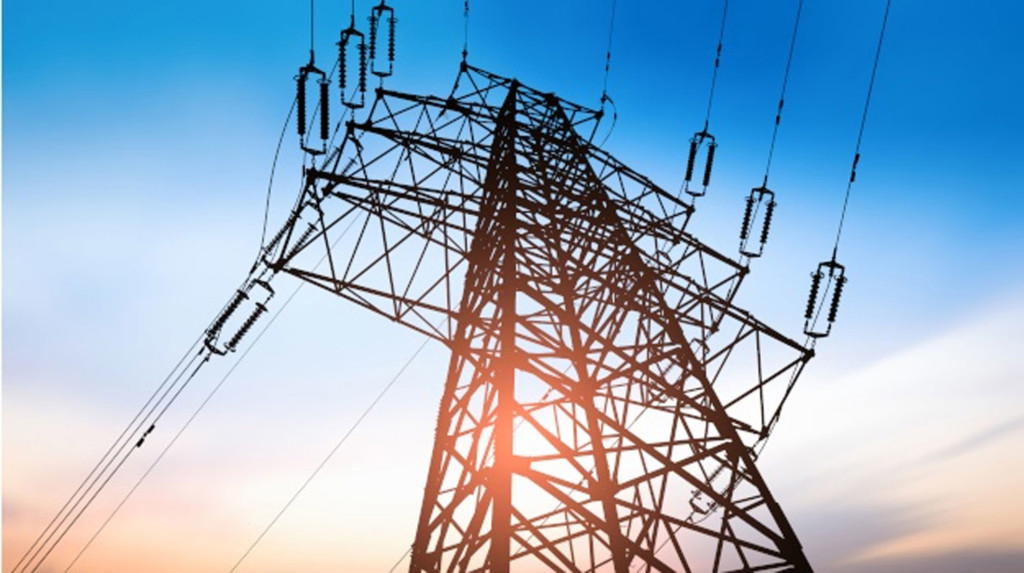
Despite the injection of €2.3 billion (N3.7 trillion at current exchange rate) into the Presidential Power Initiative, PPI, the flagship electricity project has completely collapsed, with power output failing to reach even 7,000 MW.
nThe five-year project, planned to ramp up Nigeria’s power output to 25,000 megawatts (MW) between 2020 and 2025, has formally closed, according to latest data obtained from Nigerian Independent System Operator, NISO.
nUnder the €2.3 billion PPI, driven by FGN Power and executed by Siemens of Germany, the government set out a phased roadmap to boost generation, transmission and distribution to 7,000MW by 2021; 11,000MW by 2023, and finally 25,000MW by 2025, but these targets were not met.
nLatest data obtained from NISO indicated that the country still struggles to generate 5,000MW, transmit over 4,000MW and distribute about 3,000MW of power to a population of more than 200 million people, due to various challenges.
nIndustry operators have indicated that some factors, especially poor infrastructure, high technical and commercial losses, weak metering penetration, and liquidity challenges have combined to undermine the failure of the project, despite the availability of generation capacity on paper.
nFGN Power said: “Securing the financing arrangements was critical to enabling project commencement and the sustained execution of implementation activities, and although the process required extensive negotiations, and due diligence, it was deliberately undertaken with the necessary rigour to ensure the financing arrangements deliver optimal value for Nigeria.
nPPI Phase 1 batch 1 projects include 3 substations (New Abeokuta, Ayede and Onitsha) to be completed by the end of 2026, while Sokoto and Offa will be completed by the end of 2027, adding additional wheeling capacity of 984MW to the transmission network.
nUnder phase 1 batch 2 projects, contracts will be signed in May 2026, with the target of delivering 12 substations to be completed by the end of 2028, according to FGN Power.
nHowever, in an interview with Financial Vanguard, a Professor of Energy Law in the University of Lagos, Yemi Oke, identified the transmission and distribution segments as still loaded with many challenges, citing the weakest link as distribution, which interfaces directly with consumers.
nProf Oke said: “The weakest link has always been distribution, where you have metering gaps, estimated billing, energy theft, bypasses, tariff collection challenges and huge commercial losses, and transmission is a serious challenge, with frequent grid collapses, infrastructure weaknesses, vandalism of high-voltage lines, transmission losses, load rejection and power surges.
nNigeria’s transmission capacity has struggled around 5,000 megawatts, with attempts to push it higher often resulting in instability, and the infrastructure under the Transmission Company of Nigeria is weak and, in many cases, obsolete, according to Prof Oke.
nProf Oke advocated de-emphasising excessive dependence on the national grid and focusing more on decentralised systems — mini-grids, embedded generation and regional grids, as it makes little sense to generate electricity in one far corner of the country and transmit it across vast distances only to send it back near its source.
nOn her part, Dr. Chinyere Almona, Director General/CEO, Lagos Chamber of Commerce & Industry, said: “Nigeria’s power sector targets under the Presidential Power Initiative, PPI, with Siemens for milestones of 7,000 MW by 2021; 11,000 MW by 2023; and 25,000 MW by 2025, were strategically designed to address Nigeria’s longstanding electricity deficit.
nDr. Almona added that the missed targets have imposed substantial costs on the Nigerian economy, with businesses, particularly in manufacturing and services, continuing to rely heavily on self-generated power using diesel and petrol generators, which raises production costs, weakens competitiveness, and erodes profit margins.
nThe Centre for the Promotion of Private Enterprise, CPPE, said in its reaction: “Productivity and industrialisation are strongly correlated with the power situation in any country, and it is difficult to achieve high levels of productivity and, more importantly industrialisation, without adequate power supply.
nCPPE added that alternative sources of power are very expensive and not competitive, and business thrives on competitiveness, so when firms rely on costly alternative energy sources, their production costs become very high, creating affordability challenges and ultimately welfare concerns.
nPresident Bola Tinubu constituted an 11-member committee to incorporate the planned Grid Assets Management Company, GAMCO, following approval by the Federal Executive Council, FEC, to fast-track solutions to the endemic problems of stranded power, grid management and transmission in the nation’s power sector.
nThe Chief of Staff to the President, Femi Gbajabiamila, who performed the inauguration, said the committee was critical to the realisation of President Tinubu’s aspirations for the sector, and would conduct a comprehensive review of the existing laws, regulations, policies and institutional frameworks governing the electricity value chain.
nHowever, in an interview with Financial Vanguard, the Executive Director of power advocacy group, PowerUp Nigeria, Adetayo Adegbemle, raised several concerns, saying that areas of conflict need to be resolved, and the success of the pilot phase would lead to the development of a scalable model that could be extended across additional plants and transmission corridors.
Related Stories
 General News
CELEBRATING TWO YEARS OF TRANSFORMATIONAL LEADERSHIP IN THE PRESIDENTIAL AMNESTY PROGRAMME
Tomorrow, 14TH March 2026, as we look forward to the second anniversary, we reflect on the remarkable two years since the Administrator of the Preside
 General News
PRESIDENTIAL AMNESTY PROGRAMME PHASE 3: DISREGARD PURPORTED STATEMENT ON DELAYED ITA PAYMENTS — OFFICE OF NATIONAL CHAIRMAN
The Office of the National Chairman of the Presidential Amnesty Programme Phase 3, General Elaye ThankGod Dollar Slaboh, has called on beneficiaries a
 General News
RE: CLARIFICATION ON MY PERSONAL RELATIONSHIPS
PUBLIC NOTICErnrnRE: CLARIFICATION ON MY PERSONAL RELATIONSHIPSrnrnIt has become necessary to make this public clarification following the increasing