
Motorists, commuters decry delay in petrol price cuts
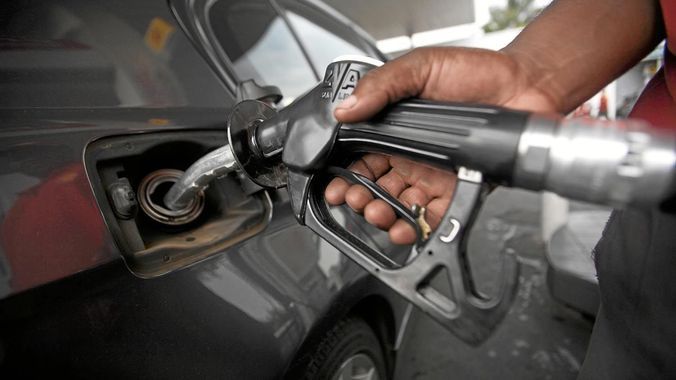
Motorists and commuters across the Federal Capital Territory (FCT) have decried the failure by petrol stations to reduce the price of petrol, following the Dangote Refinery’s latest N25 per litre price cut.
nDangote Refinery on Monday announced a N25 per litre reduction in its gantry price to N1,325 per litre.
nThe latest reduction comes after petrol pump prices rose significantly to between N1,395 per litre and N1,450 per litre in Abuja and other parts of the country over the past two weeks.
nThe reduction also comes as international crude oil prices retreat.
nBrent crude was trading at 100.40 dollars per barrel, down 3.34 per cent, while West Texas Intermediate (WTI) stood at 90.40 dollars per barrel, down 3.83 per cent, at the latest trading.
nChecks by the News Agency of Nigeria (NAN) in Abuja on Tuesday showed that some filling stations had yet to adjust their petrol prices, leaving motorists to pay the higher rates.
nNAN observed that MRS retail outlets were still selling petrol at N1,395 per litre, while NIPCO outlets sold at N1,430 per litre.
nMobil outlets sold at N1,430 per litre, Conoil at N1,410 and Total filling station sold N1,430 per litre.
nMotorists expressed concerns that they were already grappling with rising food, transportation and household expenses, saying the high petrol prices represent another unwelcome strain.
nMr Olusegun Shokoya, a motorist in Gwarinpa, said he purchased petrol at N1,430 per litre.
nShokoya said the persistent increase in fuel prices was putting growing financial pressure on families and making it increasingly difficult for many Nigerians to meet their basic needs.
nFor Mr Mohamed Hamzat, who said that he bought petrol at N1,430 per litre in Dutse, the impact of the increase goes beyond the cost of fuelling his vehicle.
n“I can not feed my children three times a day because of the high cost of things in the market. Traders complain that it is because of the increase in fuel prices.
n“We urge the Federal Government to urgently intervene by stabilising fuel prices,” he said.
nAnother motorist, Mr Chigozie Ugwu, described the situation as unbearable, saying many households are struggling to cope with the ripple effects of rising fuel costs.
nHe said the concern was particularly strong among motorists who depended on their vehicles for their daily activities.
nMrs Shotayo Aliyu, a commuter, said her fear was that every increase in the pump price of petrol would eventually translate into higher transport fares and more expensive goods.
nShe said that the rising cost of petrol would inevitably push up food prices as traders sought to recover increased transportation expenses.
nAliyu said the additional cost would eventually be passed on to consumers, further reducing the purchasing power of households.
n“The increase in fuel prices will continue to make foodstuffs more expensive because traders will want to recover transportation costs and make a profit,” she said.
nShe called on the Federal Government to intervene and stabilise fuel prices to ease the economic burden on Nigerians.
nMeanwhile, the National President of the Petroleum Products Retail Outlets Owners Association of Nigeria (PETROAN), Billy Gillis-Harry, had earlier said stakeholders would not rule out the possibility of a reduction in petrol prices.
nGillis-Harry said this recently at a consultation with the Nigerian Midstream and Downstream Petroleum Regulatory Authority (NMDPRA), Federal Competition and Consumer Protection Commission (FCCPC) and other stakeholders.
nAccording to him, PETROAN and other stakeholders would place the interests of Nigerians first, but not to their detriment.
nMr Chinedu Ukadike, National Publicity Secretary of the Independent Petroleum Marketers Association of Nigeria (IPMAN) told NAN that the volatility in international crude oil prices remained a major challenge for independent petroleum products marketers.
nUkadike said changes in international crude oil prices would ultimately affect the prices of refined petroleum products in the global market.
nAccording to him, the major challenge facing independent marketers is the volatility of the market, as many operators had purchased petroleum products before the latest decline in prices.
nHe said some members of the association had bought products only a few weeks ago and would therefore need to manage the resulting losses while remaining in business.
n“Most of our members just bought some products a few weeks ago. They will continue to cushion the effect of the loss and also continue to find a way to be in business,” he said.
nHe said the situation was part of the realities of a deregulated market, where competition and market forces determine prices.
n“That is the beauty of a free economy. That is the beauty of deregulation, where competition drives the market,” he said.
nHe, however, said marketers would continue to adjust to prevailing market conditions while seeking ways to remain competitive and sustain their businesses.
n(NAN)
n nRelated Stories
 General News
CELEBRATING TWO YEARS OF TRANSFORMATIONAL LEADERSHIP IN THE PRESIDENTIAL AMNESTY PROGRAMME
Tomorrow, 14TH March 2026, as we look forward to the second anniversary, we reflect on the remarkable two years since the Administrator of the Preside
 General News
PRESIDENTIAL AMNESTY PROGRAMME PHASE 3: DISREGARD PURPORTED STATEMENT ON DELAYED ITA PAYMENTS — OFFICE OF NATIONAL CHAIRMAN
The Office of the National Chairman of the Presidential Amnesty Programme Phase 3, General Elaye ThankGod Dollar Slaboh, has called on beneficiaries a
 General News
RE: CLARIFICATION ON MY PERSONAL RELATIONSHIPS
PUBLIC NOTICErnrnRE: CLARIFICATION ON MY PERSONAL RELATIONSHIPSrnrnIt has become necessary to make this public clarification following the increasing