By Victor Ahiuma-Young
Organised labour under the African Regional Organisation of the International Trade Union Confederation (ITUC-Africa) has raised concern over what it describes as worsening inequality and economic hardship across the continent.
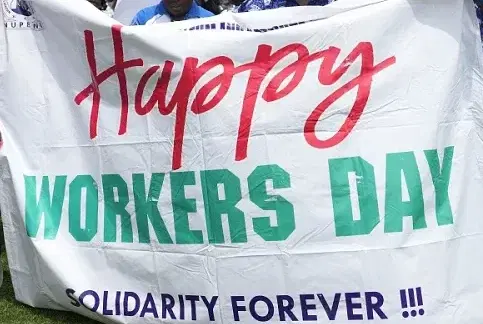
Marking this year’s International Workers’ Day, ITUC-Africa warned that Africa is facing a growing imbalance in wealth distribution, where economic gains are increasingly concentrated among a small segment of society while many workers continue to struggle with rising living costs and limited opportunities.
In a statement by its General Secretary, Akhator Joel Odigie, the organisation attributed the situation to structural economic challenges, including corruption risks, illicit financial flows, and weak fiscal accountability in some jurisdictions.
The labour body said significant financial resources are lost annually through practices such as tax avoidance, capital flight, and governance gaps—funds it argued could otherwise support public services, infrastructure, and job creation.
Across several African countries, the statement noted that workers continue to face unemployment pressures, inflationary trends, and shrinking economic prospects, while calls for improved governance and accountability grow louder among citizens.
ITUC-Africa also criticised austerity-focused economic policies that, in its view, disproportionately affect workers through wage constraints and reductions in public services. It instead called for improved tax systems, stronger financial oversight, and measures to curb illicit financial outflows.
The organisation further expressed concern about socio-political tensions and the impact of ongoing conflicts in parts of the continent, including Sudan, the Democratic Republic of Congo, and Mali, where insecurity continues to disrupt livelihoods and labour systems.
Despite these challenges, the labour group highlighted emerging opportunities linked to global demand for critical minerals essential for energy transition technologies. It urged African governments to prioritise industrial development, value addition, and regional trade rather than reliance on raw material exports.
It also pointed to the African Continental Free Trade Area (AfCFTA) as a key framework for strengthening intra-African trade and creating employment opportunities through regional value chains.
The statement called for expanded investment in energy infrastructure, improved social protection systems, stronger labour rights, and fair migration policies, warning that continued inequality could accelerate skilled labour migration from the continent.
ITUC-Africa urged workers and trade unions to remain organised and engaged in advocating for accountability and reforms, stressing that collective action remains central to advancing labour interests.
As Africa marks Workers’ Day, the organisation said addressing inequality and strengthening governance systems remain critical to ensuring inclusive and sustainable economic growth across the continent.


Comments
Please login to leave a comment.
No comments yet. Be the first to share your thoughts!