
Marking the End of Ramadan: A Time for Philanthropy, Appreciation, and Global Unity
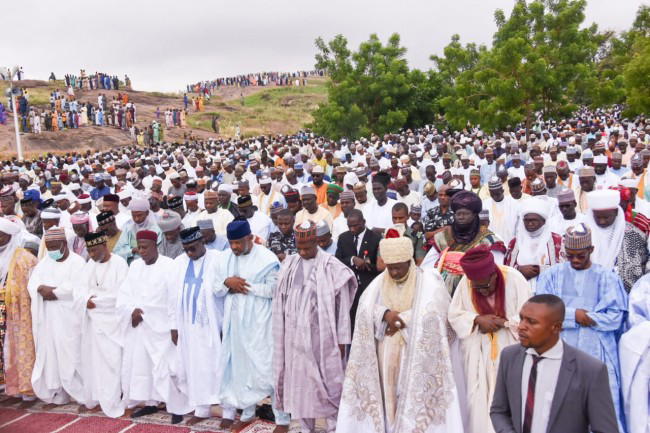
As the crescent of Shawwal emerges, signaling the end of Ramadan, Muslims worldwide celebrate Eid-ul-Fitr, a culmination of a profound spiritual journey that blends devotion with dignity and worship with responsibility.
nThis momentous occasion is deeply rooted in the institution of Zakatul Fitr, a mandatory act that embodies the social conscience of Islam, as prescribed by the Prophet Muhammad (peace be upon him), which requires every Muslim to give four handful measures of staple food.
nThis measure, approximately 2.5 to 3 kilograms of local staple food, such as rice, maize, wheat, or dates, reflects Islam's emphasis on realism and inclusiveness, focusing on giving what people actually eat and what nourishes them.
nZakatul Fitr is fundamentally about dignity, aiming to reach the poor before the Eid prayer, allowing them to participate in the celebration without the burden of hunger or exclusion, a profound corrective to the increasing inequality in the world.
nIn a world where inequality is rampant, this timeless instruction reminds us that no one should celebrate while their neighbor starves, highlighting the importance of social transformation and the values of compassion, discipline, and generosity.
nThe discipline that restrains the believer from food and desire during Ramadan must now translate into generosity and empathy, as worship in Islam extends beyond the prayer mat to uplifting the most vulnerable among us.
nThe timing of Zakatul Fitr is equally significant, serving as a bridge between devotion and celebration when given before the Eid prayer, but losing its essence if delayed, becoming ordinary charity rather than a sacred obligation tied to Ramadan.
nAs Muslims gather for the Eid prayer, they must reflect on what truly defines this day, recognizing that Eid-ul-Fitr is not an escape from Ramadan, but its continuation in another form, a moment to carry the spirit of sincerity and devotion beyond the month of fasting.
nThe night prayers of the last ten days of Ramadan, especially the search for Lailatul Qadr, remind us that this season is never ordinary, a night better than a thousand months, when destinies are written and prayers are answered, calling for a level of sincerity that should not fade with the sighting of the moon.
nIf Ramadan trained the soul, Eid tests its outcome, raising questions about whether the discipline of fasting will translate into restraint in indulgence, humility in interactions, and generosity in daily life.
nIslam provides clear guidance on how to mark Eid with purpose, including giving Zakatul Fitr, eating before the prayer, performing ghusl, wearing one's best attire, and gathering in congregation, which are expressions of gratitude and unity.
nHowever, cautions against excess, neglect of the sermon, or abandoning the spirit of worship serve as reminders that celebration must not overshadow consciousness of Allah, highlighting the importance of balance and mindfulness.
nIn many societies, Eid risks being reduced to spectacle, with lavish meals, extravagant spending, and social display, but the true beauty of Eid lies not in consumption, but in sharing and giving to those in need.
nThis is particularly relevant in communities grappling with economic hardship, where Zakatul Fitr and charity must be approached with urgency and sincerity, reaching those who need it most and giving thoughtfully.
nAs we mark Eid-ul-Fitr, there is room for collective appreciation, recognizing the shared journey through Ramadan, marked by fasting, reflection, charity, and spiritual renewal, which has brought communities together, softened hearts, and rekindled faith.
nUltimately, Eid-ul-Fitr is a celebration of completion and continuity, marking the successful observance of Ramadan, but also challenging believers to sustain its lessons and values, reminding us that faith is not seasonal and that compassion, discipline, and generosity must endure.
nAs the takbirs echo and families gather, the message of Eid remains clear: be grateful, be generous, and be mindful, ensuring that no one is left behind and that no act of worship ends without impacting another life, and that the spirit of Ramadan continues to illuminate hearts long after the festivities have passed.
nEid Mubarak.
Related Stories
 General News
CELEBRATING TWO YEARS OF TRANSFORMATIONAL LEADERSHIP IN THE PRESIDENTIAL AMNESTY PROGRAMME
Tomorrow, 14TH March 2026, as we look forward to the second anniversary, we reflect on the remarkable two years since the Administrator of the Preside
 General News
PRESIDENTIAL AMNESTY PROGRAMME PHASE 3: DISREGARD PURPORTED STATEMENT ON DELAYED ITA PAYMENTS — OFFICE OF NATIONAL CHAIRMAN
The Office of the National Chairman of the Presidential Amnesty Programme Phase 3, General Elaye ThankGod Dollar Slaboh, has called on beneficiaries a
 General News
RE: CLARIFICATION ON MY PERSONAL RELATIONSHIPS
PUBLIC NOTICErnrnRE: CLARIFICATION ON MY PERSONAL RELATIONSHIPSrnrnIt has become necessary to make this public clarification following the increasing