
Mambilla: APC’s claims long on propaganda, short on evidence – Paul Ibe
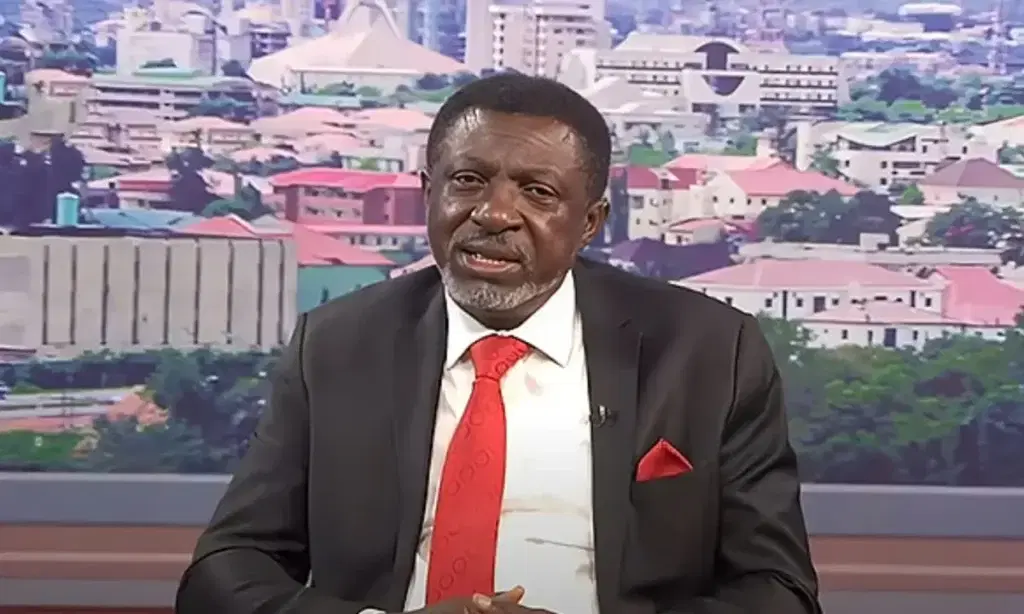
Paul Ibe
nBy Paul Ibe
nThe APC Presidential Campaign Council wants Nigerians to believe that the Mambilla arbitration delivered a corruption verdict against Atiku Abubakar.
nIt did not.
nThe tribunal examined a $500,000 transfer made on 30 January 2003 by Sunrise promoter Leno Adesanya, through China Castle Investments Limited, to the US bank account of Jennifer Douglas, then Atiku’s wife.
nThe tribunal did not accept Adesanya’s explanation that the payment represented a foreign-exchange transaction conducted for Atiku. It found that the explanation was unsupported by contemporaneous documentary evidence and regarded the circumstances surrounding the payment as raising “red flags”.
nThose are legitimate matters for scrutiny.
nBut scrutiny is not a conviction and “red flags” are not proof of a corrupt quid pro quo. And, crucially, they are not a finding that Atiku used his office to procure the Mambilla contract.
nThe disputed award letter was issued on 22 May 2003 by then Minister of Power and Steel, Olu Agunloye. The controversy before the tribunal included whether the purported award had the necessary presidential and Federal Executive Council authority. Published accounts of the award show that President Olusegun Obasanjo had directed that the matter be presented to the Federal Executive Council, while the extent of any subsequent approval became a central issue in the arbitration.
nYet the APC Presidential Campaign Council rushed from those facts to dramatic accusations of “treasonable act”, “greed”, “bribe”, “corruption” and an “illegal contract”.
nThe obvious questions therefore remain.
nWhere is the evidence that Atiku instructed Agunloye to issue the disputed award? Where is the directive showing that Atiku circumvented President Obasanjo or the Federal Executive Council? Where is the evidence establishing that the $500,000 payment was consideration for an official act performed by Atiku?
nMost importantly, where is the tribunal’s finding that Atiku actually exercised his office to procure Sunrise’s award?
nThe tribunal did conclude that Atiku possessed a considerable degree of power and influence within the Federal Government during the first half of 2003. It also examined his involvement in discussions surrounding the Mambilla project. But published accounts of the award state that the tribunal did not arrive at the conclusion that he actually exercised his official duties in a manner that fostered the award to Sunrise.
nThat distinction is fundamental.
nPolitical influence is not, by itself, proof of corruption. Participation in government discussions is not proof of corruption. A suspicious or unexplained financial transaction can justify investigation and questions, but it does not automatically prove a corrupt bargain.
nNor should another basic fact be obscured: the proceeding was an international commercial arbitration between Sunrise and the Federal Republic of Nigeria. Atiku was not a party to that arbitration and did not testify before the tribunal.
nThe APC is entitled to interrogate Atiku’s record and to demand explanations concerning the $500,000 transaction. What it should not do is transform suspicion, adverse inferences and “red flags” into a corruption finding against Atiku that the tribunal itself did not make.
nIf the APC Presidential Campaign Council maintains that Atiku corruptly procured the Mambilla contract, it should identify the evidence connecting him directly to the disputed award: a directive, correspondence, instruction, testimony or other record showing that he used his office to secure the contract for Sunrise.
nPolitics does not lower the burden of evidence.
nThere is a difference between a suspicious circumstance and proof; between an allegation and a finding; and between political propaganda and the actual record of a tribunal.
nOn Mambilla, the APC Presidential Campaign Council has made claims that go further than the findings publicly reported from the arbitration.
nThat is the problem with its case: long on political propaganda, short on evidence.
nPaul Ibe, Media Adviser to Atiku Abubakar, writes from Abuja
n nRelated Stories
 General News
CELEBRATING TWO YEARS OF TRANSFORMATIONAL LEADERSHIP IN THE PRESIDENTIAL AMNESTY PROGRAMME
Tomorrow, 14TH March 2026, as we look forward to the second anniversary, we reflect on the remarkable two years since the Administrator of the Preside
 General News
PRESIDENTIAL AMNESTY PROGRAMME PHASE 3: DISREGARD PURPORTED STATEMENT ON DELAYED ITA PAYMENTS — OFFICE OF NATIONAL CHAIRMAN
The Office of the National Chairman of the Presidential Amnesty Programme Phase 3, General Elaye ThankGod Dollar Slaboh, has called on beneficiaries a
 General News
RE: CLARIFICATION ON MY PERSONAL RELATIONSHIPS
PUBLIC NOTICErnrnRE: CLARIFICATION ON MY PERSONAL RELATIONSHIPSrnrnIt has become necessary to make this public clarification following the increasing