
Mali's military leaders rule out negotiations with extremist organizations
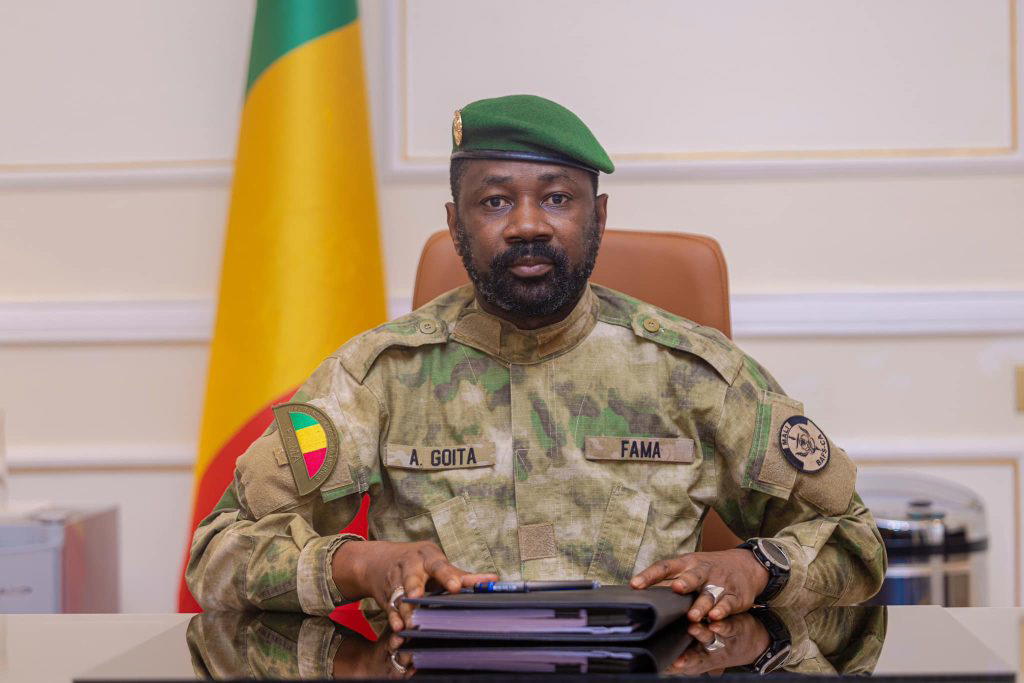
Mali's government has made it clear that it will not engage in talks with "terrorist" groups, according to the foreign minister, following a series of coordinated attacks by jihadists and allied separatists that have shaken the ruling junta, with the foreign minister's statement coming after the deadly offensive by Al-Qaeda-linked jihadists and Tuareg separatists on April 25 and 26.
nThe attacks targeted key towns, resulting in the death of the country's influential defence minister, and have since led to a blockade being imposed on the capital Bamako by the jihadists, with the blockade having a significant impact on the country.
nForeign Minister Abdoulaye Diop reiterated the government's stance, stating that "The government of Mali does not envisage any dialogue with the lawless terrorist armed groups that bear responsibility for the tragic events our people have been experiencing for years", during a meeting with the country's diplomats on Thursday.
nThe recent violence is reminiscent of a crisis that rocked Mali in 2012, and marks the latest development in a country that has grappled with over a decade of violence, with the junta-led west African country struggling to maintain stability.
nAn alliance between Tuareg rebels of the Azawad Liberation Front (FLA) and the Al-Qaeda-linked jihadist Group for the Support of Islam and Muslims (JNIM) was forged a year ago, and has led to the latest assaults, with the FLA teaming up with JNIM to launch the coordinated attacks.
nAccording to Minister Diop, "The FLA has freely chosen to take up the cause of an extremist group recognised as terrorist by the United Nations", referring to the JNIM, and highlighting the concerns surrounding the alliance between the two groups.
nThe key town of Kidal, as well as other towns and villages in the north, have been captured and are now controlled by the FLA and the jihadists, who have imposed a blockade on Bamako, exacerbating the humanitarian crisis in the region.
nDefence Minister Sadio Camara, the architect of Mali's military alliance with Russia, was killed in an attack on Kati, a junta stronghold garrison town near the capital, and has been replaced by Junta chief Assimi Goita, who has taken on the defence brief.
nSeveral opposition figures and military personnel have been detained or abducted in the wake of the attacks, according to security, legal and family sources, with verification of the number and identity of those involved proving difficult.
nThe jihadist blockade, which was imposed on April 30, has severely impacted travel into the capital, with the landlocked country relying heavily on imports by road, and the blockade has led to a significant increase in humanitarian needs.
nIn recent days, the jihadists have burnt several convoys transporting goods on the roads, according to a witness, a security source, and a local elected official, highlighting the escalating crisis in the region.
nA worker from an NGO in the Kayes region town of Kita reported that the roads to Bamako were paralysed by the jihadists, "creating increasingly urgent humanitarian needs", with hundreds of people unable to reach the capital.
nThe worker added that "Hundreds of people who left their homes have not been able to reach Bamako, they remain packed together here and sleep directly on the ground", highlighting the dire humanitarian situation.
nA civil servant posted in Segou, central Mali, reported that he had spent "two days" travelling between Bamako and his workplace, a journey that normally takes three hours, due to the blockade and the resulting congestion.
nHowever, according to one driver, several vehicles and buses were able to enter Bamako on Thursday, under escort from the Malian army and its Russian allies from the Africa Corps, providing some relief to the besieged city.
nSince 2012, Mali has faced a deep security crisis, fuelled by violence from fighters affiliated with Al-Qaeda and the Islamic State group, as well as local criminal gangs and pro-independence groups, leading to a prolonged period of instability in the country.
nThe unrest has also fed a political crisis, leading to two military coups in 2020 and 2021, and the country continues to struggle with the ongoing security and humanitarian challenges.
Related Stories
 General News
CELEBRATING TWO YEARS OF TRANSFORMATIONAL LEADERSHIP IN THE PRESIDENTIAL AMNESTY PROGRAMME
Tomorrow, 14TH March 2026, as we look forward to the second anniversary, we reflect on the remarkable two years since the Administrator of the Preside
 General News
PRESIDENTIAL AMNESTY PROGRAMME PHASE 3: DISREGARD PURPORTED STATEMENT ON DELAYED ITA PAYMENTS — OFFICE OF NATIONAL CHAIRMAN
The Office of the National Chairman of the Presidential Amnesty Programme Phase 3, General Elaye ThankGod Dollar Slaboh, has called on beneficiaries a
 General News
RE: CLARIFICATION ON MY PERSONAL RELATIONSHIPS
PUBLIC NOTICErnrnRE: CLARIFICATION ON MY PERSONAL RELATIONSHIPSrnrnIt has become necessary to make this public clarification following the increasing