
Mali coup leaders 'on brink of collapse' as Tuareg fighters pledge to seize control of the north
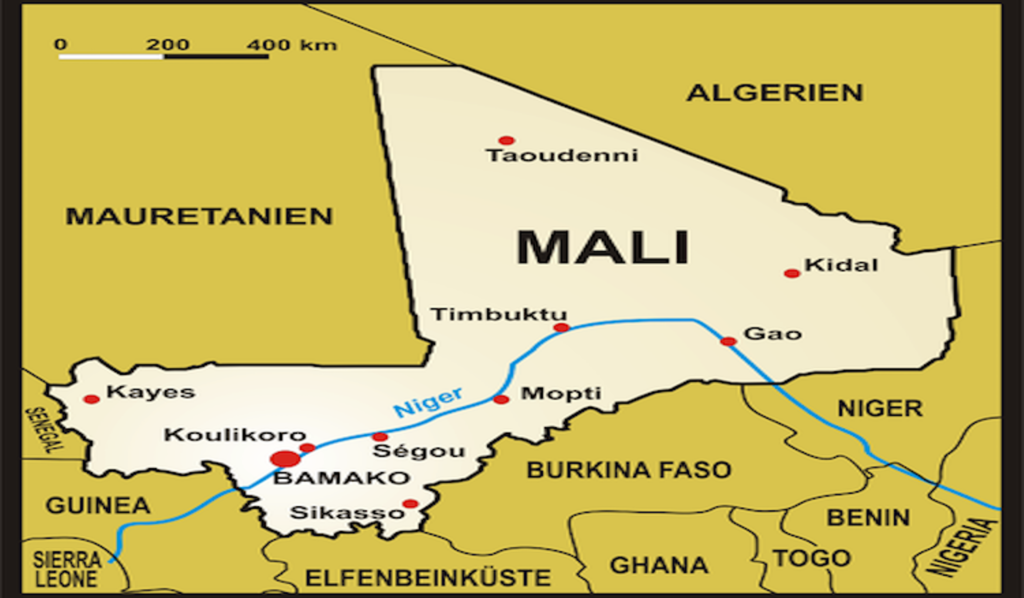
Mali's Tuareg rebels have confidently asserted to AFP on Wednesday that the country's ruling junta is on the brink of collapse, and they are determined to conquer the northern region, following a series of unprecedented large-scale attacks on the nation's military government just days prior.
nThese attacks, which were launched by jihadists and Tuareg separatists over the weekend, constitute the largest assault on the country in nearly 15 years, targeting the military junta and its Russian paramilitary backers, and have resulted in a significant escalation of the conflict.
nJunta chief Assimi Goita, who had been absent from public view for three days, acknowledged the gravity of the situation in a speech on TV late Tuesday, stating that the situation was "under control", in an attempt to reassure the nation.
nHowever, a spokesman for the Tuareg separatist coalition Azawad Liberation Front (FLA) told AFP during a visit to Paris on Wednesday that the regime's demise is inevitable, saying "the regime will fall, sooner or later", highlighting the separatists' unwavering resolve.
nThe clashes have pitted the army against not only the FLA but also its allies within the Al-Qaeda-linked jihadist Group for the Support of Islam and Muslims (JNIM), resulting in a complex and multifaceted conflict that threatens the stability of the region.
nThe coordinated dawn offensive on Saturday against strategic junta positions, including areas around the capital, Bamako, killed at least 23 people, with the toll expected to rise, and also claimed the life of Defence Minister Sadio Camara, who was seen as the mastermind behind the junta's pivot to Russia.
nCamara's funeral is planned for Thursday, as the nation mourns the loss of a key figure in the government, and the separatists and jihadists continue to consolidate their gains, having captured the key northern town of Kidal and targeted Gao in the mostly desert north, along with Mopti and Sevare in the centre.
nGao is the army's second-largest military stronghold after Kati, a garrison town near Bamako, which is home to several senior junta officials and was targeted in the weekend attacks, highlighting the strategic importance of the region.
nFLA spokesman Mohamed Elmaouloud Ramadane told AFP on Wednesday that the rebels intend to take control of Gao, Timbuktu, and Menaka, following their success in Kidal, as they seek to expand their territorial gains and consolidate their position in the region.
nIn the Gao region, the Malian army has already abandoned some of its positions, according to local sources, who told AFP that the army's withdrawal is a sign of the separatists' growing strength and influence in the area.
nSince 2012, the west African nation has faced a profound security crisis, fuelled in particular by violence from groups affiliated with Al-Qaeda and the Islamic State, as well as local criminal gangs and pro-independence groups, which has had a devastating impact on the country and its people.
nThe latest assaults raise questions about the junta's ability to tackle the security crisis, despite its insistence that its strategy, foreign partnerships, and increased military efforts have stemmed the jihadist threat, and have sparked concerns about the government's capacity to respond to the growing instability.
nMali's junta government, like its military counterparts in neighbouring Niger and Burkina Faso, has severed ties with former colonial ruler France and several Western countries, moving closer politically and militarily to Russia, in a strategic shift that has significant implications for the region.
nRussia's mercenary Wagner Group, which had been fighting with Malian forces against jihadists since 2021, ended their involvement in June 2025, and has since become the Africa Corps, an organisation under the direct control of the Russian defence ministry, marking a new phase in Russia's involvement in the region.
nAlthough JNIM and FLA have different goals, according to experts, they are united against a common enemy — the military junta that has ruled since 2020 and the Russian paramilitary backers, who are seen as a threat to their interests and aspirations.
nFLA spokesman Ramadane additionally told AFP Wednesday that his group's "objective is for Russia to withdraw permanently from Azawad and beyond, from all of Mali", highlighting the separatists' desire for Russian forces to leave the region and allow them to pursue their goals without external interference.
nThe FLA is made up of mainly Tuareg groups who want independence for Azawad, a territory in northern Mali, and have been waging an armed struggle for decades against marginalisation, with action centred in particular around the key city of Kidal.
n"We have no particular problem with Russia, nor with any other country, our problem is with the regime that governs Bamako", Ramadane said, clarifying the FLA's position and emphasizing their focus on the Malian government rather than external powers.
nA historically nomadic people, Tuaregs, who are spread across Mali, Niger, Algeria, Libya, and Burkina Faso, have waged an armed struggle for decades against marginalisation, with action centred in particular around the key city of Kidal, and have a long history of resistance against external forces.
nThe most recent attacks are reminiscent of a crisis that rocked Mali in 2012, when Tuareg rebels joined forces with jihadists to capture strategic hubs in the vast, remote north, and were eventually repelled by forces from France, which has since left the Sahel country.
nThe alliance between the jihadists and Tuareg rebels eventually unravelled when they turned on each other, and the jihadists drove the Tuareg separatists out, but the latest attacks are the result of a new alliance forged a year ago, which has significant implications for the region and its future stability.
Related Stories
 General News
CELEBRATING TWO YEARS OF TRANSFORMATIONAL LEADERSHIP IN THE PRESIDENTIAL AMNESTY PROGRAMME
Tomorrow, 14TH March 2026, as we look forward to the second anniversary, we reflect on the remarkable two years since the Administrator of the Preside
 General News
PRESIDENTIAL AMNESTY PROGRAMME PHASE 3: DISREGARD PURPORTED STATEMENT ON DELAYED ITA PAYMENTS — OFFICE OF NATIONAL CHAIRMAN
The Office of the National Chairman of the Presidential Amnesty Programme Phase 3, General Elaye ThankGod Dollar Slaboh, has called on beneficiaries a
 General News
RE: CLARIFICATION ON MY PERSONAL RELATIONSHIPS
PUBLIC NOTICErnrnRE: CLARIFICATION ON MY PERSONAL RELATIONSHIPSrnrnIt has become necessary to make this public clarification following the increasing