
Makinde Faces 2027 Dilemma: Remain Loyal to PDP or Join Forces with Opposition Alliance?
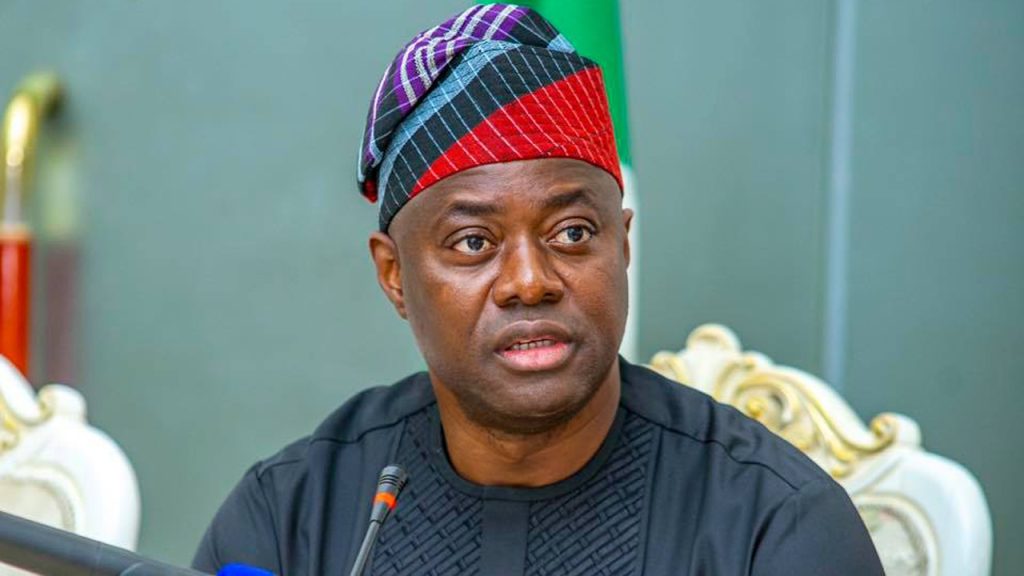
Gov Seyi Makinde of Oyo State
nBy Luminous Jannamike
nABUJA — Oyo State Governor, Seyi Makinde, faces a defining choice ahead of 2027 as a deepening crisis in the Peoples Democratic Party (PDP) intensifies following a split ruling by the Supreme Court of Nigeria, which nullified the party’s disputed November 2025 national convention in Ibadan.
nLast Thursday’s judgment, delivered in a 3–2 decision by a five-member panel led by Justice Mohammed Garba, upheld earlier rulings of lower courts that voided the convention and all structures that emerged from it.
nThe verdict has not resolved the PDP’s leadership crisis but has instead deepened uncertainty, sharpening the political choices before Makinde at a critical moment.
nRecent opposition engagements in Ibadan, combined with the ruling, have placed the governor at the centre of a wider opposition realignment, even as he continues to publicly affirm loyalty to the PDP.
nSupreme Court Ruling: Clarity Without Closure
nThe apex court affirmed that the Ibadan convention was conducted in violation of a subsisting court order, effectively nullifying its outcomes, including leadership claims tied to the exercise.
nWhile the majority held that the convention breached due process, the minority questioned the extent of judicial intervention in internal party affairs, highlighting the contentious nature of the decision.
nCrucially, the ruling did not install new leadership but reverted the party to its pre-convention status, leaving multiple factions to interpret the outcome in their favour.
nVictory Claims, Lingering Crisis
nThe immediate aftermath has been marked by competing narratives.
n“Today, the Supreme Court has brought an end to the so-called factions of the PDP. There is no more faction in the party. There is only one PDP,” said Nyesom Wike, insisting the ruling has settled the crisis and dismissing rival claims.
nBut other voices within the party struck a different tone. Figures aligned with the Ibadan convention, including blocs associated with Tanimu Turaki, SAN, argue that the ruling leaves the PDP without clear leadership, deepening uncertainty rather than resolving it.
nThe PDP Board of Trustees, aligned with structures linked to Kabiru Turaki, accepted the judgment and moved to assert continuity, positioning itself as a stabilising authority while calling for reconciliation.
nThe conflicting interpretations underscore a familiar pattern: legal clarity without political consensus.
nIbadan Summit Signals Coalition Push
nEven before the ruling, Makinde had begun widening his political engagements.
nBarely a week earlier, he hosted a high-level gathering of opposition leaders in Ibadan, bringing together figures from multiple parties, including elements linked to the African Democratic Congress (ADC), Labour Party, and the New Nigeria Peoples Party (NNPP).
nFormer Anambra State Governor Peter Obi, after a closed-door meeting with Makinde, said: “We have come to respectfully consult my dear brother on the coalition for the 2027 election and the overall well-being of Nigeria. It’s about how to build a better Nigeria.”
nThese engagements reinforce Makinde’s role as a bridge across opposition divides, even as they raise questions about whether he will remain within the PDP or align more fully with coalition forces.
nCoalition Cracks Emerge
nHowever, the coalition path is far from settled.
n“Charity begins at home. Let us put our party in order internally before we go outside. That is the point I have been making,” Kingsley Temitope Ogga, a factional leader within the ADC, told Vanguard in Abuja, distancing his bloc from the Ibadan meeting.
nThe response underscores divisions within the coalition space and highlights the difficulty of forging a unified front among parties still grappling with internal disputes.
nFor Makinde, the calculation is delicate: aligning too quickly with a fragile alliance carries risk, while staying put ties him to a PDP still struggling to define its leadership after the court ruling.
n‘Wild Wild West’: A Remark That Resonated
n“For those that are carrying on as if there’s no tomorrow, they should remember that ‘Operation Wetie’ started from here. This is the same Wild Wild West,” Makinde said at the Ibadan summit, warning against what he described as dangerous political trends.
nThe comment drew swift reactions from political opponents, while allies insist it was a historical caution about the dangers of political excess.
nPDP Crisis Deepens After Verdict
nInside the PDP, the crisis shows no sign of easing. The party’s internal divisions, already entrenched since the 2023 elections, have now entered a new phase following the Supreme Court ruling.
nWith the Ibadan convention voided, questions over legitimate leadership, control of party organs, and authority to convene meetings remain unresolved.
nOnce dominant nationally, the PDP continues to grapple with declining influence and a shrinking base of governorship control.
nThe fallout from the G5 governors’ rebellion, where Makinde opposed the party’s presidential candidate, Atiku Abubakar, still shapes internal alignments and mistrust.
nOyo: The Immediate Battle
nFor all the national manoeuvring, the immediate battle remains at home.
nAs he approaches the end of his second term, attention is turning to whether Makinde can successfully back a successor in Oyo State, a challenge that has historically proven difficult for outgoing governors.
nHis administration has anchored its record on infrastructure, economic expansion, and industrialisation under the “Omituntun” agenda. However, internal PDP divisions and renewed opposition mobilisation could complicate that path, particularly if the party’s national crisis spills into state structures.
nStructure vs Survival
nObservers say Makinde’s current posture reflects a careful balancing act. By staying within the PDP, he retains control of party structures in Oyo, a critical factor in managing succession and sustaining influence.
nAt the same time, his engagement with opposition figures keeps him relevant in coalition talks that could shape the national contest.
nHe is emerging as a convening figure capable of bridging competing interests across party lines—standing in two political worlds without fully committing to either.
nFor Makinde, this is increasingly a calculation between structure and survival.
nThe Pressure Point
nAs the 2027 elections draw closer, pressure is expected to mount on key political actors to make clearer choices.
nCoalition advocates are likely to push for firmer commitments, while PDP loyalists will continue to press for unity and internal rebuilding.
nThe Supreme Court ruling has provided legal clarity on one dispute, but it has not resolved the party’s deeper political fractures.
nWhatever path he chooses, Makinde’s decision will shape not only his political future, but also the trajectory of opposition politics in Nigeria heading into 2027.
n nRelated Stories
 General News
CELEBRATING TWO YEARS OF TRANSFORMATIONAL LEADERSHIP IN THE PRESIDENTIAL AMNESTY PROGRAMME
Tomorrow, 14TH March 2026, as we look forward to the second anniversary, we reflect on the remarkable two years since the Administrator of the Preside
 General News
PRESIDENTIAL AMNESTY PROGRAMME PHASE 3: DISREGARD PURPORTED STATEMENT ON DELAYED ITA PAYMENTS — OFFICE OF NATIONAL CHAIRMAN
The Office of the National Chairman of the Presidential Amnesty Programme Phase 3, General Elaye ThankGod Dollar Slaboh, has called on beneficiaries a
 General News
RE: CLARIFICATION ON MY PERSONAL RELATIONSHIPS
PUBLIC NOTICErnrnRE: CLARIFICATION ON MY PERSONAL RELATIONSHIPSrnrnIt has become necessary to make this public clarification following the increasing