
Legislator Exposes Widespread Scam in Financial Plans
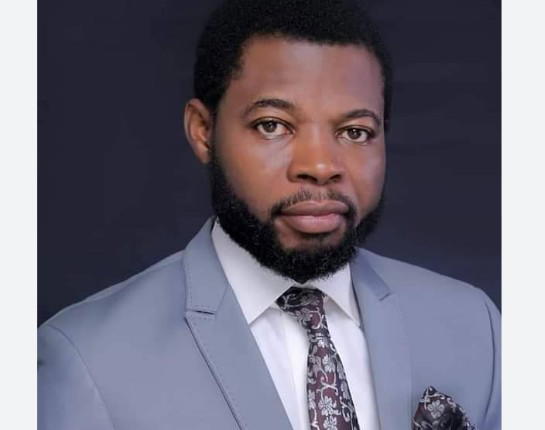
According to Rep. Clement Jimbo, a member of the House of Representatives, items that can last for years are often inserted into capital budgets on a yearly basis, which can lead to unnecessary expenditures and fuel inflation.
nFigures are sometimes arbitrarily inserted into budgets, and professionals are later asked to adjust estimates to fit these figures, rather than being involved in the initial budgeting process, Jimbo notes.
nUnity is the biggest asset of the APC ahead of the 2027 elections, and Senator Godswill Akpabio is a key figure who inspires Jimbo, who represents the Abaq/Etim Ekpo/Ika Federal Constituency of Akwa Ibom State.
nNigeria is currently grappling with rising inflation, deepening economic hardship, and growing security concerns, making the debate over governance and leadership a key issue ahead of the 2027 political cycle.
nRep. Jimbo believes that his constituents are well aligned with the current government's policies and their implementation under President Bola Ahmed Tinubu, citing the Student Loans Act and the introduction of CNG initiatives as examples.
nAkwa Ibom State is building one of the largest CNG plants, and many of its youths are undergoing training in installation and maintenance, which Jimbo sees as a practical benefit of government policy.
nNigeria has been strategically positioned to absorb shocks that could have been worse, such as the conflict involving the United States, Iran, and Israel, thanks to the Dangote Refinery and other policy shock absorbers put in place by the Executive and the 10th National Assembly.
nJimbo is moving a motion on the urgent need for Nigeria to establish a Strategic Petroleum Reserve, similar to those of countries like the United States, China, and India, which have reserves of about 750 million, 450 million, and 40 million barrels, respectively.
nHe proposes that state governments should intervene directly to subsidize fuel prices, for example, by absorbing the difference if fuel is sold at N1,350 per liter and selling it at N1,000, which could create a ripple effect that benefits Nigerians.
nThe fraud in subsidy payments was real, with people bringing in empty vessels and claiming subsidy, but now that more funds are available to states due to subsidy removal, governors should use part of those funds to support citizens, Jimbo argues.
nHe believes that rent in Nigeria should be regulated, as it is unacceptable that a house built 10 or 20 years ago continues to see arbitrary rent increases yearly, which is not inflation, but greed, and government must step in to cap rent increases to protect citizens.
nJimbo has sponsored several bills and motions, including one for the establishment of a National Commission on Technology Transfer, aimed at leveraging Nigeria's lithium deposits to boost local manufacturing, especially in battery production.
nHe has also moved motions on pension reforms to allow retirees easier access to their savings and on infrastructure like the Kolo-Biobo Bridge, which is now being handled by the NDDC, and has built schools, installed solar streetlights, and provided boreholes in his constituency.
nThe solution to Nigeria's security concerns is intelligence and technology-driven intelligence, with the use of drones, surveillance systems, and real-time tracking, which would help to build confidence and serve as a deterrent, Jimbo says.
nHe is a strong supporter of state policing, as security is local, and people who understand the terrain, language, and culture are better equipped to handle security challenges, and a local officer will know the routes, the people, and even detect suspicious conversations.
nEvery system has its risks, but that should not stop progress, and with proper legal frameworks and oversight, concerns about governors abusing state police powers can be managed, Jimbo argues.
nThe problem with Nigeria's budgeting system lies largely with the capital component, with unrealistic budgeting and the insertion of items that are not necessary, such as repeated purchases of computers, vehicles, and furniture every year.
nThe National Assembly must intensify its oversight to eliminate such waste and ensure only relevant, realistic items make it into the budget, and the executive often submits budgets late, which puts the National Assembly under pressure and limits its ability to properly scrutinize proposals.
nLack of professional input is a major issue, as budgeting is a technical exercise, but professionals like quantity surveyors are often not involved, and figures are arbitrarily inserted, leading to inflated or unrealistic project costs, abandoned projects, and poor implementation.
nJimbo aspires to higher office, having contested for President in 2019 under the Social Democratic Party, and intends to return to the House of Representatives in 2027, and from there, we will see what direction God leads.
nThe APC is well-positioned for the 2027 elections, with about 32 governors, a majority in the House of Representatives, and a dominant presence in the Senate, and its strength lies in its ability to build alliances, Jimbo says.
nNigeria still has about 19 registered political parties, and the real issue is the inability of opposition parties to organize themselves, with internal crises, leadership struggles, and lack of discipline weakening them, not the APC, according to Jimbo.
nNigeria's electoral process has made significant progress, with the introduction of smart card readers and BVAS, and electronic transmission of results has improved transparency, although no system is perfect, Jimbo notes.
nSenator Godswill Akpabio has greatly influenced Jimbo's political journey, with his leadership style, resilience, and visible impact in Akwa Ibom State, and if given a higher leadership role, Jimbo's top priority would be to fix power electricity.
nDecentralizing power generation and distribution, and allowing states to generate and distribute electricity, would drive efficiency and solve about 70% of Nigeria's problems, Jimbo argues.
nNigeria must adapt to new energy solutions, including a mix of renewable and conventional energy, and deploy mini-grids in rural communities to reduce dependence on expensive diesel-powered systems, Jimbo says.
nJimbo's message to Nigerians ahead of 2027 is to participate, vote wisely, and hold leaders accountable, as the quality of leadership depends on the choices made, and elections do affect people's lives, he emphasizes.
Related Stories
 General News
CELEBRATING TWO YEARS OF TRANSFORMATIONAL LEADERSHIP IN THE PRESIDENTIAL AMNESTY PROGRAMME
Tomorrow, 14TH March 2026, as we look forward to the second anniversary, we reflect on the remarkable two years since the Administrator of the Preside
 General News
PRESIDENTIAL AMNESTY PROGRAMME PHASE 3: DISREGARD PURPORTED STATEMENT ON DELAYED ITA PAYMENTS — OFFICE OF NATIONAL CHAIRMAN
The Office of the National Chairman of the Presidential Amnesty Programme Phase 3, General Elaye ThankGod Dollar Slaboh, has called on beneficiaries a
 General News
RE: CLARIFICATION ON MY PERSONAL RELATIONSHIPS
PUBLIC NOTICErnrnRE: CLARIFICATION ON MY PERSONAL RELATIONSHIPSrnrnIt has become necessary to make this public clarification following the increasing