
Lawmakers put on hold legislation aiming to prohibit plain, nutrient-deficient cooking oils
By Gift Chapi Odekina, Abuja
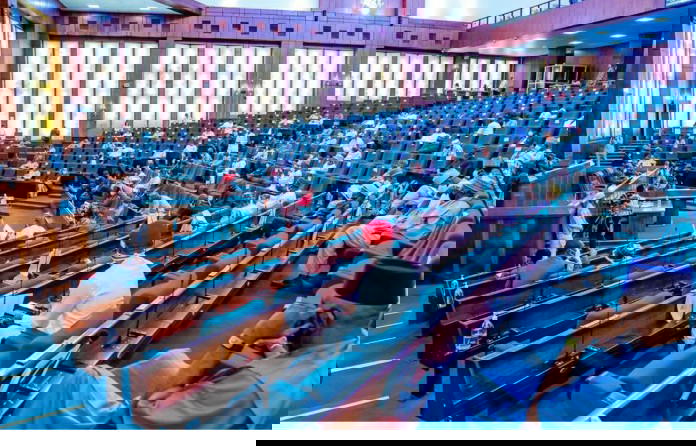
nThe House of Representatives on Wednesday stepped down a bill seeking to prohibit the production, importation, distribution, sale and consumption of unbranded and unfortified edible oils after lawmakers expressed divergent views over its implications.
nThe proposed legislation, sponsored by Rep. Chike Okafor, representing Ehime/Mbano/Ihitte Uboma/Obowo Federal Constituency of Imo State, was listed for second reading but was deferred following concerns raised by members, including complaints that copies of the bill had not been circulated to all lawmakers.
nLeading the debate, Okafor said the bill was aimed at addressing the public health risks associated with the widespread consumption of unbranded and unfortified cooking oils in Nigeria.
nHe said about 67 per cent of Nigerians consume unbranded edible oils, while only 31 per cent of edible oils available in the country are fortified.
nCiting the World Health Organisation (WHO), Okafor said food fortification remained “a proven, cost-effective strategy to address micronutrient deficiencies and improve public health.”
nHe explained that the bill seeks to prohibit the production, importation, distribution and sale of unbranded and unfortified edible oils, while encouraging collaboration among research institutions, universities and state ministries to improve seedlings and establish cooking oil processing mills through public-private partnerships.
nThe lawmaker added that the proposed legislation also prescribes penalties, including prison terms for offenders, while providing a transition period for producers and marketers to comply with the new requirements.
n“This is a matter of life and death. It is a call to protect the health of Nigerians,” he said.
nHowever, some lawmakers opposed the bill, arguing that it could adversely affect thousands of small-scale palm oil producers and duplicate the responsibilities of existing regulatory agencies.
nRep. Paschal Agbodike, representing Ihiala Federal Constituency of Anambra State, warned that the legislation could undermine the livelihoods of rural communities that depend on local palm oil production.
n“This bill is not okay. Many of my people are into the local production of palm oil. We must be careful about the laws we make because the livelihoods of people in rural areas are very important,” he said.
nAlso opposing the bill, Rep. Gaza Gbefwi, representing Karu/Keffi/Kokona Federal Constituency of Nasarawa State, argued that the National Agency for Food and Drug Administration and Control (NAFDAC) already has the statutory responsibility to regulate edible oils and other food products.
n“I do not think we need to over-legislate. Instead, we should strengthen existing laws and oversight. We already have NAFDAC and the Standards Organisation of Nigeria. If there are gaps in their enabling Acts, we can amend them,” he said.
nRep. Wale Raji, representing Epe Federal Constituency of Lagos State, shared a similar view, saying NAFDAC’s existing mandate already covers the objectives of the proposed bill.
nBacking the legislation, however, Rep. Sada Soli, representing Jibia/Kaita Federal Constituency of Katsina State, argued that the bill would complement rather than duplicate existing regulatory efforts.
n“The bill is mindful of NAFDAC. This legislation is trying to improve the existing framework and is not harmful. It is not against local palm oil production,” he said.
nDuring the debate, Rep. Billy Osawaru, representing Orhionmwon/Uhunmwonde Federal Constituency of Edo State, noted that many lawmakers had not received copies of the bill, making it difficult to make informed contributions.
nIn response, Okafor appealed to the Deputy Speaker, Benjamin Kalu, who presided over the plenary, to step down the bill to allow wider circulation of copies and further consultations with stakeholders.
nKalu granted the request and deferred further consideration of the bill to a later legislative date.
nThe proposed legislation comes amid renewed concerns over food safety and nutrition in Nigeria. Although mandatory food fortification programmes already exist under the supervision of NAFDAC and the Standards Organisation of Nigeria (SON), the continued circulation of unbranded and informally processed edible oils has prompted calls for stronger enforcement of existing regulations.
n nRelated Stories
 General News
CELEBRATING TWO YEARS OF TRANSFORMATIONAL LEADERSHIP IN THE PRESIDENTIAL AMNESTY PROGRAMME
Tomorrow, 14TH March 2026, as we look forward to the second anniversary, we reflect on the remarkable two years since the Administrator of the Preside
 General News
PRESIDENTIAL AMNESTY PROGRAMME PHASE 3: DISREGARD PURPORTED STATEMENT ON DELAYED ITA PAYMENTS — OFFICE OF NATIONAL CHAIRMAN
The Office of the National Chairman of the Presidential Amnesty Programme Phase 3, General Elaye ThankGod Dollar Slaboh, has called on beneficiaries a
 General News
RE: CLARIFICATION ON MY PERSONAL RELATIONSHIPS
PUBLIC NOTICErnrnRE: CLARIFICATION ON MY PERSONAL RELATIONSHIPSrnrnIt has become necessary to make this public clarification following the increasing