
Lawmakers Call for Easier Payment Terms on Coronavirus Loans for Citizens
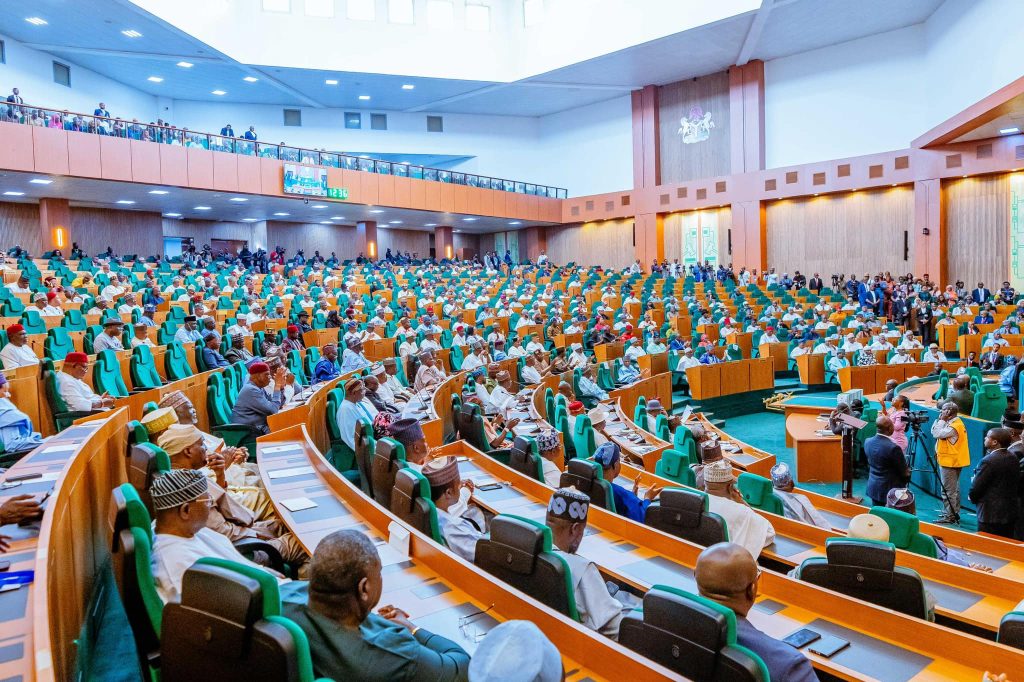
The House of Representatives has instructed the Central Bank of Nigeria, NIRSAL, and SMEDAN to overhaul the repayment system for COVID-19 loans, aiming to make the process more flexible for Nigerian borrowers.
nThis directive also encompasses a reduction in interest rates and an extension of the repayment period, thereby alleviating the burden on small businesses that are struggling to stay afloat.
nThe lawmakers' call to action was prompted by a public outcry from Nigerians who had taken out the loan, only to find their accounts being depleted without warning.
nIn response to the outcry, the lawmakers have urged the Ministry of Finance to suspend all forced recoveries and consider waiving the loans for low-income earners and small business owners who are struggling to make ends meet.
nAccording to Rep. Saidu Abdullahi, who initiated the motion, many individuals are genuinely unable to repay these loans due to the current economic hardship that has been affecting the country.
nFollowing numerous complaints about account depletion, stakeholders have called upon the CBN and NIRSAL Microfinance Bank to provide a detailed record of the COVID-19 loans that have been disbursed to date.
nThese stakeholders made their appeal in an interview with the News Agency of Nigeria on Tuesday in Abuja, highlighting the need for greater transparency in the loan recovery process.
nIn 2020, the federal government established a Targeted Credit Facility to mitigate the economic impact of the COVID-19 pandemic on Nigerians and small businesses, with the aim of providing financial support during a difficult period.
nHowever, stakeholders have claimed that the total amount of loans given out, as well as the amount recovered, has been shrouded in secrecy, leading to concerns about accountability and transparency.
nFindings have revealed that the Targeted Credit Facility was created by the CBN and disbursed by NMFB, with a total of N419.42 billion being disbursed to 792,936 beneficiaries, comprising households and small businesses.
nSome beneficiaries of the loans have complained that their bank savings are being eroded without authorization, leading to widespread frustration and concern among those who have borrowed money.
nAccording to economist Bola Adeola, the statistics on COVID-19 loan recovery are still unavailable, and many beneficiaries have defaulted on their loan repayments, highlighting the need for more effective recovery mechanisms.
nAdeola noted that auto-debits for COVID-19 loans only began recently, and accountability remains a significant challenge in the loan recovery process.
nPolicymaker Seidu Yusuf observed that many people have noticed money being deducted from their bank accounts by NFMB, causing confusion and concern among those who are unaware of the loan repayment terms.
nYusuf explained that most of these deductions are related to COVID-19 intervention loans under the Targeted Credit Facility, and many people mistakenly believed that the money was a free grant rather than a loan that must be repaid.
nEmannuel Owen, a banker, stated that many individuals collected COVID-19 and NIRSAL loans without having a clear plan for the funds, and instead spent the money without considering the repayment terms.
nAs a result, their accounts have been debited for years, leaving them feeling angry and frustrated with the loan repayment process.
nAn official of the CBN, speaking on condition of anonymity, revealed that NIRSAL is responsible for the disbursement and recovery of the loans, but it is difficult to determine the exact amount that has been recovered to date.
nAccording to the official, 62 percent of the total N419 billion disbursed under the Targeted Credit Facility is underperforming, with N41 billion repaid and ₦261 billion remaining in default as non-performing loans.
nThe official also noted that N116 billion is still in the system, being paid or restructured, and that the only requirement for loan recovery is the borrower's Bank Verification Number, which allows access to all linked bank accounts.
Related Stories
 General News
CELEBRATING TWO YEARS OF TRANSFORMATIONAL LEADERSHIP IN THE PRESIDENTIAL AMNESTY PROGRAMME
Tomorrow, 14TH March 2026, as we look forward to the second anniversary, we reflect on the remarkable two years since the Administrator of the Preside
 General News
PRESIDENTIAL AMNESTY PROGRAMME PHASE 3: DISREGARD PURPORTED STATEMENT ON DELAYED ITA PAYMENTS — OFFICE OF NATIONAL CHAIRMAN
The Office of the National Chairman of the Presidential Amnesty Programme Phase 3, General Elaye ThankGod Dollar Slaboh, has called on beneficiaries a
 General News
RE: CLARIFICATION ON MY PERSONAL RELATIONSHIPS
PUBLIC NOTICErnrnRE: CLARIFICATION ON MY PERSONAL RELATIONSHIPSrnrnIt has become necessary to make this public clarification following the increasing