
Landmark NIMR repository of 400,000 specimens poised to revolutionize medical studies
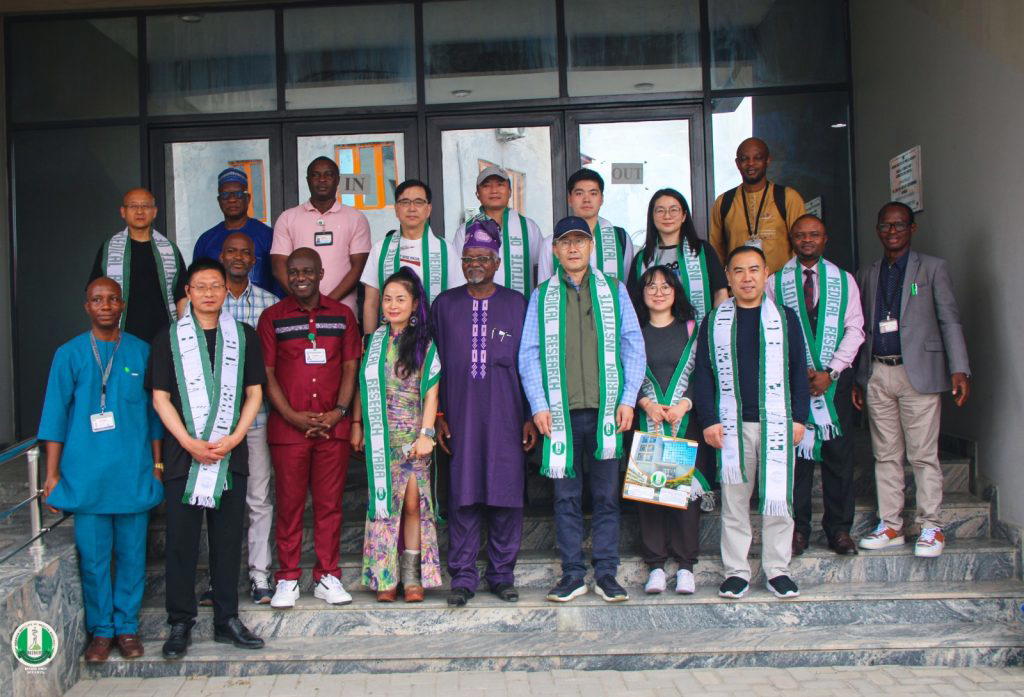
The Nigerian Institute of Medical Research, NIMR, has made a significant breakthrough with the unveiling of its biobank, which contains over 400,000 biological samples, a development that is expected to transform disease research and enhance Nigeria's response to local health challenges.
nThis milestone was disclosed by the Director-General of the institute, Prof. John Oladapo Obafunwa, during a meeting with a Chinese scientific delegation in Lagos, where he highlighted the repository's potential to provide valuable insights into disease patterns in Nigeria.
nAccording to Obafunwa, the biobank, which was built over several years through research activities and collaborations, offers a rich pool of locally generated data that can deepen the understanding of disease patterns and improve treatment outcomes if properly harnessed.
nObafunwa noted that NIMR is shifting its focus from routine research to data-driven studies that can inform public health policies and drive innovation, a move that is expected to have a significant impact on the country's health sector.
nThe Director-General described the biobank facility as functional but emphasized the need to strengthen technical capacity, data management systems, and analytical tools to maximize its full potential, an area where strategic collaboration would be highly beneficial.
nObafunwa also recalled NIMR's key role during the COVID-19 pandemic, particularly in testing and supporting the national response through collaboration with health professionals and research institutions, a testament to the institute's capabilities.
nThe NIMR boss further highlighted the institute's ongoing work in diagnostic kit development and clinical trials, backed by an active Institutional Review Board, IRB, which ensures strict adherence to ethical standards.
nDespite the progress made, Obafunwa identified key challenges facing the institute, including inadequate infrastructure, the absence of a fully centralized research complex, and delays in funding for critical laboratory expansion.
nHe also stressed the need to build local capacity in advanced research areas such as human genome sequencing, noting that dependence on foreign facilities continues to limit Nigeria's scientific growth and development.
nObafunwa emphasized the need for partnerships that will support technology transfer, build local expertise, and enable the generation of solutions that are relevant to the Nigerian population, a crucial step towards advancing the country's scientific capabilities.
nThe visit by the Chinese delegation ended with both NIMR scientists and the delegation exploring opportunities for joint research, innovation, and long-term collaboration aimed at strengthening Nigeria's research capacity and global competitiveness.
Related Stories
 General News
CELEBRATING TWO YEARS OF TRANSFORMATIONAL LEADERSHIP IN THE PRESIDENTIAL AMNESTY PROGRAMME
Tomorrow, 14TH March 2026, as we look forward to the second anniversary, we reflect on the remarkable two years since the Administrator of the Preside
 General News
PRESIDENTIAL AMNESTY PROGRAMME PHASE 3: DISREGARD PURPORTED STATEMENT ON DELAYED ITA PAYMENTS — OFFICE OF NATIONAL CHAIRMAN
The Office of the National Chairman of the Presidential Amnesty Programme Phase 3, General Elaye ThankGod Dollar Slaboh, has called on beneficiaries a
 General News
RE: CLARIFICATION ON MY PERSONAL RELATIONSHIPS
PUBLIC NOTICErnrnRE: CLARIFICATION ON MY PERSONAL RELATIONSHIPSrnrnIt has become necessary to make this public clarification following the increasing