
Lagos youths trained to spot fake news, manipulated content
By Dickson Omobola
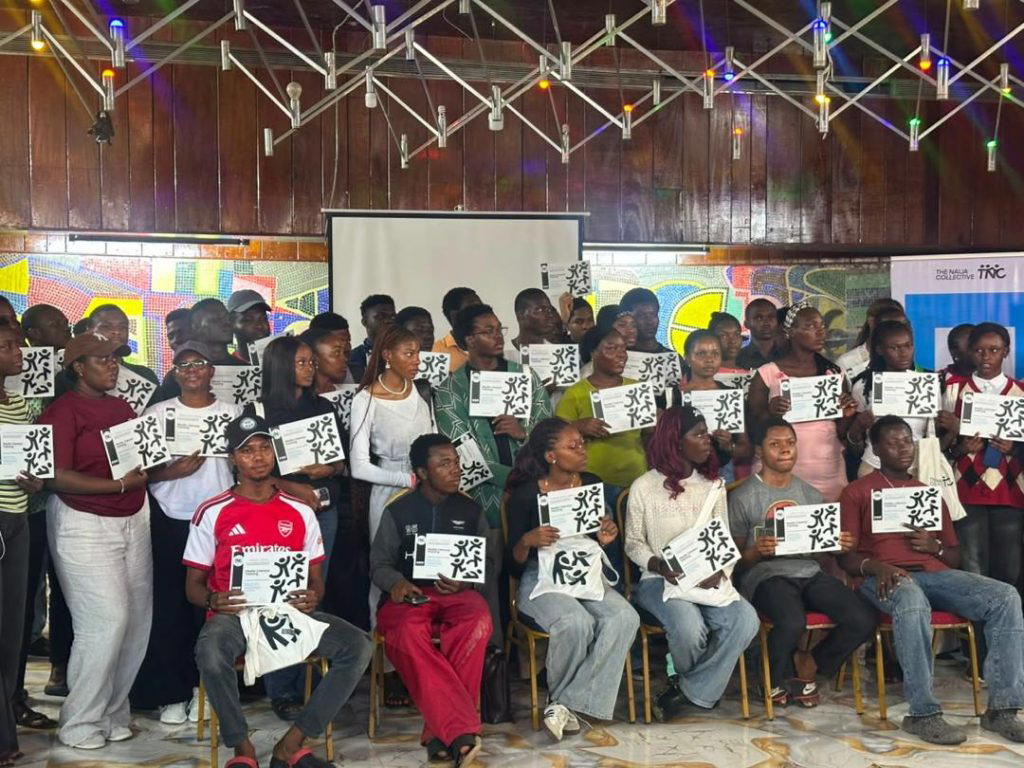
nNo fewer than 50 youths in Lagos State have been trained to identify fake news, impostor content, misleading headlines, manipulated or altered media, fabricated information and content presented out of context.
nThe training comes against the backdrop of growing concerns over the spread of misleading information online. Around 75 per cent of internet users in Nigeria frequently encounter fake news on digital platforms, severely affecting public trust in online media.
nStudies such as the Abuja Public Trust Study indicate that three out of four respondents regularly encounter misleading information.
nTherefore, the Naija Collective organised a three-day media literacy workshop aimed at equipping young people with the skills to critically assess information and identify misinformation, disinformation and fake news.
nThe workshop featured sessions on the media landscape, critical reading, information verification and the responsible consumption of media content.
nThe final session focused on fact-checking and was facilitated by media communications strategist and trainer, Abdulkerimu Oare, who took participants through practical steps and tools for verifying information.
nOare introduced the CRAAP framework — Currency, Relevance, Authority, Accuracy and Purpose — as a tool for evaluating the credibility of information.
nHe explained that fact-checkers should consider how recent information is, whether it is relevant to the issue being discussed, the authority or credibility of its source, the accuracy of the claims and the purpose behind the content.
nParticipants subsequently engaged in a practical exercise designed to test their understanding of the lessons. They were divided into five groups and tasked with debriefing and analysing a news item, examining its claims and identifying possible red flags.
nOare said: “Over the past two days, we’ve covered issues around the media landscape, teaching young people how to read critically and investigate the content that’s in front of them. However, today, day three, was all about fact-checking.
n“We tried to also explore all the typical shortcomings that they can identify from information that’s presented to be legitimate when it’s not.
n“The participants showed great interest and they also displayed that the knowledge gained wasn’t lost, as they all actively participated in the exercises and scenarios before them,” he said.
nOne of the coordinators, Nosike Nwigene, said the organisers hoped the workshop would be the first of several editions.
nNwigene said the programme was particularly timely ahead of the coming elections, when young people could be exposed to large volumes of misleading or deceptive information.
n“We’re hoping that this is the first of many. We also have election experience and obviously disinformation is a big part of how people digest and perceive information,” Nwigene said.
nAccording to Nwigene, the decision to organise the workshop was partly informed by the need to help young people build resilience against misleading information that could circulate during election periods.
n“We felt this was important because elections are coming and a lot of people are going to be susceptible to all sorts of content, and it’s good to help them build resilience in it, basically,” Nwigene said.
nOne of the participants, Omotolani Olufumbi, described the workshop as impactful, saying she had gained practical knowledge on how to identify and verify questionable information.
n“Now I know how to spot fake news and I also know how to detect whether news is actually true or false,” Olufumbi said.
n nRelated Stories
 General News
CELEBRATING TWO YEARS OF TRANSFORMATIONAL LEADERSHIP IN THE PRESIDENTIAL AMNESTY PROGRAMME
Tomorrow, 14TH March 2026, as we look forward to the second anniversary, we reflect on the remarkable two years since the Administrator of the Preside
 General News
PRESIDENTIAL AMNESTY PROGRAMME PHASE 3: DISREGARD PURPORTED STATEMENT ON DELAYED ITA PAYMENTS — OFFICE OF NATIONAL CHAIRMAN
The Office of the National Chairman of the Presidential Amnesty Programme Phase 3, General Elaye ThankGod Dollar Slaboh, has called on beneficiaries a
 General News
RE: CLARIFICATION ON MY PERSONAL RELATIONSHIPS
PUBLIC NOTICErnrnRE: CLARIFICATION ON MY PERSONAL RELATIONSHIPSrnrnIt has become necessary to make this public clarification following the increasing