
Lagos Transport Authority Denies Allegations of Bribery in Blue Line Project Payments
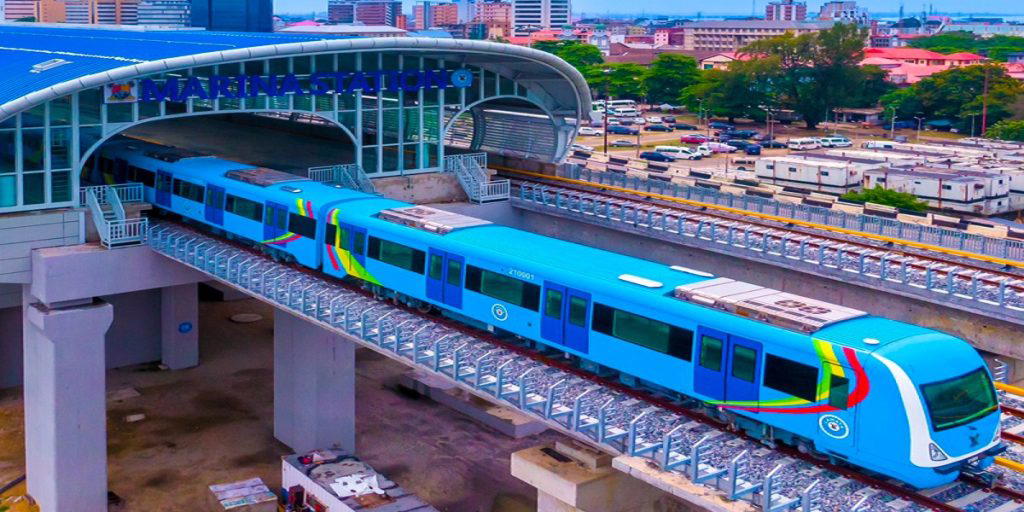
LAMATA has dismissed claims that compensation payments to tenants and property owners affected by the Blue Line rail project in Ojo are tied to inducements or improper incentives, stating that all payments adhere to Lagos State Government-approved policies that prioritize fairness and assistance for relocated residents.
nThese policies are part of Lagos State's broader vision for a modern, integrated public transport network, which includes the Blue Line project that aims to connect with the proposed Purple Line and existing transport systems to reduce congestion and improve commute times.
nThe Blue Line project spans from Marina in Lagos Island to Okokomaiko in Ojo, with plans for extension to Agbara, and is designed to provide residents with safer and more efficient travel options while facilitating access to commercial and industrial hubs.
nAccording to LAMATA, the rail network will boost economic activity in areas such as Ojo, Agbara, and Lagos Island, and the authority has assured the public of its commitment to transparency and due process throughout the project.
nLAMATA stressed that no resident or tenant will be coerced into accepting unfair terms or making decisions about their property without proper consideration, with the authority committed to fairness, transparency, and the legal protection of residents affected by the project.
nThe statement from LAMATA explicitly rejected any suggestion of inducement, emphasizing that all compensation payments are guided by Lagos State Government-approved policies that ensure fairness and support relocation.
nUpon completion, the Blue Line will integrate with the proposed Purple Line at the Volkswagen axis, creating a seamless network for commuters and enhancing connectivity across the city, with the project expected to move thousands of commuters daily.
nThis integration is anticipated to improve the quality of life and access to economic opportunities in Lagos, with LAMATA highlighting that Lagos State is the only subnational government in Nigeria that compensates tenants in such situations.
nThe authority pointed to previous projects, such as the Red Line and earlier phases of the Blue Line, as evidence of established processes for compensating displaced residents, with valuation of developments on lands to be acquired based on 'Replacement Cost' in line with international standards.
nThis approach ensures that compensation reflects the true value of the affected property, allowing tenants and property owners to rebuild or relocate without undue financial loss, and addressing concerns that compensation might be inadequate or unfair.
nAllegations of inducement surfaced following reports by critics claiming that compensation offered to tenants and property owners might be a form of bribe or incentive to facilitate the project, which LAMATA strongly rejected, asserting that the authority operates transparently and in accordance with the law.
nLAMATA stated that as a public institution guided by due process and international best practices, it operates strictly within the law, with all acquisitions and payments made for the overriding public interest and not as inducements to encourage compliance.
nThe statement reaffirmed that the land targeted for the Blue Line project has been lawfully acquired, ensuring that the rail infrastructure can proceed without legal disputes that may delay its completion, and that all affected tenants and property owners are entitled to compensation calculated under internationally recognized standards.
nLagos State, with a population exceeding 20 million, faces chronic traffic congestion, with daily commutes often taking several hours, making rail projects like the Blue Line part of the state's strategic plan to provide mass transit options and reduce reliance on road transport.
nRail expansion projects are expected to stimulate local economies along their corridors by creating jobs, attracting businesses, and increasing property values, making fair and transparent compensation for affected residents essential to maintain public trust and ensure smooth project execution.
nCharles Aniagwu, the Commissioner for Works (Rural Roads) and Public Information, has urged property owners and tenants to engage with LAMATA officials during the compensation and relocation process, stressing that all procedures are legal and aimed at protecting citizens' interests.
nAs the Blue Line project progresses, the focus remains on ensuring that all stakeholders, including tenants, property owners, and commuters, are treated equitably while supporting the state's vision for an integrated and modern urban transport system.
Related Stories
 General News
CELEBRATING TWO YEARS OF TRANSFORMATIONAL LEADERSHIP IN THE PRESIDENTIAL AMNESTY PROGRAMME
Tomorrow, 14TH March 2026, as we look forward to the second anniversary, we reflect on the remarkable two years since the Administrator of the Preside
 General News
PRESIDENTIAL AMNESTY PROGRAMME PHASE 3: DISREGARD PURPORTED STATEMENT ON DELAYED ITA PAYMENTS — OFFICE OF NATIONAL CHAIRMAN
The Office of the National Chairman of the Presidential Amnesty Programme Phase 3, General Elaye ThankGod Dollar Slaboh, has called on beneficiaries a
 General News
RE: CLARIFICATION ON MY PERSONAL RELATIONSHIPS
PUBLIC NOTICErnrnRE: CLARIFICATION ON MY PERSONAL RELATIONSHIPSrnrnIt has become necessary to make this public clarification following the increasing