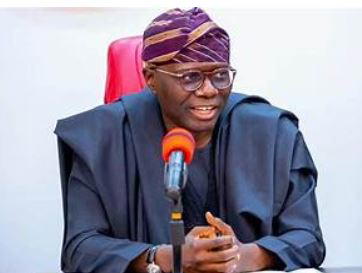
Lagos State Governor, Babajide Sanwo-Olu, has officially launched the reintroduction of the monthly environmental sanitation exercise, which is set to commence in April.
The exercise will take place on the last Saturday of every month, from 6:30 a.m. to 8:30 a.m., as reported by the News Agency of Nigeria (NAN).
Sanwo-Olu emphasized that the initiative is not a political contest, but rather a public health and civic responsibility exercise aimed at creating a cleaner and healthier Lagos.
The governor noted that the reintroduced sanitation exercise is designed to reach all parts of the state and promote environmental consciousness among residents, adding that government alone cannot achieve a clean city without active public participation.
Sanwo-Olu stated that the cleanliness of streets, markets, drainage channels, and public spaces reflects the daily habits of residents, and that sustainable environmental management must be driven by shared responsibility and not enforcement alone.
The governor pointed out that a clean city is not achieved by government alone, but is built every day by the actions of citizens in their homes, markets, communities, and on their streets.
NAN reports that the monthly environmental sanitation in Lagos was officially suspended in November 2016, following a March 2015 Federal High Court ruling that deemed the restriction of human movement from 7 a.m. to 10 a.m. as unconstitutional and a violation of citizens' rights to freedom of movement.
Former Governor Akinwunmi Ambode had formally announced the cancellation of the monthly, mandatory cleanup exercise in November 2016, citing impracticality for a megacity like Lagos.
Sanwo-Olu recalled that the monthly environmental sanitation was once a national civic culture, where residents voluntarily cleaned their surroundings as part of a broader commitment to public health, and expressed his desire to revive this culture through awareness, partnership, and voluntary participation.
The governor assured residents that the state government would continue to strengthen waste management systems, improve training and infrastructure, and support environmental enforcement agencies in sustaining a cleaner Lagos.
Sanwo-Olu decried the indiscriminate disposal of refuse, such as water sachets, plastic bottles, and wrappers, into drainage channels, warning that this habit worsens flooding and undermines the state's road infrastructure.
The governor noted that clogged drainage systems often cause roads to fail repeatedly, even after repairs by contractors, because residents continue to dump waste into gutters and canals meant to discharge stormwater.
Sanwo-Olu urged community development associations, market leaders, youths, religious organizations, political groups, and other institutions to take ownership of environmental cleanliness in their communities, emphasizing that clean Lagos begins with daily individual choices.
The governor emphasized that while political offices and leadership positions are temporary, the health and wellbeing of communities are enduring priorities that should unite all residents behind the sanitation initiative.
Earlier, Commissioner for the Environment and Water Resources, Tokunbo Wahab, commended Sanwo-Olu for reintroducing the monthly environmental sanitation exercise, describing it as a bold step towards reviving a long-standing culture of cleanliness in Lagos.
Wahab noted that the exercise, which was discontinued in 2016, was once a familiar monthly tradition that encouraged residents to dedicate time to cleaning their immediate environment and promoting healthy living.
The commissioner said the reintroduction of the exercise followed over a year of consultations and deliberations involving the state government and critical stakeholders in the environmental management sector.
Wahab urged residents to support the initiative by setting aside one or two hours monthly to clean their homes, streets, business premises, and neighborhoods in the interest of public health, noting that this small sacrifice would make a significant difference in the quality of the environment.
The commissioner noted that Lagos is transitioning from a linear waste management model to a circular system that treats waste as a resource with economic value, rather than as a burden, and that this new approach will enable the state to convert waste into wealth, energy, compost, fertilizer, and recyclable materials.
Wahab thanked stakeholders, environmental agencies, private sector operators, and community groups for their support, emphasizing that sustained collaboration would be critical to the success of the sanitation initiative across Lagos.
The commissioner reiterated that the monthly environmental sanitation exercise is not merely a government program, but a call for behavioral change and a return to community-driven environmental stewardship, aimed at building a cleaner, healthier, and more resilient Lagos for present and future generations.
Present at the sensitization event were Deputy Governor, Dr. Obafemi Hamzat, Head of Service, Mr. Bode Agoro, and Chief of Staff, Mr. Tayo Ayinde.

Comments
Please login to leave a comment.
No comments yet. Be the first to share your thoughts!