
Kwara State Makes History by Offering Financial Incentives to Pupils, Resulting in Higher Attendance Rates and Improved Academic Achievements
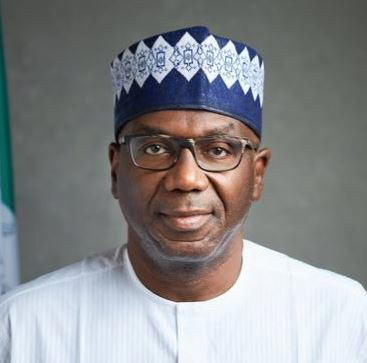
Governor of Kwara State, AbdulRahman AbdulRazaq, has made significant strides in the education sector, embodying the words of Malcolm X, who said, "Education is the passport to the future, for tomorrow belongs to those who prepare for it today."
nIn a recent interview, Commissioner for Education and Human Capital Development in Kwara state, Dr. Lawal Olalekan Olohungbebe, discussed the challenges the education sector faced seven years ago and how the administration addressed them, starting with infrastructure and student performance.
nThe commissioner explained that the Universal Basic Education Commission (UBEC) requires states to pay counterpart funds to access grants, but Kwara had not paid since 2013-2014, resulting in a lack of infrastructure development between 2014 and 2019.
nUpon assuming office in 2019, the governor paid the outstanding counterpart funds, enabling the state to access grants and embark on infrastructure projects, including the construction of 600 schools.
nThe deployment of teachers was also a significant challenge, with a concentration of teachers in urban areas and a lack of teachers in other areas, resulting in disparities in student performance.
nTo address this, the government introduced Kwara LEARN, a program that ensures teachers in all 1603 primary schools have access to the same curriculum and lesson notes, which are delivered through a digital platform, allowing for real-time monitoring and feedback.
nKwara LEARN has had a positive impact on students, with the state winning the President's debate competition in 2022, 2023, and 2024, and representing Nigeria in international competitions, including a recent trip to Malaysia.
nThe commissioner also highlighted the recruitment of teachers, which now involves a rigorous process, including computer-based tests and interviews, to ensure that only qualified and technologically inclined teachers are hired.
nIn the last recruitment exercise, only 1,900 out of 29,000 applicants were successful, and the governor paid for drug tests to ensure that the recruited teachers are not involved in substance abuse.
nThe government has also focused on infrastructure development, with 1,995 classrooms built and 149 schools currently under renovation, and has implemented a program to pay girl students in GSS One and SS One 40,000 Naira per term to encourage enrollment.
nThe commissioner noted that the program has had a significant impact, with an increase in girl student enrollment, although he did not have the exact data available.
nThe government's reforms in the education sector have left a lasting legacy, particularly in the area of teacher recruitment, which the commissioner believes is the key to improving education in the state.
nInsecurity has, however, had a significant impact on education in the state, with schools closed in 10 local government areas for several weeks, although the government has taken steps to address the issue and ensure that students are able to register for exams like WAEC.
nIn the area of tertiary education, the government has achieved significant milestones, including the rehabilitation and upgrade of facilities across state-owned institutions, such as the Kwara State University and the Kwara State Polytechnic.
nThe government has also expanded scholarship and bursary programs, introduced new academic programs, and supported research and development initiatives, resulting in improved learning environments, higher student enrollment, and increased program accreditation.
nDespite these achievements, challenges such as funding constraints and aging infrastructure persist, but the government is addressing them through strategic budgeting, private sector engagement, and efficient resource utilization.
Related Stories
 General News
CELEBRATING TWO YEARS OF TRANSFORMATIONAL LEADERSHIP IN THE PRESIDENTIAL AMNESTY PROGRAMME
Tomorrow, 14TH March 2026, as we look forward to the second anniversary, we reflect on the remarkable two years since the Administrator of the Preside
 General News
PRESIDENTIAL AMNESTY PROGRAMME PHASE 3: DISREGARD PURPORTED STATEMENT ON DELAYED ITA PAYMENTS — OFFICE OF NATIONAL CHAIRMAN
The Office of the National Chairman of the Presidential Amnesty Programme Phase 3, General Elaye ThankGod Dollar Slaboh, has called on beneficiaries a
 General News
RE: CLARIFICATION ON MY PERSONAL RELATIONSHIPS
PUBLIC NOTICErnrnRE: CLARIFICATION ON MY PERSONAL RELATIONSHIPSrnrnIt has become necessary to make this public clarification following the increasing