
Key figures to back Tinubu, Atiku, Obi, and Makinde in 2027
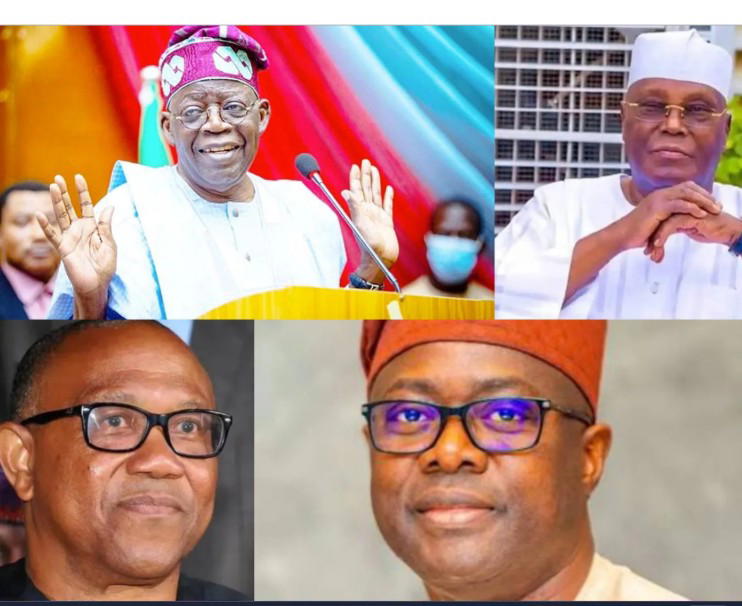
With the Nigerian polls just eight months away, the focus is shifting from the candidates to the powerful forces backing them, as governors, former ministers, and political financiers maneuver for position in Abuja.
nConversations among the elite have moved beyond merely identifying the contenders to examining who has the machinery to win, in a struggle that increasingly pits structure against emotion, incumbency against coalition politics, and elite power against grassroots anger.
nPresident Bola Ahmed Tinubu is surrounded by the most formidable political structure in the country, while the opposition is driven by public frustration over economic hardship but hindered by competing ambitions and uncertain alliances.
nTinubu's extensive political structure spans 31 governors, federal appointees, lawmakers, party loyalists, business interests, and entrenched Southwest networks built over decades, with minimal opposition to his re-election bid within the APC.
nAs the incumbent, Tinubu benefits from the advantages of federal power, with ministers, special advisers, and senior office holders invested in the administration's survival, as well as his longstanding relationship with the business elite, which strengthens his position financially and strategically.
nPerceptions of institutional sympathy toward incumbents are common in Nigerian opposition politics, although there is no public evidence that institutions like INEC, the judiciary, or security agencies are acting improperly.
nTinubu also benefits from zoning sentiment, with many Southern political actors believing power should remain in the South beyond one term, which may weaken the chances of Northern aspirants seeking to unseat him.
nFor the APC, the calculation is simple: if the opposition remains divided, Tinubu may not need overwhelming public enthusiasm to secure victory, and may only need the opposition to remain divided long enough.
nFormer Vice President Atiku Abubakar is perhaps the opposition figure most connected to Nigeria's traditional political establishment, with relationships across Northern networks, old PDP structures, business circles, and elite negotiating blocs.
nAtiku's supporters argue that he possesses the widest elite contact base across regions, but the forces behind him also expose his greatest vulnerability, as his establishment connections weaken his appeal among younger voters searching for generational change.
nWithin sections of the South, resistance to another Northern presidency complicates Atiku's pathway, and some politicians sympathetic to him acknowledge that the strongest anti-Tinubu coalition may require a Southern candidate to neutralize zoning politics.
nPeter Obi represents emotional political energy, with a support base that remains emotionally intense, digitally active, and deeply distrustful of traditional political structures, driven by economic hardship and Southern presidency sentiment.
nObi's greatest challenge is converting emotional popularity into electoral machinery, as he lacks a deep network of governors, entrenched party structures, and state-level patronage systems capable of sustaining nationwide electoral operations.
nRabiu Musa Kwankwaso controls an organized political movement with real grassroots mobilization strength, making him strategically important in the opposition landscape, and a key figure in Northern arithmetic.
nKwankwaso's importance lies not merely in votes but in structure, as he commands loyal grassroots mobilization networks capable of influencing turnout, local coordination, and political momentum across strategic Northern states.
nOyo State Governor Seyi Makinde occupies a delicate position within the emerging opposition map, with an appeal rooted in governance perception, technocratic branding, and quiet elite calculations, but lacks the extensive governor network surrounding Tinubu or the emotional movement powering Obi.
nMakinde's challenge is not visibility alone but scale, and his candidacy raises a difficult strategic question for the opposition: whether multiple Southern contenders ultimately strengthen Tinubu by dispersing anti-APC votes across overlapping constituencies.
nFormer Rivers governor Rotimi Amaechi remains one of the opposition's most experienced political actors, with remnants of old APC relationships, technocratic governance advocates, and sections of the South-South political class seeking an alternative Southern power bloc outside Tinubu's influence.
nAmaechi's experience, elite relationships, and combative political style ensure he cannot be dismissed entirely, but the political space around him is narrowing, with Obi dominating much of the emotional Southern opposition energy and Tinubu controlling the strongest Southwest political machinery.
nAdewole Adebayo occupies a distinct political lane within the SDP, with an appeal based on ideological consistency and outsider credibility rather than institutional power, but lacks the governors, financiers, entrenched party structures, and nationwide mobilization systems needed to win a presidential election.
nThe collapse of early ADC coalition momentum exposed the old problem of competing ambitions and leadership disagreements, which weakened the project and led to the emergence of the NDC as a potential broad anti-Tinubu platform.
nThe NDC's success in occupying the coalition space may depend on discipline, as Nigerian opposition coalitions often struggle not from lack of shared grievances but from competing calculations about who should ultimately inherit power.
Related Stories
 General News
CELEBRATING TWO YEARS OF TRANSFORMATIONAL LEADERSHIP IN THE PRESIDENTIAL AMNESTY PROGRAMME
Tomorrow, 14TH March 2026, as we look forward to the second anniversary, we reflect on the remarkable two years since the Administrator of the Preside
 General News
PRESIDENTIAL AMNESTY PROGRAMME PHASE 3: DISREGARD PURPORTED STATEMENT ON DELAYED ITA PAYMENTS — OFFICE OF NATIONAL CHAIRMAN
The Office of the National Chairman of the Presidential Amnesty Programme Phase 3, General Elaye ThankGod Dollar Slaboh, has called on beneficiaries a
 General News
RE: CLARIFICATION ON MY PERSONAL RELATIONSHIPS
PUBLIC NOTICErnrnRE: CLARIFICATION ON MY PERSONAL RELATIONSHIPSrnrnIt has become necessary to make this public clarification following the increasing