
KASU: Kaduna Govt urges ASUU to embrace dialogue
By Ibrahim Hassan-Wuyo
nKADUNA — The Kaduna State Government has urged the Academic Staff Union of Universities (ASUU), Kaduna State University (KASU) chapter, to embrace dialogue in resolving its grievances rather than resorting to threats of strike, saying industrial action should remain a measure of last resort.
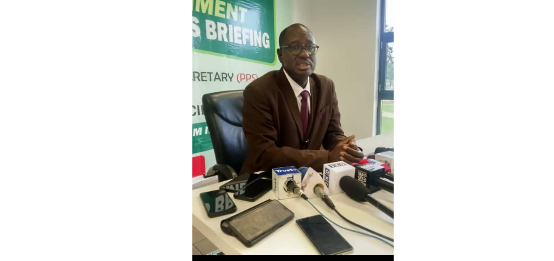
nThe Principal Private Secretary to Governor Uba Sani, Prof. Bello Ayuba, stated this on Wednesday while addressing a press briefing in Kaduna on the two-week ultimatum issued by KASU-ASUU to the university authorities and the state government.
nKASU-ASUU had threatened to embark on a total and indefinite strike if the 2025 Federal Government-ASUU agreement was not implemented.
nAyuba said available records showed that only 59 academic staff had left the university between January 2024 and August 2026, including 17 professors and associate professors.
nAccording to him, the figure comprised two professors, two associate professors, six senior lecturers, 10 lecturers I, 15 lecturers II, 12 assistant lecturers and 12 graduate assistants.
nHe explained that staff movements were normal in the university system, noting that retirements, transfers, resignations, completion of temporary and contract appointments, as well as the emergence of new universities, could account for staff departures.
nHe therefore described the claim that all staff who left the university did so because of poor conditions of service as “pure mischief.”
nThe Principal Private Secretary said the Uba Sani administration had demonstrated commitment to the welfare of KASU staff, disclosing that more than N896 million had been spent on staff welfare.
nHe said the government released over N146.4 million in May 2025 to clear withheld salaries and outstanding SIWES allowances inherited from the previous administration, while a monthly intervention of N50 million was approved for staff and other sundry claims.
nHe added that the administration had also settled over N118 million in unpaid salary liabilities, paid more than N96 million in hazard allowance arrears and cleared other outstanding personnel liabilities.
nOn infrastructure and academic development, Ayuba said the government had provided over N200 million in overhead funding to KASU for laboratory chemicals and reagents, students’ field trips, examinations and other academic activities.
nHe said more than N300 million had also been invested in accreditation and resource verification, resulting in the accreditation of over 57 academic programmes, verification of 60 programmes by the National Universities Commission (NUC) and full accreditation of seven professional programmes.
nAccording to him, the university had also established 14 research centres and two specialised institutes, while attracting local and international research grants, including a N1 billion TETFund grant for commercial agriculture.
nHe said the university had also developed academic partnerships with institutions in Russia, Egypt, the United Kingdom, Indonesia and China.
nAyuba further said the state government had reduced tuition fees by 50 per cent in its tertiary institutions and spent over N1.6 billion on local and foreign scholarships.
nOn the 2025 Federal Government-ASUU agreement, he said the agreement recognised the peculiarities of individual universities and required engagement between ASUU branches and their respective proprietors on issues relating to staff welfare, libraries, research and staff development.
nHe said KASU-ASUU had not engaged the state government on the agreement before issuing its ultimatum.
n“Constructive dialogue remains the most effective path to sustainable resolution of contending issues,” Ayuba said, stressing that the government and KASU management remained committed to resolving legitimate concerns through established channels.
nHe acknowledged that KASU, like every major institution, faced challenges, but maintained that such challenges could be addressed through dialogue and appropriate institutional mechanisms.
nAyuba warned that industrial action could have serious consequences for students and the education system, urging all stakeholders to remain committed to protecting the future of students.
n“Industrial action by its nature is disruptive and should therefore remain a measure of last resort,” he said.
nHe, however, maintained that while the government was prepared to engage the union, it would not succumb to threats, stressing that sustainable solutions could only be achieved through mutual understanding and responsible engagement.
n nRelated Stories
 General News
CELEBRATING TWO YEARS OF TRANSFORMATIONAL LEADERSHIP IN THE PRESIDENTIAL AMNESTY PROGRAMME
Tomorrow, 14TH March 2026, as we look forward to the second anniversary, we reflect on the remarkable two years since the Administrator of the Preside
 General News
PRESIDENTIAL AMNESTY PROGRAMME PHASE 3: DISREGARD PURPORTED STATEMENT ON DELAYED ITA PAYMENTS — OFFICE OF NATIONAL CHAIRMAN
The Office of the National Chairman of the Presidential Amnesty Programme Phase 3, General Elaye ThankGod Dollar Slaboh, has called on beneficiaries a
 General News
RE: CLARIFICATION ON MY PERSONAL RELATIONSHIPS
PUBLIC NOTICErnrnRE: CLARIFICATION ON MY PERSONAL RELATIONSHIPSrnrnIt has become necessary to make this public clarification following the increasing