
Kano Introduces Female-Exclusive Three-Wheelers, Dubbed Pink Kekes, Promoting Women's Liberation on the Roads
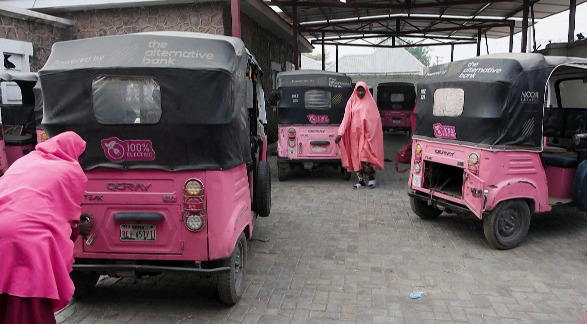
In Kano, a city where tradition and modernity coexist, a unique initiative has emerged, providing women with a safe and dignified mode of transportation, courtesy of hot-pink tricycles driven by female riders, thereby eliminating the risk of cramped contact with male riders and the accompanying dignity trade-off.
nSarah Abner, a passenger, has expressed her preference for these women-only tricycles, citing the respect they afford her comfort and privacy, which determines her decision to ride at all, and this permission to ride safely is a crucial aspect of her daily life.
nThe initiative, which began in March, has seen 120 electric tricycles, all hot pink for enhanced visibility, being allocated to riders from the Mata Zalla and Yar Baiwa cooperatives, with each woman receiving comprehensive instruction in driving, servicing, and maintenance to prevent financial ruin in the event of a puncture.
nA battery-swapping terminal within the metropolis enables a drained pack to be exchanged in minutes, not hours, thereby preserving the women's daily income, and with fuel subsidies gone, electric vehicles have become a viable option, turning volatile petrol spending into predictable earnings.
nThe Mata Zalla initiative is a testament to the power of partnership, brought together by The Alternative Bank, the UK government's Foreign, Commonwealth & Development Office, and electric mobility company Qoray, which has created a thriving ecosystem in Kano, one of Nigeria's most tradition-bound cities.
nThe Mata Zalla Cooperative Society, with over 2,500 members, has been operating in Kano for years, cutting across all 44 local government areas, and its membership includes teachers, traders, farmers, women with formal education, and those without, all united by the cooperative's founding premise that women's empowerment is a way of life.
nHauwa Ahmad Tarauni, co-founder of Mata Zalla, has described the women at the heart of the initiative, stating that most of them are divorced or widowed, with children to care for, and face numerous difficulties due to the lack of a trade or steady means of support, but are capable of doing the work, given the opportunity.
nThe cooperative had the community and trust, but needed a partner to provide tangible support, which The Alternative Bank provided, stepping in to back the community with something that could not be undone, and this partnership has been instrumental in the initiative's success.
nThe pink color of the tricycles is not just a design choice, but a practical consideration, as it provides safety and visibility, and female commuters in Kano have long had to navigate public transport that is, at best, indifferent to their comfort, but the women-only service has changed this calculus entirely.
nSarah Abner has stated that she prefers to ride with a female driver, as it allows her to maintain her dignity, and this sentiment is echoed by Regional Coordinator of Kaduna and Kano State for the UK's FCDO, Adamu Maikano, who notes that the project addresses challenges women face with traditional tricycles, including instances of violence.
nFor the drivers, the pink tricycles represent something different, as they are no longer invisible in the transport sector, and are out there, doing a job that was not supposed to be theirs, and doing it well, and this sense of ownership and pride is a crucial aspect of the initiative's success.
nThe Alternative Bank's involvement in the Mata Zalla initiative is not just a case of corporate social responsibility, but a deliberate effort to create genuine economic infrastructure, rather than one-off handouts, and this approach has been instrumental in the initiative's success.
nAccording to Garba Mohammed, Executive Director at The Alternative Bank, the durability of the initiative is the real metric, and the bank has provided the women with the infrastructure to match their drive, ensuring that the project will outlast the partnership that created it.
nThe Mata Zalla Cooperative Society is already expanding, with the template being replicated in other states, and the approach is straightforward, starting with a community that already exists, finding a financial partner willing to build infrastructure, bringing in technical expertise, training people properly, and then getting out of the way.
nThe bank has embodied this year's International Women's Day Theme, #GiveToGain, and in doing so, has created something rare, a programme that works, with women who are not waiting to be told what to do next, but are simply working, building something that belongs to them and those they care for.
Related Stories
 General News
CELEBRATING TWO YEARS OF TRANSFORMATIONAL LEADERSHIP IN THE PRESIDENTIAL AMNESTY PROGRAMME
Tomorrow, 14TH March 2026, as we look forward to the second anniversary, we reflect on the remarkable two years since the Administrator of the Preside
 General News
PRESIDENTIAL AMNESTY PROGRAMME PHASE 3: DISREGARD PURPORTED STATEMENT ON DELAYED ITA PAYMENTS — OFFICE OF NATIONAL CHAIRMAN
The Office of the National Chairman of the Presidential Amnesty Programme Phase 3, General Elaye ThankGod Dollar Slaboh, has called on beneficiaries a
 General News
RE: CLARIFICATION ON MY PERSONAL RELATIONSHIPS
PUBLIC NOTICErnrnRE: CLARIFICATION ON MY PERSONAL RELATIONSHIPSrnrnIt has become necessary to make this public clarification following the increasing