
June 30 protests: Illegal immigration concerns valid; violence won’t be tolerated — S/Africa president
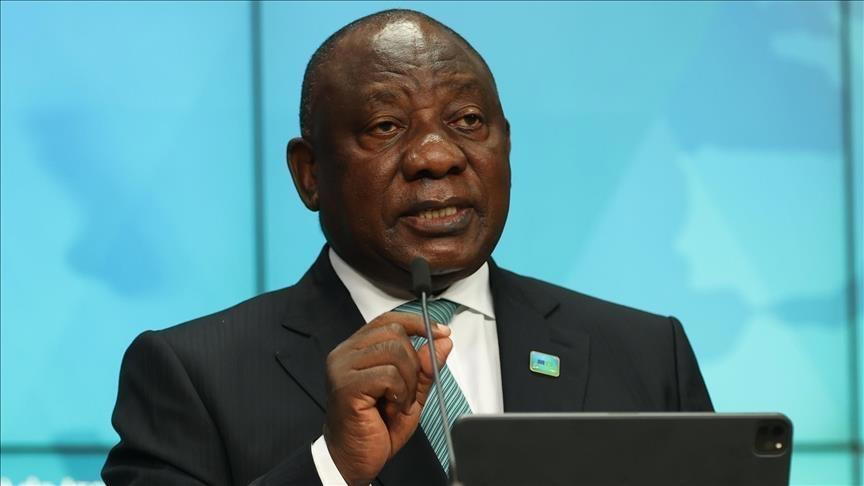
South Africa President, Cyril Ramaphosa
nBy Ayobami Okerinde
nSouth African President Cyril Ramaphosa has acknowledged that citizens’ concerns over illegal immigration are legitimate but warned that violence, intimidation and vigilantism will not be tolerated during planned nationwide protests on June 30.
nIn his weekly newsletter released on Monday, Ramaphosa urged protesters to exercise their constitutional right peacefully and within the confines of the law, stressing that no grievance justifies unlawful conduct.
nThe president said South Africans had raised genuine concerns over undocumented immigration, border management, pressure on public services, and criminal syndicates exploiting the country’s immigration system.
nWhile affirming that the right to protest is guaranteed under South Africa’s Constitution, he cautioned that such freedom does not permit threats, intimidation, vandalism or violence.
nIt partly reads, “South Africans have raised deep concerns about illegal immigration, border management, pressure on public services, criminal syndicates that exploit our immigration system and the impact these challenges have on communities. These concerns are real and they deserve to be heard.
n“The right to protest is enshrined in our Constitution. It is a credit to our robust democratic order that people are able to express their grievances openly. But the right to protest and freedom of expression does not allow people to threaten or intimidate others, or to engage in acts of vandalism or violence.
n“South Africa is a constitutional republic governed by the rule of law. The exercise of rights by any citizen in a constitutional democracy cannot be determined by intimidation, threats or ultimatums. It must be determined through democratic institutions, evidence and the rule of law.”
nRamaphosa disclosed that his government had accepted the need for substantial reforms to the country’s immigration system, including strengthening border management, increasing enforcement against undocumented immigration, improving the integrity of asylum and visa systems, and tackling corruption that has weakened immigration controls.
n“We also recognise that where our systems have failed, they must be corrected. Where corruption has enabled illegal immigration, those responsible must be held accountable. Where enforcement has been inadequate, it must improve,” it reads.
n“Over the last few weeks, we have seen support for these measures and for government’s stance from across society. We have held meetings with the country’s traditional monarchs and other traditional and Khoi-San leaders, with trade union and business leaders, with the religious community and with other formations in society.
n“Freedom comes with responsibility. The right to protest is one of the defining freedoms of our democracy, but every right carries corresponding responsibilities. Those who intend to protest should do so peacefully, lawfully and with respect for the rights, dignity and safety of others.”
nThe South African leader warned citizens against taking immigration enforcement into their own hands, describing such actions as vigilantism that have no place in a constitutional democracy.
n“The authority to demand identification and enforce immigration laws belongs to government law-enforcement officers acting within the Constitution—not to private individuals,” he said.
nRamaphosa further noted that many foreign nationals residing in South Africa were lawfully in the country, contributing to the economy through work, education and investment, and remained entitled to the protection of the Constitution.
nHe welcomed assurances from organisers that Tuesday’s protests would remain peaceful but warned that anyone engaging in criminal acts would be held accountable.
n“Where there is criminal conduct, those responsible will be held accountable and the law will take its course,” the president said.
nCalling on South Africans to reject fear and division, Ramaphosa urged citizens to uphold both national security and constitutional values.
n“We must never allow ourselves to return to that painful chapter of our history where people were stopped on the street, had their physical identities scrutinised, and their right to move freely in the country hindered by suspicion and humiliation.
n“Our country’s law-enforcement authorities stand ready in defence of the rule of law. Let us work together to keep communities, businesses and individuals safe, all the while protecting people’s right to protest.
n“Throughout our history we have overcome difficult moments not through fear or division, but by choosing law over lawlessness, dialogue over confrontation and justice over vengeance. Let us once again choose that path. Let us protect both our borders and our Constitution, both our security and our humanity. We are capable of doing both, and we must.”
nSouth Africa has witnessed weeks of anti-immigration protests and sporadic xenophobic attacks, prompting several African countries, including Nigeria, Ghana, Mozambique, Malawi and Zimbabwe, to evacuate or assist in the voluntary repatriation of their citizens over mounting safety concerns.
n nRelated Stories
 General News
CELEBRATING TWO YEARS OF TRANSFORMATIONAL LEADERSHIP IN THE PRESIDENTIAL AMNESTY PROGRAMME
Tomorrow, 14TH March 2026, as we look forward to the second anniversary, we reflect on the remarkable two years since the Administrator of the Preside
 General News
PRESIDENTIAL AMNESTY PROGRAMME PHASE 3: DISREGARD PURPORTED STATEMENT ON DELAYED ITA PAYMENTS — OFFICE OF NATIONAL CHAIRMAN
The Office of the National Chairman of the Presidential Amnesty Programme Phase 3, General Elaye ThankGod Dollar Slaboh, has called on beneficiaries a
 General News
RE: CLARIFICATION ON MY PERSONAL RELATIONSHIPS
PUBLIC NOTICErnrnRE: CLARIFICATION ON MY PERSONAL RELATIONSHIPSrnrnIt has become necessary to make this public clarification following the increasing