
Japan stations advanced missiles close to Chinese border
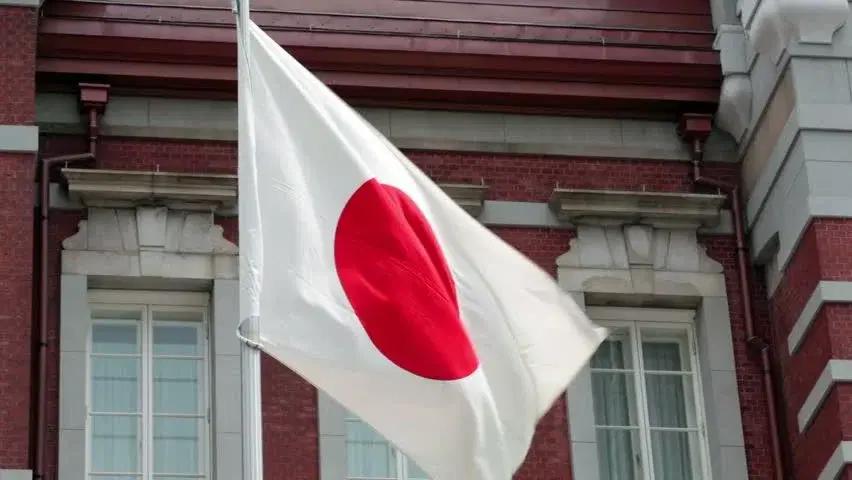
Japan's defence minister announced on Tuesday the deployment of long-range missiles in a southwest region near China, a move made at a time when relations between the two nations are at their lowest point in recent years.
nThis deployment has taken place in Kumamoto, located in the southern region of Kyushu, as Japan seeks to bolster its military capabilities in response to China's increased naval activity in the East China Sea.
nAccording to Defence Minister Shinjiro Koizumi, the "standoff defense capabilities" provided by these missiles will enable Japan to counter the threat of invading forces while ensuring the safety of its personnel.
nKoizumi emphasized that this initiative is crucial for strengthening Japan's deterrence and response capabilities, highlighting its importance for the country's defence strategy.
nThe surface-to-ship guided missile system has a range of approximately 1,000 kilometres, or 620 miles, which puts parts of the Chinese mainland within reach, including Shanghai, located about 900 kilometres from Kumamoto.
nIn addition to the missile deployment in Kumamoto, Koizumi also announced the deployment of a "hyper velocity gliding projectile" in Shizuoka, a coastal area closer to Tokyo that faces the Pacific, designed to defend remote islands from enemy forces.
nJapan has traditionally adhered to a policy of using its military solely for self-defence, but in recent years, it has been steadily expanding its defence capacity in response to increased military activities by regional neighbours, including China, Russia, and North Korea.
nIn 2022, Japan approved a plan to deploy missiles with counter-attack capabilities, marking a significant development in its defence strategy.
nA defence white paper issued last year noted that relying solely on ballistic missile defence would become increasingly difficult in addressing the threat posed by missiles with advanced technologies.
nChina's military expansion and involvement in territorial disputes with other countries in the region, including Japan over the Senkaku Islands, also known as the Diaoyu in China, have contributed to heightened tensions in the area.
nJapan's relations with Beijing have deteriorated in recent months, particularly after Prime Minister Sanae Takaichi suggested in November that Tokyo could intervene militarily in the event of an attack on self-ruled Taiwan, which China claims as its territory.
nCritics argue that Japan's decision to deploy missiles could make the area a potential target for enemy attacks, raising concerns about the move's implications for regional security.
nEarlier this month, local media reported that Japan's ground force delivered a launcher for the missiles to Kumamoto without warning local communities, prompting dozens of opponents to stage a protest in front of a local military base.
Related Stories
 General News
CELEBRATING TWO YEARS OF TRANSFORMATIONAL LEADERSHIP IN THE PRESIDENTIAL AMNESTY PROGRAMME
Tomorrow, 14TH March 2026, as we look forward to the second anniversary, we reflect on the remarkable two years since the Administrator of the Preside
 General News
PRESIDENTIAL AMNESTY PROGRAMME PHASE 3: DISREGARD PURPORTED STATEMENT ON DELAYED ITA PAYMENTS — OFFICE OF NATIONAL CHAIRMAN
The Office of the National Chairman of the Presidential Amnesty Programme Phase 3, General Elaye ThankGod Dollar Slaboh, has called on beneficiaries a
 General News
RE: CLARIFICATION ON MY PERSONAL RELATIONSHIPS
PUBLIC NOTICErnrnRE: CLARIFICATION ON MY PERSONAL RELATIONSHIPSrnrnIt has become necessary to make this public clarification following the increasing