
It’s time to turn reforms into results – Oyedele
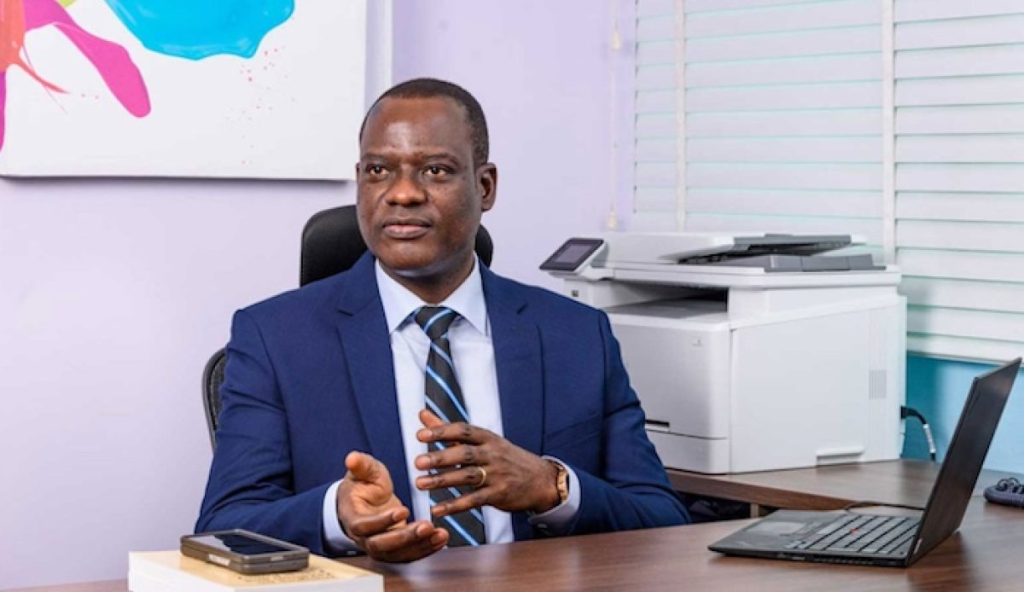
Taiwo Oyedele
nBy Emma Ujah, Abuja Bureau Chief
nMinister of Finance and Coordinating Minister of the Economy, Taiwo Oyedele, has said the time has come for Nigeria to move from reforms to results.
nHe spoke in Abuja on Tuesday while inaugurating the Ministerial Advisory Committee.
nThe committee, headed by Abubakar Suleiman, was charged with the responsibility of interfacing with private sector operators and members of the public to advise the minister on how best the government’s reforms can positively impact Nigerians and businesses.
nMr. Oyedele said, “Translating reform into results is where the rubber meets the road. A fiscal reform that looks flawless on paper but fails to improve conditions for Nigerian businesses is not reform; it is disguised bureaucracy. Your focus must, therefore, remain on practical, real-world impact.”
nAccording to the minister, the committee will provide independent, evidence-based and constructive external counsel.
n“We need you to think through the second- and third-order effects of our policies, identify vulnerabilities and risks before they become crises, bring international best practices into our decision-making, and relay how our reforms are actually impacting factories, shops and communities so we can adjust course dynamically where necessary,” he said.
nOyedele clarified that the committee’s role would be advisory, adding: “Your independent perspective will strengthen our decisions and keep us relentlessly focused on outcomes.”
nHe said the committee’s mandate would rest on four pillars, including economic policy advisory, public financial management, economic coordination and stakeholder engagement.
n“We need data-driven counsel on how to achieve our core development objectives of job creation, robust growth, enhanced productivity and revenue optimisation.
n“The government’s aspiration remains bold — achieving 7 per cent annual real GDP growth and building a $1 trillion economy by 2030.
n“This requires thinking differently, questioning assumptions, challenging long-held theories and developing strategies that stretch us while remaining firmly grounded in economic reality,” he said.
nOn public financial management, the minister said the administration was determined to strengthen fiscal governance across government institutions.
n“We must improve how we generate revenue, the quality and priority of our spending, responsible borrowing and transparent reporting so we can build institutions that earn the enduring confidence of citizens, investors and the international community,” he said.
nOn economic coordination, Oyedele stressed that reforms could not succeed in isolation.
n“They require alignment across government agencies, close coordination with sub-national governments and a genuine partnership with the private sector.
n“The committee’s recommendations will actively inform ministerial decisions and the advice I provide to the President,” he said.
nHe challenged members of the committee to be rigorous and bold, grounding their recommendations in “hard evidence, not intuition, populism or political convenience.”
n“Data should illuminate our choices, not merely justify predetermined outcomes. We do not need this committee to validate decisions already taken.
n“We need you to challenge our assumptions, point out the trade-offs we may be overlooking and tell us the truth we may not want to hear.
n“Translate complexity into clarity. Nigeria’s fiscal challenges are technically complex, but they must not be incomprehensible.
n“Stay connected to reality. Do not let this committee become an ivory tower exercise. Speak with manufacturers, exporters and ordinary Nigerians.
n“Understand where policy is creating friction and where it can open doors. A young entrepreneur deterred by regulation or a factory manager struggling to obtain permits is the real measure of whether our policies are succeeding.
n“The government alone cannot build the Nigeria we desire. Capital, innovation and sustainable growth ultimately come from the private sector.
n“Our role is to clear the path through predictable policies, macroeconomic stability and the rule of law.
n“History will not judge us by the elegance of our reports or the number of meetings we hold. It will judge us by whether Nigeria becomes more prosperous, more competitive and more inclusive because of the ideas we generate together. Those goals are ambitious, but they are entirely achievable if we combine sound policy with disciplined and empathetic execution,” he said.
nEarlier, the Permanent Secretary of the Ministry of Finance, Mr. Raymond Omachi, described the committee as a strategic platform for evidence-based economic policymaking.
nHe said it comprised economists, public finance experts, governance professionals, development practitioners and private sector representatives.
nHe urged members to provide strategic advice on fiscal reforms, government efficiency, stakeholder engagement and economic coordination.
nAccording to him, the committee’s work should support efforts to improve fiscal sustainability, strengthen public confidence and advance Nigeria’s economic transformation agenda.
nThe chairman of the committee promised that his team would use their expertise to meet the minister’s expectations.
n nRelated Stories
 General News
CELEBRATING TWO YEARS OF TRANSFORMATIONAL LEADERSHIP IN THE PRESIDENTIAL AMNESTY PROGRAMME
Tomorrow, 14TH March 2026, as we look forward to the second anniversary, we reflect on the remarkable two years since the Administrator of the Preside
 General News
PRESIDENTIAL AMNESTY PROGRAMME PHASE 3: DISREGARD PURPORTED STATEMENT ON DELAYED ITA PAYMENTS — OFFICE OF NATIONAL CHAIRMAN
The Office of the National Chairman of the Presidential Amnesty Programme Phase 3, General Elaye ThankGod Dollar Slaboh, has called on beneficiaries a
 General News
RE: CLARIFICATION ON MY PERSONAL RELATIONSHIPS
PUBLIC NOTICErnrnRE: CLARIFICATION ON MY PERSONAL RELATIONSHIPSrnrnIt has become necessary to make this public clarification following the increasing