
Israel says will take ‘control’ of security zone in south Lebanon
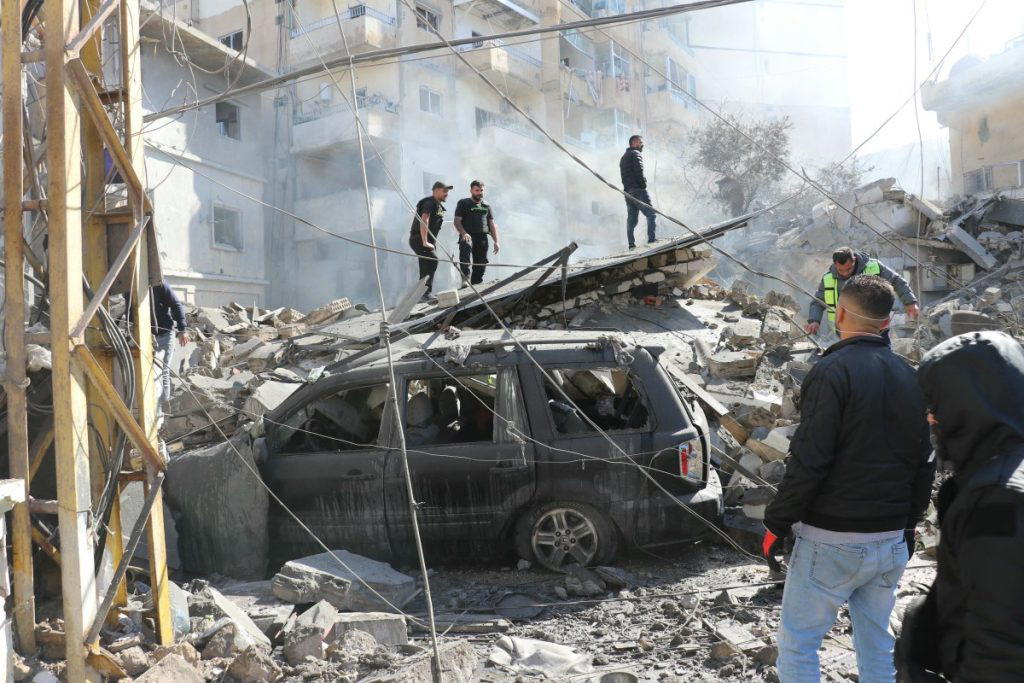
First aid responders arrive to the site of an Israeli airstrike that targeted the southern Lebanese coastal city of Tyre on March 24, 2026. Lebanon was pulled into the Middle East war when Iran-backed Hezbollah began firing rockets into Israel on March 2 to avenge the killing of Iran’s supreme leader. Israel has since launched strikes across Lebanon, killing at least 1,039 people and displacing more than a million others, and sent ground troops into the country’s south. (Photo by Kawnat HAJU / AFP) /
nIsrael said on Tuesday that its military would take control of south Lebanon up to the Litani River, around 30 kilometres (20 miles) from the border, as deadly strikes pounded the country.
nIn the latest unprecedented step by Lebanese authorities since a new war erupted between Israel and Hezbollah, Lebanon’s foreign ministry declared the Iranian ambassador persona non grata, giving him until Sunday to leave the country.
nLebanon was pulled into the Middle East war when the Tehran-backed Hezbollah militant group began firing rockets into Israel on March 2 to avenge the killing of Iran’s supreme leader Ayatollah Ali Khamenei.
nIsrael has since launched strikes across Lebanon, killing at least 1,039 people and displacing more than a million others in more than three weeks of fighting. It has also sent ground troops into the country’s south.
nIsrael kept up strikes across Lebanon on Tuesday, with the state-run National News Agency (NNA) reporting attacks in the country’s south and east, as well as near Beirut, after a night of bombardment on the capital’s southern suburbs.
nOn Tuesday morning in south Beirut, an AFP photographer saw vast destruction near the site of an Israeli strike overnight, with rubble piled up and debris covering the street.
nThe Israeli army said that overnight its forces “struck Hezbollah terrorist infrastructure in Beirut and in additional areas in Lebanon”.
n– ‘Nothing left’ –
nIn Bshamoun, a mixed town in the Aley region southeast of Beirut, outside of Hezbollah’s traditional strongholds, AFP correspondents saw destruction to an apartment building hit by an Israeli strike.
n“There’s nothing left. It’s all burned or destroyed… No walls, the windows are gone, the facade is gone, all my hard work has been lost,” said Abbas Qassem, 55, weeping at the damage to his unoccupied flat near the targeted apartment.
n“What have I done to have my home destroyed? I’m just a normal person,” said Qassem, who works for the state telecoms provider.
nLebanon’s health ministry said three people were killed including a three-year-old girl, and reported five others killed in Israeli strikes in south Lebanon.
nIsraeli Defence Minister Israel Katz said the military “will control… the security zone up to the Litani”, adding that displaced Lebanese residents will not return south of the river “until security is guaranteed for the residents of the north” of Israel.
nThe area south of the Litani has seen vast destruction since hostilities erupted between Israel and Hezbollah in 2023 in the wake of the Gaza war, and despite a November 2024 ceasefire.
nMany border villages were largely empty of residents even before the Israeli army resumed heavy bombardment and incursions into the area since the latest war erupted more than three weeks ago.
n– ‘Violation of diplomatic norms’ –
nIsrael has repeatedly issued sweeping orders for residents to evacuate the area, while Hezbollah has reporting regular attacks on Israeli troops there, including in the strategic border town of Khiam in recent days, and in the village of Qawzah on Tuesday.
nKatz said Israel’s military was “following the model of Rafah and Beit Hanoun”, two cities that were effectively razed during more than two years of war in Gaza, and which remain under Israeli military control.
nLebanon’s foreign ministry said it summoned the Iranian charge d’affaires in Lebanon over “Tehran’s violation of diplomatic norms” and said Beirut had withdrawn approval “of the accreditation of the appointed Iranian ambassador”.
nOn Sunday, Lebanese Prime Minister Nawaf Salam said members of Iran’s Revolutionary Guards were commanding Hezbollah’s operations in the war against Israel, and authorities this month banned the Guards’ activities in the country.
nIsraeli Foreign Minister Gideon Saar welcomed Lebanon’s decision to expel the envoy as a “justified and necessary step” and urged the government to take steps against Hezbollah.
n“We call on the Lebanese government to take practical and meaningful measures against Hezbollah, whose representatives still serve as ministers within it,” Saar said in a post on X.
nIsrael has said it has struck Guards operatives in Lebanon in recent weeks, including on Monday.
nIran’s Guards on Tuesday threatened “heavy” attacks on Israel “if its crimes against civilians in Lebanon and Palestine persist”.
n nRelated Stories
 General News
CELEBRATING TWO YEARS OF TRANSFORMATIONAL LEADERSHIP IN THE PRESIDENTIAL AMNESTY PROGRAMME
Tomorrow, 14TH March 2026, as we look forward to the second anniversary, we reflect on the remarkable two years since the Administrator of the Preside
 General News
PRESIDENTIAL AMNESTY PROGRAMME PHASE 3: DISREGARD PURPORTED STATEMENT ON DELAYED ITA PAYMENTS — OFFICE OF NATIONAL CHAIRMAN
The Office of the National Chairman of the Presidential Amnesty Programme Phase 3, General Elaye ThankGod Dollar Slaboh, has called on beneficiaries a
 General News
RE: CLARIFICATION ON MY PERSONAL RELATIONSHIPS
PUBLIC NOTICErnrnRE: CLARIFICATION ON MY PERSONAL RELATIONSHIPSrnrnIt has become necessary to make this public clarification following the increasing