
Israel faces fresh threat from Hezbollah's high-tech, fibre-optic equipped unmanned aircraft
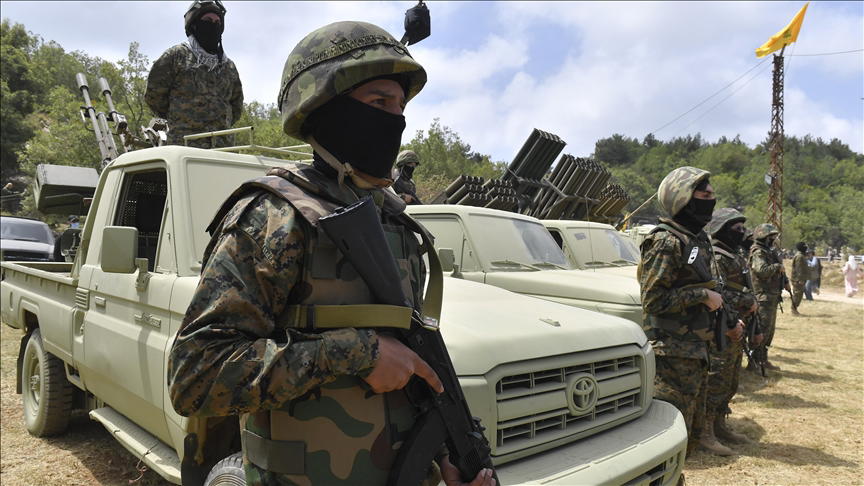
Hezbollah's innovative use of low-cost fibre-optic drones has introduced a new layer of complexity for Israeli forces operating in southern Lebanon, prompting a strategic shift in their approach to counter this escalating threat.
nThe Israeli military, renowned for its advanced capabilities, has suffered significant losses, with two soldiers and one civilian contractor killed in explosive drone attacks within a single week, despite a ceasefire being in place since mid-April, and several others wounded.
nOrna Mizrahi, a senior researcher at Israel's Institute for National Security Studies, likened these devices to "children's toys" due to their small size, affordability, and widespread availability, highlighting the military's current lack of effective countermeasures.
nMizrahi noted that the military is unprepared to respond to such low-tech explosives, which has left them vulnerable to these attacks, as she explained to AFP.
nIsrael has been engaged in conflict with Lebanese Hezbollah since early March, with troops deployed in southern Lebanon to confront the Iran-backed militant group, and violence has persisted, with both sides accusing each other of violating the ceasefire.
nHezbollah's drones are distinct from conventional models, as they are connected to their launch site via a thin fibre-optic cable that can extend for dozens of kilometres, allowing operators to pilot them using first-person view screens or virtual reality goggles with minimal training.
nArie Aviram, an expert who has written on the subject for the INSS, explained that these drones cannot be detected or blocked through electronic means because they do not transmit images via radio broadcast or receive guidance commands via a radio receiver.
nThe speed and precision of these drones enable them to inflict significant damage on Israeli targets, and their lack of electronic signatures forces troops to rely on radar or visual detection, which often proves insufficient.
nHezbollah's use of these drones exemplifies asymmetrical warfare, according to INSS researcher Mizrahi, as the group has increasingly relied on this tactic in recent days, shifting away from the rocket barrages that characterized the early weeks of the conflict.
nThe cost of assembling these fibre-optic drones can range from a few hundred dollars to around $4,000, depending on the quality and type of components, which can be readily purchased on online platforms such as AliExpress, according to experts.
nOn Friday, Youssef al Zein, the media chief of the Lebanese militant group, confirmed that they were using these drones, which are being manufactured in Lebanon, and stated that they are exploiting the enemy's weaknesses despite being aware of their superior capabilities.
nFor Israel, the use of sophisticated air defences and fighter jets to shoot down these cheap drones is unsustainable and costly, highlighting the need for alternative solutions.
nArie Aviram suggested that lasers, such as those used in Israel's Iron Beam air defence system, could be an effective solution if widely deployed, which is not currently the case.
nThe Israeli defence ministry issued a public call on April 11 for proposals to identify additional capabilities to address the threat posed by fibre-optic-controlled FPV drones, underscoring the challenge they pose.
nA video shared on social media by Israeli journalist Amit Segal appeared to show military vehicles draped in netting to protect against drone attacks, although AFP was unable to verify the footage.
nA senior military official stated that the military is currently using force protection technologies and other measures, such as nets and barriers, to counter the drone threat, but acknowledged that there is no foolproof solution and that they are still adapting to this evolving threat.
nThe official noted that the military is drawing lessons from the war in Ukraine, where fibre-optic drones have become commonplace, and is working to improve and adapt their systems to address the threat.
nIsraeli news website Mako reported in 2024 that Ukraine, which has become a leading expert in drone technology since Russia's invasion, had offered its expertise to Israel several years ago but was rebuffed, with Ukraine's former defence minister Oleksii Reznikov stating that there was no concrete response.
nThe Israeli military stated that troops have conducted an in-depth analysis of the drone threat and how Hezbollah employs it, and that they are continuously working to improve and adapt their systems to address the evolving threat.
Related Stories
 General News
CELEBRATING TWO YEARS OF TRANSFORMATIONAL LEADERSHIP IN THE PRESIDENTIAL AMNESTY PROGRAMME
Tomorrow, 14TH March 2026, as we look forward to the second anniversary, we reflect on the remarkable two years since the Administrator of the Preside
 General News
PRESIDENTIAL AMNESTY PROGRAMME PHASE 3: DISREGARD PURPORTED STATEMENT ON DELAYED ITA PAYMENTS — OFFICE OF NATIONAL CHAIRMAN
The Office of the National Chairman of the Presidential Amnesty Programme Phase 3, General Elaye ThankGod Dollar Slaboh, has called on beneficiaries a
 General News
RE: CLARIFICATION ON MY PERSONAL RELATIONSHIPS
PUBLIC NOTICErnrnRE: CLARIFICATION ON MY PERSONAL RELATIONSHIPSrnrnIt has become necessary to make this public clarification following the increasing