
Iran's Revolutionary Forces caution residents following Trump's imposed Strait of Hormuz ultimatum
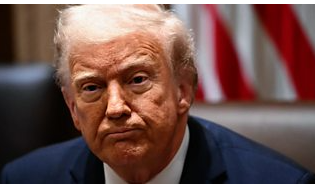
Iran’s Revolutionary Guards urged civilians across the Middle East Friday to stay away from areas near US forces, ramping up its threats despite President Donald Trump’s claim talks to end the month-long war were “going well”.
nThe Guards’ warning came after Trump again extended a deadline for Tehran to open the Strait of Hormuz or face the destruction of its energy assets, pushing it from Friday to April 6.
nTrump said he did so at Tehran’s request, insisting the Islamic republic wanted “to make a deal” to end the war engulfing the region since the United States and Israel first attacked Iran on February 28.
nBut the Iranian side, which has made it clear it wants to end fighting on its own terms, indicated no let up in reprisal attacks against Israel and targets across the Gulf.
nAccusing “cowardly American-Zionist forces” of resorting to “human shields”, the country’s powerful Guards issued a stark warning to civilians.
n“We recommend that you urgently leave locations where American forces are stationed so that no harm comes to you,” they said — hours after Iran’s military threatened to target hotels housing US soldiers across the region.
nThe warning came as Kuwait said its main commercial port was damaged in a drone attack at dawn.
nThe Guards also said the Strait of Hormuz was “closed” to vessels travelling to and from enemy ports, and that they had turned back three ships seeking to cross the transit point.
n“This morning, following the lies of the corrupt US president claiming that the Strait of Hormuz was open, three container ships of different nationalities… were turned back after a warning from the IRGC Navy,” the Guards said on their Sepah News website.
n– ‘Hostage’ –
nOil prices and stocks were mixed Friday after Trump pushed back for a second time his ultimatum for Iran to lift its choke on Hormuz shipping, which has sent energy prices soaring and threatens lasting damage on the global economy.
nIn the latest sign of the fallout, a Japanese official said the government plans to temporarily lift restrictions on coal-fired power plants to face the energy crunch, while Vietnam temporarily waived a fuel tax.
nTrump’s top diplomat Marco Rubio was in France on Friday for talks with his G7 counterparts, with UK foreign minister Yvette Cooper calling for a “swift” conflict resolution and an end to Iran’s block on Hormuz.
n“Iran cannot be able to just hold the global economy hostage,” Cooper said ahead of the meeting.
nTrump’s reprieve over Hormuz capped days of conflicting signals on peace talks with Tehran, but his envoy Steve Witkoff spoke Thursday of “strong signs” it was ready to negotiate.
nNegotiations revolve around a 15-point US “action list”, relayed via Pakistan, to which Tehran has reportedly replied — and is awaiting a response.
nIran’s Tasnim news agency said Tehran was demanding war reparations and respect for its “sovereignty” over the Strait of Hormuz.
nTehran also called for an end to US and Israeli attacks on Iran as well as on groups in the region aligned with it, the report said — a reference to Lebanon’s Hezbollah, among others.
nThe UN’s rights chief Volker Turk urged Washington Friday to wrap up its probe into a deadly strike on an Iranian elementary school on the first day of the war, demanding justice “for the terrible harm done”.
nAccording to a preliminary US military probe reported by The New York Times, a US Tomahawk cruise missile hit the school due to a targeting mistake.
nSince the start of the war, a senior Tehran cultural official said US and Israeli strikes have damaged at least 120 museums and cultural and historic sites nationwide, including the capital’s UNESCO-listed Golestan Palace.
n– Israel ‘stretched to limit’ –
nLocal media confirmed fresh strikes in the Iranian capital Friday, as well as the holy city of Qom further south, and in Urmia in the northwest, after Israel’s military announced “wide-scale” hits on infrastructure in Tehran.
nThe new attacks came a day after Israel’s opposition leader Yair Lapid warned the war was taking too high a toll, with the military “stretched to the limit and beyond.”
nMilitary spokesman Effie Defrin for his part said more combat soldiers were needed to establish a “defensive” buffer zone in southern Lebanon — drawn into the war after Hezbollah fired rockets at Israel.
nLebanese state media reported a new airstrike on Beirut’s southern suburbs Friday, while Hezbollah said it had launched rockets at northern Israel, where air raid sirens sent residents to shelters.
n nRelated Stories
 General News
CELEBRATING TWO YEARS OF TRANSFORMATIONAL LEADERSHIP IN THE PRESIDENTIAL AMNESTY PROGRAMME
Tomorrow, 14TH March 2026, as we look forward to the second anniversary, we reflect on the remarkable two years since the Administrator of the Preside
 General News
PRESIDENTIAL AMNESTY PROGRAMME PHASE 3: DISREGARD PURPORTED STATEMENT ON DELAYED ITA PAYMENTS — OFFICE OF NATIONAL CHAIRMAN
The Office of the National Chairman of the Presidential Amnesty Programme Phase 3, General Elaye ThankGod Dollar Slaboh, has called on beneficiaries a
 General News
RE: CLARIFICATION ON MY PERSONAL RELATIONSHIPS
PUBLIC NOTICErnrnRE: CLARIFICATION ON MY PERSONAL RELATIONSHIPSrnrnIt has become necessary to make this public clarification following the increasing