
Iran's judicial system calls on courts to accelerate death sentence implementations
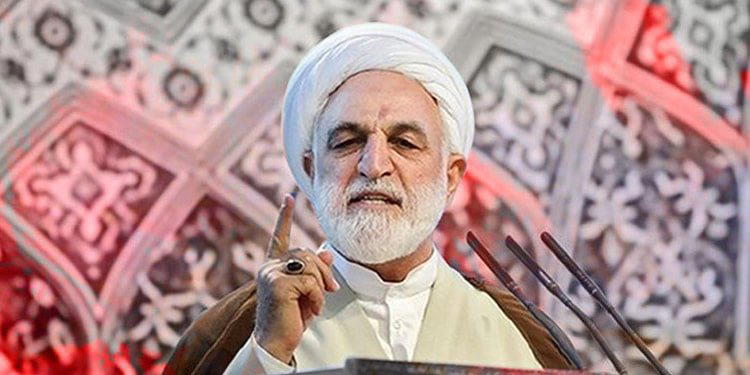
Iran’s hardline judiciary chief Gholamhossein Mohseni Ejei
nIran’s hardline judiciary chief on Tuesday urged courts to speed up verdicts linked to the US-Israeli war, including capital punishment, as activists sounded the alarm about surging hangings of convicts seen as political prisoners.
nSince the war began on February 28, Iran has hanged seven people in connection with January protests, six convicted of membership of banned opposition group the People’s Mujahedin of Iran (MEK) and a dual Iranian-Swedish citizen on charges of spying for Israel.
nRights groups have warned dozens more are at risk of execution over the January protests or after being arrested on suspicion of helping the enemy during the current war.
n“You need to speed up the issuing of sentences for executions and the confiscation of property,” judiciary chief Gholam Hossein Mohseni Ejei told a televised meeting of senior judiciary officials.
nUsing existing laws on punishing espionage, “it is necessary to continue issuing judicial verdicts for elements and agents of the aggressor enemy with greater speed”, he added.
nIranian Nobel Peace Prize laureate Shirin Ebadi, who now lives in exile, said on Telegram that instead of defending Iranians in the face of threats by US President Donald Trump, the Islamic republic’s response “is to accelerate executions, repression and confiscation of the opposition’s property”.
nTwo teenagers are among those who have been executed over the January protests, which were suppressed by authorities in a crackdown that left thousands dead, according to rights groups.
nAuthorities have branded those facing hanging over those protests as “terrorists” who acted on behalf of Israel and the United States, but rights groups have said they were convicted in “grossly unfair” trials.
n“In the midst of the ongoing war, the execution of death sentences for protesters and political prisoners through non-transparent and hasty processes is seen as an attempt to instill fear and maintain control over society,” said the US-based Abdorrahman Boroumand Center rights group.
nWith wartime arrests continuing, national police chief Ahmad Reza Radan was quoted by state media as saying that 85 people had been arrested in 25 provinces for operating in an alleged “organised network” sending location information to Iran’s enemies.
n“The confessions of the accused and the full details of how they collaborated with the enemy will be published soon,” he added.
nRights groups accuse Iranian authorities of using torture to extract from prisoners false confessions that are then broadcast during televisions news bulletins.
nAFP
n nRelated Stories
 General News
CELEBRATING TWO YEARS OF TRANSFORMATIONAL LEADERSHIP IN THE PRESIDENTIAL AMNESTY PROGRAMME
Tomorrow, 14TH March 2026, as we look forward to the second anniversary, we reflect on the remarkable two years since the Administrator of the Preside
 General News
PRESIDENTIAL AMNESTY PROGRAMME PHASE 3: DISREGARD PURPORTED STATEMENT ON DELAYED ITA PAYMENTS — OFFICE OF NATIONAL CHAIRMAN
The Office of the National Chairman of the Presidential Amnesty Programme Phase 3, General Elaye ThankGod Dollar Slaboh, has called on beneficiaries a
 General News
RE: CLARIFICATION ON MY PERSONAL RELATIONSHIPS
PUBLIC NOTICErnrnRE: CLARIFICATION ON MY PERSONAL RELATIONSHIPSrnrnIt has become necessary to make this public clarification following the increasing