
Iran's Foreign Minister Faults America for Collapse of Negotiations Upon Arrival in Russia
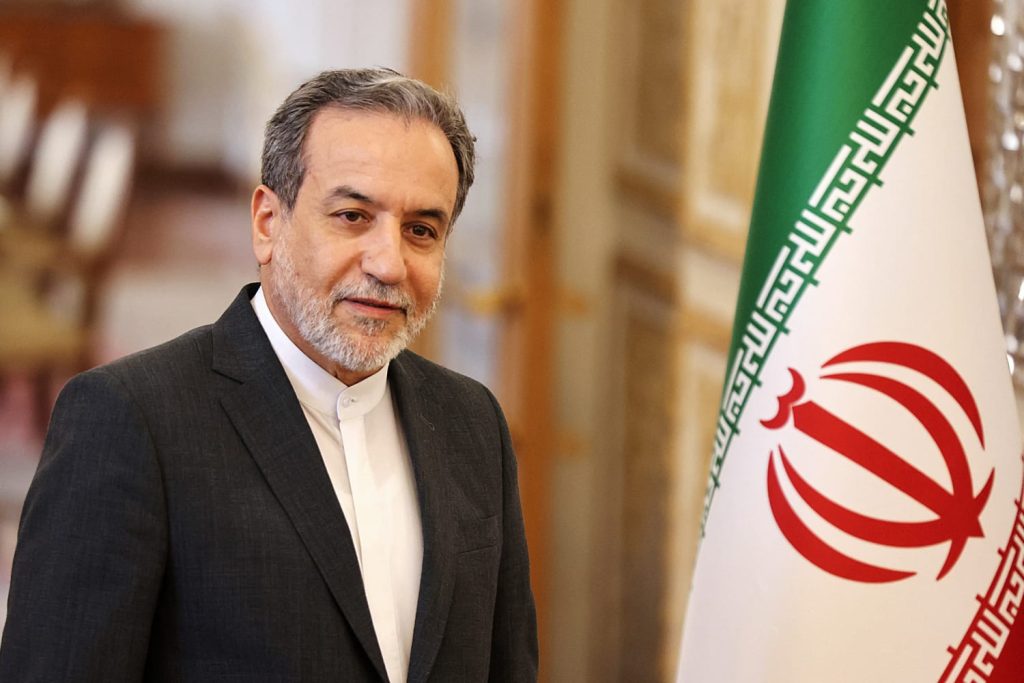
Iranian Foreign Minister Abbas Araghchi
nIran’s top diplomat blamed Washington on Monday for the failure of talks after landing in Russia as part of a whirlwind diplomatic tour, with direct negotiations between the warring parties seemingly at an impasse.
nForeign Minister Abbas Araghchi made the remarks in Saint Petersburg, where he is expected to meet with Russian President Vladimir Putin, having sandwiched a trip to Oman in between visits to main mediator Pakistan over the past few days.
nIslamabad played host to the first and only round of unsuccessful talks between Washington and Tehran, and Araghchi’s visit had fanned hopes for fresh negotiations over the weekend, until US President Donald Trump scrapped a planned trip by his envoys Steve Witkoff and Jared Kushner.
n“The US approaches caused the previous round of negotiations, despite progress, to fail to reach its goals because of the excessive demands,” Araghchi said Monday.
nAfter calling off his emissaries’ trip, Trump told Fox News that if Iran wanted talks, “they can come to us, or they can call us”, though he has said the cancellation does not signal a return to hostilities.
nIn a sign that backchannel efforts were ongoing, the Fars news agency said Iran had passed “written messages” to the Americans via Pakistan spelling out red lines, including nuclear issues and the Strait of Hormuz.
nFars news agency said the messages were not part of formal negotiations, however.
nUS media outlet Axios — citing a US official and two other sources with knowledge of the matter — reported on Sunday that Iran had sent a new proposal to end the war centred on reopening the Strait of Hormuz and ending a US naval blockade there, with nuclear negotiations postponed for a later stage.
nIranian state news agency IRNA cited the report without denying it.
n– Global issue –
nThe ceasefire in the US-Israeli war with Iran has so far held, but its economic shock waves have continued to reverberate globally.
nIran has blockaded the strait, cutting off flows of oil, gas and fertiliser and sending prices soaring, raising fears of food insecurity in developing countries.
nIn response, the US has imposed a blockade of Iranian ports in the waterway and beyond.
nTrump faces domestic pressure as fuel prices rise following Iran’s closure of Hormuz, with midterm elections due in November. Polls show the war is unpopular among Americans.
nThe subject of the strait was on the agenda during Araghchi’s trip to Oman, which lies on the other side of the waterway from Iran.
n“The safe passage through the Strait of Hormuz is an important global issue. Naturally, as the two coastal countries of this strait, we must speak with each other so that our common interests are secured,” Araghchi said from Saint Petersburg.
nRussian and Iranian state media confirmed Araghchi would speak with Putin, citing officials from their respective governments.
nIran’s Revolutionary Guards, however, have said they have no intention of lifting their market-shaking blockade, saying control of the Hormuz “and maintaining the shadow of its deterrent effects over America… is the definitive strategy” of Tehran.
nOil prices were creeping up again on Monday, though lingering hopes that a deal can eventually be reached have tempered the gains.
n– Violence in Lebanon –
nViolence, meanwhile, has continued on the war’s Lebanese front, in spite of a recently extended ceasefire between Israel and Iran-backed Hezbollah.
nThe two sides traded blame over violations on Sunday, with Prime Minister Benjamin Netanyahu saying the military was “vigorously” targeting the group as both sides claimed new attacks.
nHezbollah drew Lebanon into the Middle East war on March 2 by firing rockets at Israel to avenge the death of Iran’s supreme leader Ali Khamenei, with Israel responding with strikes and a ground invasion.
nNetanyahu told a weekly cabinet meeting that Hezbollah’s actions were “dismantling the ceasefire”, while Hezbollah vowed to respond to Israeli violations and its “continued occupation”.
nLebanon’s health ministry said Israeli strikes on the country’s south on Sunday killed 14 people, the deadliest day since the truce came into force.
nAFP correspondents reported heavy traffic heading north as people fled following the warning and intensified raids.
nIsrael also reported a soldier killed in combat in south Lebanon.
nThe country maintains that under the terms of the truce, it can act against “planned, imminent or ongoing attacks”.
n“This means freedom of action not only to respond to attacks… but also to pre-empt immediate threats and even emerging threats,” Netanyahu said.
nAFP
n nRelated Stories
 General News
CELEBRATING TWO YEARS OF TRANSFORMATIONAL LEADERSHIP IN THE PRESIDENTIAL AMNESTY PROGRAMME
Tomorrow, 14TH March 2026, as we look forward to the second anniversary, we reflect on the remarkable two years since the Administrator of the Preside
 General News
PRESIDENTIAL AMNESTY PROGRAMME PHASE 3: DISREGARD PURPORTED STATEMENT ON DELAYED ITA PAYMENTS — OFFICE OF NATIONAL CHAIRMAN
The Office of the National Chairman of the Presidential Amnesty Programme Phase 3, General Elaye ThankGod Dollar Slaboh, has called on beneficiaries a
 General News
RE: CLARIFICATION ON MY PERSONAL RELATIONSHIPS
PUBLIC NOTICErnrnRE: CLARIFICATION ON MY PERSONAL RELATIONSHIPSrnrnIt has become necessary to make this public clarification following the increasing