
Iran vows to hit back at America and Israel following attack on Lebanese capital
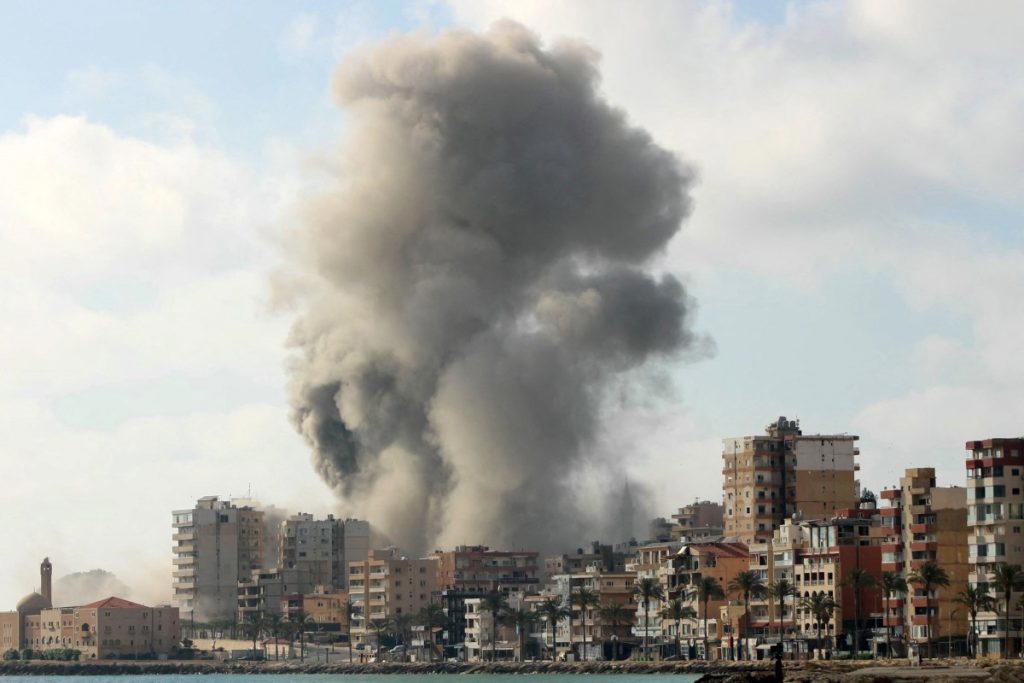
Smoke rises from the site of an Israeli airstrike that targeted a neighborhood in the southern Lebanese coastal city of Tyre on June 7, 2026. Israel and Hezbollah regularly exchange fire but the south of the capital — including districts seen as bastions of the Iran-backed group — has been relatively spared, having been struck only twice since mid-April. Israel later issued an evacuation warning for most of the southern Lebanese city of Tyre and its surroundings, a more frequent site of strikes. (Photo by Kawnat HAJU / AFP)
nIran threatened to retaliate against the United States and Israel for a fresh attack on Beirut on Sunday, further dampening hopes for a lasting peace as the Middle East war reached its 100th day.
nEfforts to turn a ceasefire into a settlement have repeatedly stalled, while the war has rattled global markets and increased domestic pressure on US President Donald Trump ahead of midterm elections.
nTehran insists any deal to permanently end the war must also halt the parallel conflict in Lebanon, where Israel is pursuing a campaign against the Iran-backed movement Hezbollah.
nOn Sunday, Israeli Prime Minister Benjamin Netanyahu’s office announced that the army had “just struck a militant command centre in Beirut’s Dahiyeh district, in response to Hezbollah’s fire towards Israeli territory”.
nThe raid killed two people and wounded 20 more, Lebanon’s health ministry said.
nWhile Israel and Hezbollah routinely exchange fire near the border, Beirut’s southern districts — seen as bastions of the militant group — have been struck only twice since mid-April.
nIsrael had warned it would hit the area should Hezbollah attack northern Israel.
nHezbollah later confirmed having launched missiles and drones that it said targeted a pair of Israeli army barracks on Sunday morning.
nMohammad Bagher Ghalibaf, Iran’s parliament speaker and its chief negotiator in talks with Washington, accused the United States of having given a “green light” for the Beirut attack.
nThis and the ongoing US blockade of Iranian ports, he said, “turns the bases and assets of America and the (Israeli) regime in the region into legitimate targets. Our armed forces, as always, are free to act.”
nThe spokesman for the Iranian parliament’s national security commission, Ebrahim Rezaei, also threatened “a decisive and painful response”.
n“These rabid dogs must be disciplined… Look at the sky over the occupied lands tonight,” he said, referring to Israeli territory.
nIran’s insistence that the conflicts are linked has complicated negotiations for Washington, and in a previously recorded interview aired Sunday, Trump had called for Israel to take a “more surgical” approach in Lebanon.
n- n
- ‘Gone numb’ – n
The threats of escalation on the war’s 100th day came as Iranians were already feeling the strain of weeks of uncertainty.
nFitness trainer Elaheh from Ahvaz told AFP: “I really have gone numb.”
n“Daily life? It’s a joke. Everything is horrible. We only try to survive,” the 32-year-old added, pointing to rising prices.
nFarhad, a 35-year-old chef, also said life was becoming “increasingly difficult”, noting economic hardship had set in even before the war.
n“Things that just a few months ago you might have considered buying have now become dreams and fairy tales,” he told AFP.
nThere were some signs of ongoing diplomatic efforts over the weekend, with Pakistan’s interior minister Mohsin Naqvi visiting Tehran.
nNaqvi said upon his arrival Saturday that he would deliver a “special letter” from Pakistan’s army chief to Iran’s supreme leader, as well as a message from the prime minister, according to Iranian state television.
nPakistani military leader Syed Asim Munir has played a key role in mediating between Iran and the US following an initial round of direct negotiations in Islamabad.
nAlso on Saturday, Lebanese army chief Rodolphe Haykal travelled to Pakistan for his own talks with Munir, and a source with knowledge of his visit said it was “linked to the Pakistani mediation” between Tehran and Washington.
n- n
- ‘Deadlock’ – n
Mohsen Rezaei, military adviser to Iranian supreme leader Ayatollah Mojtaba Khamenei, had told CNN negotiations with the US “are at a deadlock, and Trump must break this deadlock”, calling for the release of some $24 billion in frozen Iranian assets.
nBut Trump said in the same interview that he would not unfreeze Iranian assets before reaching an initial agreement with Tehran. “If they behave, if they do a good job, we start talking,” he said.
nIn fact, Washington may seek to use those funds to pay for damage wrought by Iranian strikes on Gulf allies, according to a source familiar with Treasury Secretary Scott Bessent’s thinking.
nMeanwhile, US Central Command (CENTCOM) said overnight that it destroyed two Iranian drones “that threatened international maritime traffic in the Strait of Hormuz”.
nA previous drone interception and strikes on Iranian radar sites had prompted Tehran on Saturday to fire a salvo of missiles at US allies Bahrain and Kuwait
n nRelated Stories
 General News
CELEBRATING TWO YEARS OF TRANSFORMATIONAL LEADERSHIP IN THE PRESIDENTIAL AMNESTY PROGRAMME
Tomorrow, 14TH March 2026, as we look forward to the second anniversary, we reflect on the remarkable two years since the Administrator of the Preside
 General News
PRESIDENTIAL AMNESTY PROGRAMME PHASE 3: DISREGARD PURPORTED STATEMENT ON DELAYED ITA PAYMENTS — OFFICE OF NATIONAL CHAIRMAN
The Office of the National Chairman of the Presidential Amnesty Programme Phase 3, General Elaye ThankGod Dollar Slaboh, has called on beneficiaries a
 General News
RE: CLARIFICATION ON MY PERSONAL RELATIONSHIPS
PUBLIC NOTICErnrnRE: CLARIFICATION ON MY PERSONAL RELATIONSHIPSrnrnIt has become necessary to make this public clarification following the increasing