
Iran inflicts 'widespread' destruction on Qatari natural gas facility, prompting caution from Trump
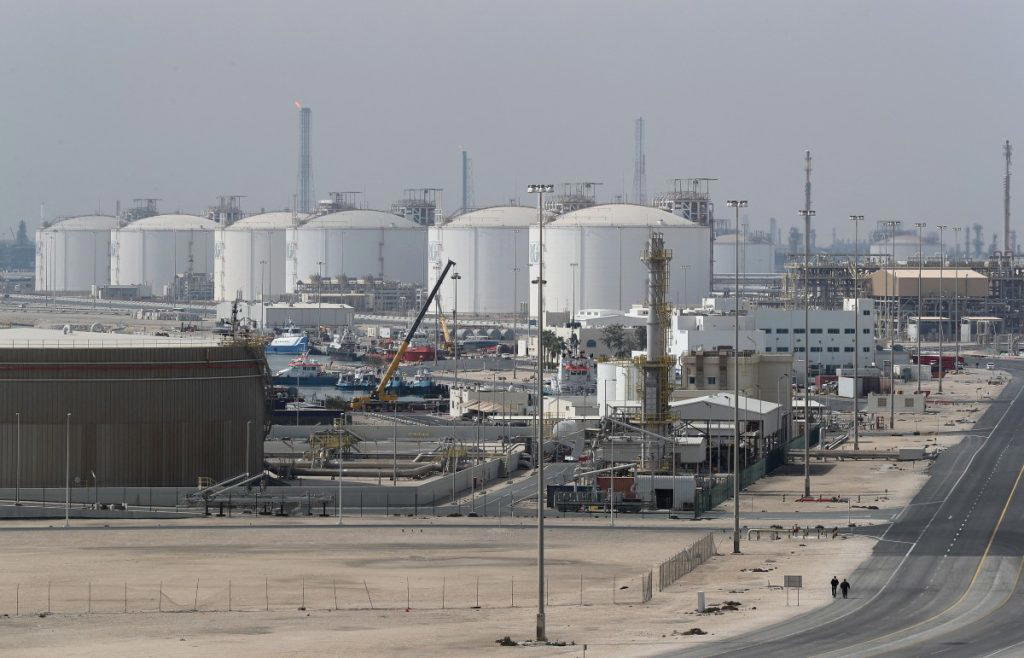
Tehran launched a series of attacks on Gulf energy sites, including Qatar's massive Ras Laffan LNG facility, on March 19, 2026, in retaliation for an Israeli strike on Iran's South Pars gas field, which is part of the world's largest natural gas reservoir.
nQatar reported "extensive" damage to the site of the world's largest liquefied natural gas facility following the Iranian strikes, sparking concerns about global energy supplies and prompting fresh threats from Donald Trump against Iran.
nThe attacks on Qatar's Ras Laffan LNG facility were carried out in response to an Israeli strike on Iran's South Pars gas field on Wednesday, with Tehran seeking to retaliate against its adversaries.
nOil prices surged by five percent and European gas prices jumped by 35 percent on Thursday, amid concerns about the impact of the nearly three-week-old Middle East war on energy supplies.
nUS President Donald Trump warned Iran to cease its attacks on Qatar, threatening to "massively blow up the entirety of the South Pars Gas Field" if Tehran continues to target the Gulf state.
nIn a social media post, Trump stated that Washington had no knowledge of the Israeli attack on South Pars and had "violently lashed out" in "anger", adding that no further attacks would be made by Israel on South Pars unless Iran continues to attack Qatar.
nQatar is one of the world's top liquefied natural gas producers, alongside the United States, Australia, and Russia, with its Ras Laffan facility being the world's largest LNG hub, which has been repeatedly targeted by Iran since the war began.
nState-run QatarEnergy reported that two waves of Iranian strikes had caused "sizeable fires and extensive further damage" to several LNG facilities at Ras Laffan, exacerbating concerns about the war's impact on global energy supplies.
nThe targeting of energy production facilities marks a significant escalation in the Middle East war, according to Theresa Fallon, director of the Centre for Russia Europe Asia Studies, who warned that the economic effects will likely be felt for years to come.
nThe United States and Israel initiated the war on February 28 by attacking Iran and killing its supreme leader, Ayatollah Ali Khamenei, prompting Iran to retaliate with strikes against Israel and US allies and interests across the Gulf and Iraq.
nGulf nations, including Qatar and the United Arab Emirates, strongly criticized the attack on Iran's South Pars gas field, which supplies around 70 percent of the country's domestic natural gas and is part of the world's largest known gas reserve.
nQatar called the attack "dangerous and irresponsible", while the UAE described it as a "dangerous escalation", with the UAE foreign ministry warning that targeting energy infrastructure poses a direct threat to global energy security.
nFollowing Iran's attack on its Ras Laffan hub, Qatar ordered Iran's military and security attaches, along with their staff, to leave the country, as tensions between the two nations escalated.
nKuwait reported drone attacks on two oil refineries on Thursday, while Saudi Arabia stated that it reserved the "right to take military actions" after intercepting drones targeting energy infrastructure in the east.
nAfter killing Iran's supreme leader, Israel claimed the lives of several other high-ranking Iranian officials, including national security chief Ali Larijani and intelligence chief Esmail Khatib, prompting China to condemn Larijani's death.
nNew Iranian supreme leader Mojtaba Khamenei vowed retaliation, stating that "every drop of spilled blood comes at a price, and the criminal murderers of these martyrs will soon have to pay it" in a message posted on his official Telegram channel.
nA US-based rights group reported that over 3,000 people had been killed in Iran by the US-Israeli strikes, although this figure could not be independently verified, as Tehran continued to unleash missile and drone attacks across the Middle East.
nAn Iranian missile barrage killed a Thai foreign worker in central Israel, according to Israeli medics and Thailand's foreign ministry, bringing the death toll in the country to 15, while missile debris also killed three Palestinian women in the occupied West Bank.
nUS intelligence chief Tulsi Gabbard told Congress that the Iranian government remained "intact but largely degraded", while also acknowledging that Tehran had not resumed nuclear enrichment, despite the ongoing conflict.
nThe death toll rose in Lebanon, which has been drawn into the conflict since the Iran-backed militant group Hezbollah launched rockets at Israel over Ali Khamenei's death, with Israeli strikes hitting central Beirut multiple times on Wednesday, killing at least 12 people.
nAs fighting with Hezbollah intensified, a line of cars stretched along Lebanon's southern coast as residents of affected areas fled to the ancient city of Sidon in search of safety, with one man, Nidal Ahmad Chokr, recounting the devastating impact of the air strikes on his village.
nNidal Ahmad Chokr, a 55-year-old resident of the village of Jibchit, said that "bakers died while making bread" in the village square and "municipal workers were martyred while using bulldozers", highlighting the human cost of the conflict.
Related Stories
 General News
CELEBRATING TWO YEARS OF TRANSFORMATIONAL LEADERSHIP IN THE PRESIDENTIAL AMNESTY PROGRAMME
Tomorrow, 14TH March 2026, as we look forward to the second anniversary, we reflect on the remarkable two years since the Administrator of the Preside
 General News
PRESIDENTIAL AMNESTY PROGRAMME PHASE 3: DISREGARD PURPORTED STATEMENT ON DELAYED ITA PAYMENTS — OFFICE OF NATIONAL CHAIRMAN
The Office of the National Chairman of the Presidential Amnesty Programme Phase 3, General Elaye ThankGod Dollar Slaboh, has called on beneficiaries a
 General News
RE: CLARIFICATION ON MY PERSONAL RELATIONSHIPS
PUBLIC NOTICErnrnRE: CLARIFICATION ON MY PERSONAL RELATIONSHIPSrnrnIt has become necessary to make this public clarification following the increasing