
Instability in Lake Chad, Sahel worsening Nigeria’s insecurity – Says Army chief
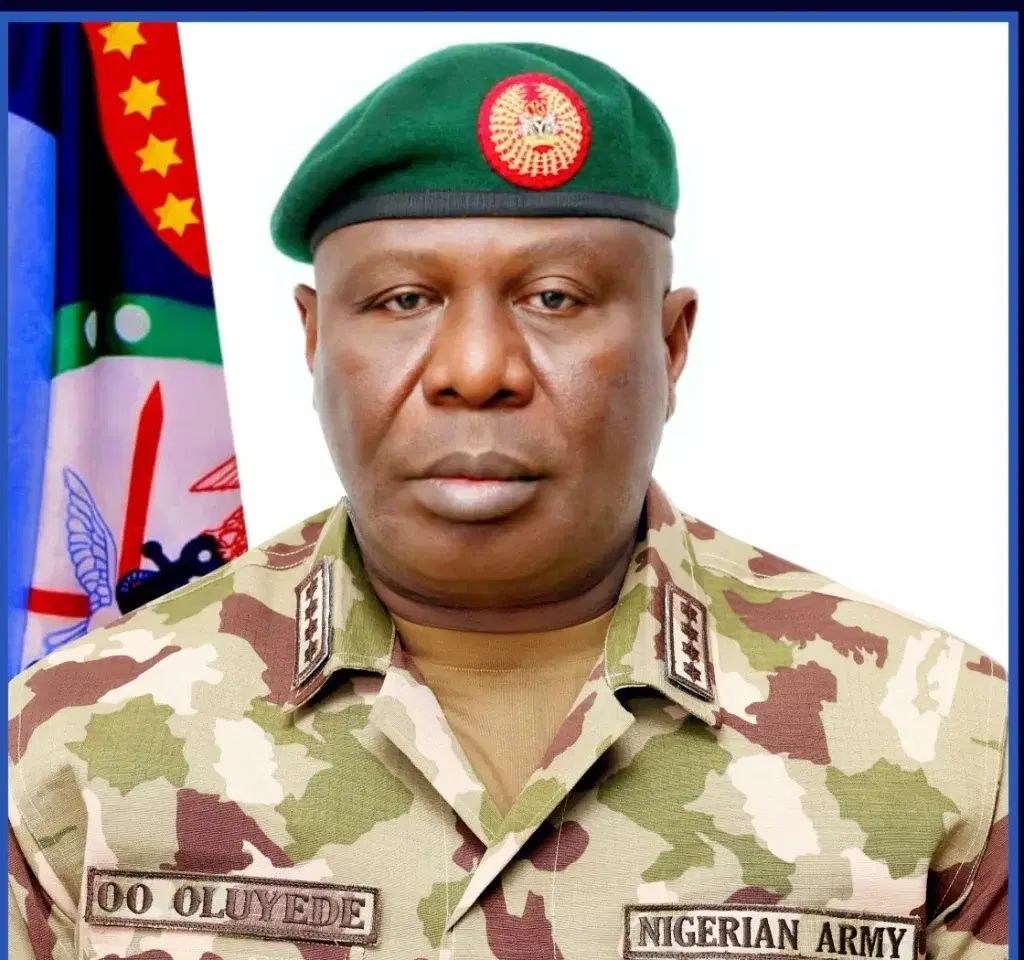
Chief of Defence Staff (CDS), Gen. Olufemi Oluyede
nBy Daniel Abia
nPORT HARCOURT — The Chief of Army Staff (COAS), Lt.-Gen. Olufemi Oluyede, has attributed Nigeria’s security challenges to instability in the Lake Chad Basin, the Sahel region and the Gulf of Guinea, stressing the need for innovative strategies to address evolving threats.
nSpeaking at the Nigerian Army Day Celebration 2026 lecture in Port Harcourt, Rivers State, the Army Chief said the country’s security environment had become increasingly complex and required fresh approaches to safeguard lives and property.
nHe noted that Nigeria continues to contend with insurgency, terrorism, banditry, cybercrime, transnational organised crime and resource-related conflicts, alongside the proliferation of small arms, porous borders and the exploitation of ethnic and religious divisions.
nAccording to him, regional instability has continued to compound domestic security concerns.
n“Beyond Nigeria’s borders, instability within the Lake Chad Basin, the Sahel Region and along the Gulf of Guinea continues to influence and exacerbate the domestic threat environment,” he said.
nHe added that global developments, including cyber operations, artificial intelligence, unmanned systems and other emerging technologies, have changed the nature of warfare and require the Nigerian Army to continually adapt.
nDespite the challenges, the Army Chief said the Nigerian Army had remained resilient through enhanced joint operations with other security agencies, improved intelligence gathering and stronger community engagement.
nHe said the Army had also invested in modern technology, capacity building and a combination of kinetic and non-kinetic operations aimed at disrupting criminal activities and restoring peace in affected communities.
nOluyede noted that the Army’s operations now place greater emphasis on protecting civilians, respecting human rights and building public confidence.
nAccording to him, initiatives such as the establishment of Human Rights Desks, expanded civil-military cooperation and the implementation of rules of engagement that prioritise civilian safety demonstrate the military’s commitment to responsible operations.
nHe also highlighted ongoing training in urban warfare, counter-insurgency and cyber defence, as well as the Army’s support for internally displaced persons, reconstruction efforts and peace-building initiatives in conflict-affected areas.
nLooking ahead, the Army Chief said the Nigerian Army would continue its transformation through innovation, professionalism and collaboration with regional and international partners.
nHe emphasised the need to leverage emerging technologies such as artificial intelligence, unmanned systems and data analytics to improve operational effectiveness and situational awareness.
nOluyede also reiterated the importance of the Army’s “Soldier-First Culture,” describing personnel as the institution’s greatest asset.
nHe said the welfare, motivation and ethical conduct of soldiers would remain a priority as the Army continues to confront Nigeria’s evolving security challenges.
n nRelated Stories
 General News
CELEBRATING TWO YEARS OF TRANSFORMATIONAL LEADERSHIP IN THE PRESIDENTIAL AMNESTY PROGRAMME
Tomorrow, 14TH March 2026, as we look forward to the second anniversary, we reflect on the remarkable two years since the Administrator of the Preside
 General News
PRESIDENTIAL AMNESTY PROGRAMME PHASE 3: DISREGARD PURPORTED STATEMENT ON DELAYED ITA PAYMENTS — OFFICE OF NATIONAL CHAIRMAN
The Office of the National Chairman of the Presidential Amnesty Programme Phase 3, General Elaye ThankGod Dollar Slaboh, has called on beneficiaries a
 General News
RE: CLARIFICATION ON MY PERSONAL RELATIONSHIPS
PUBLIC NOTICErnrnRE: CLARIFICATION ON MY PERSONAL RELATIONSHIPSrnrnIt has become necessary to make this public clarification following the increasing