
Inhabitants of Abuja's outlying suburb dumping ground bemoan unbearable foul odor
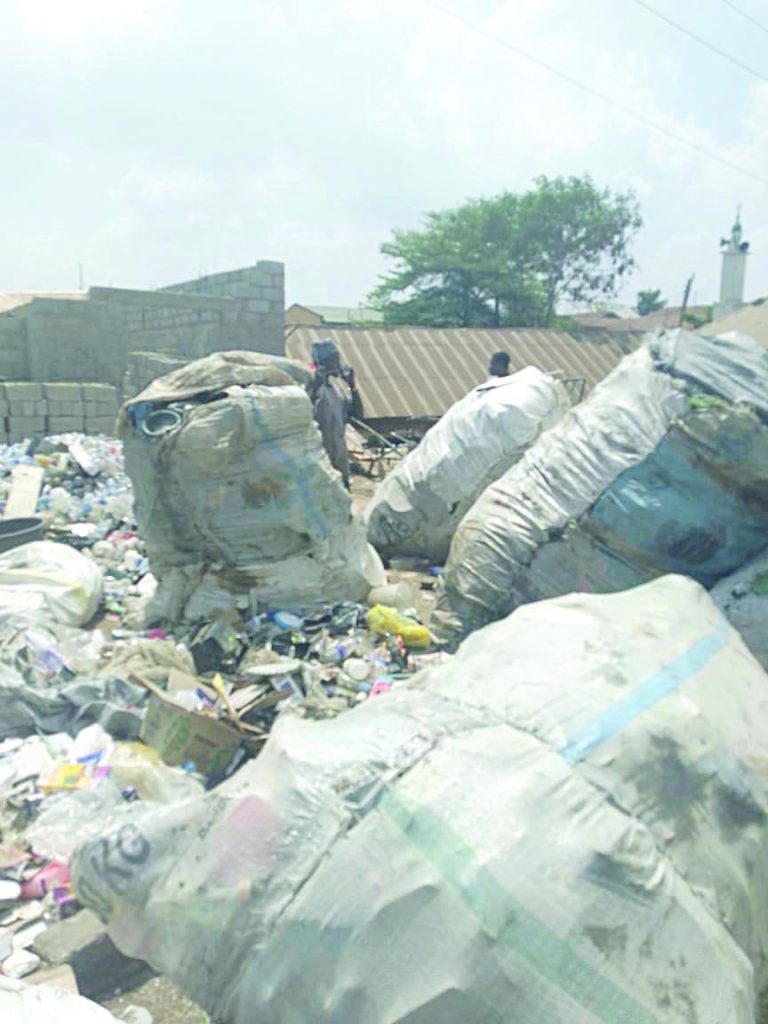
In Karu, a satellite community on the outskirts of Nigeria's capital, the day begins with the overwhelming stench of decomposing waste that hangs in the air, a harsh reality that residents have grown accustomed to.
nThe putrid smell lingers from dawn till dusk, and often deep into the night, seeping into homes, clinging to clothes, and settling heavily in the lungs of residents who feel abandoned to live amid refuse.
nMost residents of Karu are low-income earners, including traders, artisans, and civil servants who cannot afford accommodation in Abuja city centre, forcing them to live in satellite towns like Karu, Nyanya, Kurudu, and Mararaba, where poor urban planning and weak waste management systems have created a growing environmental crisis.
nHeaps of refuse spill from makeshift dumpsites onto the roadside, with black nylon bags bursting open to expose rotting food, plastic waste, medical debris, and broken household items, as flies swarm endlessly and goats, dogs, and scavengers rummage through the piles in search of anything of value.
nResidents say refuse contractors and illegal dumpers often take advantage of weak enforcement, offloading waste in these communities, sometimes under the cover of darkness, before returning to the city centre unchallenged, making life unbearable for many.
nFor 35-year-old trader, Mrs. Comfort Eze, living near a roadside dump in Nyanya has turned everyday life into a daily struggle for survival, with the smell becoming particularly unbearable in the afternoon when the sun is hot.
nMrs. Eze's home sits dangerously close to the dumpsite, where layers of plastic bags, spoiled food, and household waste have accumulated over time, causing her children to fall sick frequently with malaria, cough, and skin infections.
nA few houses away, Mrs. Esther Nwosu, a petty trader, says the dumpsite has robbed her of her peace of mind, as flies gather on her food and visitors rarely stay long due to the overwhelming smell.
nNearby, 42-year-old mechanic, Mr. Sunday Audu, shares a similar story, with his workshop sitting directly opposite another dumpsite in Karu, causing customers to complain about the smell and affecting his income.
nAnother artisan, Mr. Kabiru Lawal, a welder in Kurudu, says the smoke from burning waste has made working conditions unbearable, with his eyes turning red and him coughing as he endures the situation due to lack of choice.
nOn a dusty street in Karu, a group of young boys kick around a worn-out football just metres away from a mound of garbage littered with broken glass, plastic containers, and decomposing waste, which has become their playground.
nTen-year-old Samuel Simon says the dumpsite has become their playground, while 12-year-old Aisha Musa, who lives nearby, often falls sick after playing around the dumpsite, complaining of itching and cough.
nAnother child, nine-year-old Chinedu Okafor, recalled injuring himself while playing near the refuse, stepping on a broken bottle, and his mother, Mrs. Nkechi Okafor, says such incidents have become common, exposing children to danger every day.
nAisha's mother, Hauwa Musa, worries constantly, saying that while they tell the children not to play near the dumpsite, there is nowhere else for them to go, and they cannot be locked inside the house all day.
nResidents across the affected communities say the dumpsites have significantly worsened sanitation conditions, with pools of stagnant water collecting around the waste heaps, forming breeding grounds for mosquitoes, and the situation becoming even more alarming during the rainy season.
nMrs. Grace Yakubu, a mother of four in Kurudu, says her family has not known peace, with someone falling sick every week, whether it is malaria, typhoid, or cough, and she believes the dumpsite near her house is to blame.
nAnother resident, Mr. Ibrahim Adamu, says his elderly mother's health has deteriorated, complaining of breathing problems, and the doctor has advised that she should stay in a clean environment, but they cannot afford to relocate.
nA local pharmacist in Karu, who requested anonymity, confirmed that cases of malaria, respiratory infections, and skin-related illnesses are rampant, saying that when waste is left to rot in open spaces, it releases harmful gases and attracts pests.
nThe pharmacist added that people living close to these areas are at high risk, and many residents now rely heavily on over-the-counter medications, often without proper diagnosis.
nBeyond health concerns, the waste crisis is also taking a toll on livelihoods, with Mr. Bala Mohammed, who runs a small roadside restaurant at Nyanya, saying that business has dropped drastically due to the smell, and customers rarely stay long.
nA fruit seller at Kurudu, Mrs. Nkechi Okafor, says flies from nearby dumpsites have become a major problem, following her fruits everywhere, and customers often lose interest due to the flies.
nAnother trader, Mrs. Zainab Sadiq, who sells cooked rice by the roadside, says she has lost regular customers, who tell her they like her food but the environment is not good, and she wonders how she will survive.
nAt Kpegyi, 55-year-old retiree, Mr. James Onoja, says the situation reflects a deeper neglect of satellite communities, feeling that they do not matter, and once you leave the city centre, nobody cares about what happens there.
nMiss Rukayat Bello describes the emotional toll, saying it is depressing to wake up every day to dirt, smell, and sickness, and sometimes she just sits and cries.
nAnother resident, Mr. Paulinus Oche, says the neglect feels deliberate, as authorities know what they are going through but are not doing anything, making them feel invisible.
nResidents largely blame the situation on irregular waste collection and lack of proper disposal infrastructure, with access to official waste collection services limited or completely absent in many satellite communities.
nA tricycle operator, Mr. Sadiq Mohammed, says he has witnessed illegal dumping firsthand, with trucks offloading waste quickly at night, and the heap doubling by morning.
nCommunity leaders point to poor urban planning and rapid population growth as contributing factors, while the Abuja Environmental Protection Board, AEPB, says the refuse dumps are outside its jurisdiction.
nThe Public Relations Officer of AEPB, Janet Peni, explained that the agency's responsibility is limited to the Federal Capital City and not the satellite towns where refuse dumps are springing up frequently.
nResidents argue that such institutional gaps should not come at the expense of their health and well-being, and there is a growing call for urgent intervention across Karu, Nyanya, Kpegyi, Kurudu, and surrounding communities.
nResidents are demanding improved waste collection systems, stricter enforcement against illegal dumping, and the establishment of designated disposal sites, as well as greater collaboration among relevant government agencies.
nDoctors are raising alarm over the growing health implications of living close to unmanaged waste sites, particularly in densely populated communities where regulation and waste management systems remain weak.
nDr. Amina Sule, an Abuja-based public health physician, described life near waste sites as a 'silent emergency' often ignored until it spirals out of control, calling for urgent action to reverse the trend.
nAccording to Dr. Sule, living close to a refuse dump exposes individuals to harmful pollutants, including toxic gases like methane and carbon monoxide, which can lead to chronic respiratory conditions over time.
nDr. Chinedu Okafor, a general practitioner, says residents also face threats from contaminated water and food sources, which attract rodents, flies, and mosquitoes, all of which are vectors for serious diseases.
nDr. Okafor noted that during the rainy season, the situation becomes exacerbated as runoff water from dumpsites can seep into nearby wells and water bodies, spreading bacteria and toxins.
nHealth experts also warn that living near dumpsites can contribute to mental health problems, with Dr. Zainab Bello, a psychiatrist, saying that constant exposure to foul smells, unsightly waste, and the fear of disease can lead to chronic stress, anxiety, and even depression.
nThe FCT Minister, Nyesom Wike, has threatened to deal with refuse contractors who fail to promptly evacuate refuse, launching dedicated telephone lines for residents to report any contractor who fails to do so.
Related Stories
 General News
CELEBRATING TWO YEARS OF TRANSFORMATIONAL LEADERSHIP IN THE PRESIDENTIAL AMNESTY PROGRAMME
Tomorrow, 14TH March 2026, as we look forward to the second anniversary, we reflect on the remarkable two years since the Administrator of the Preside
 General News
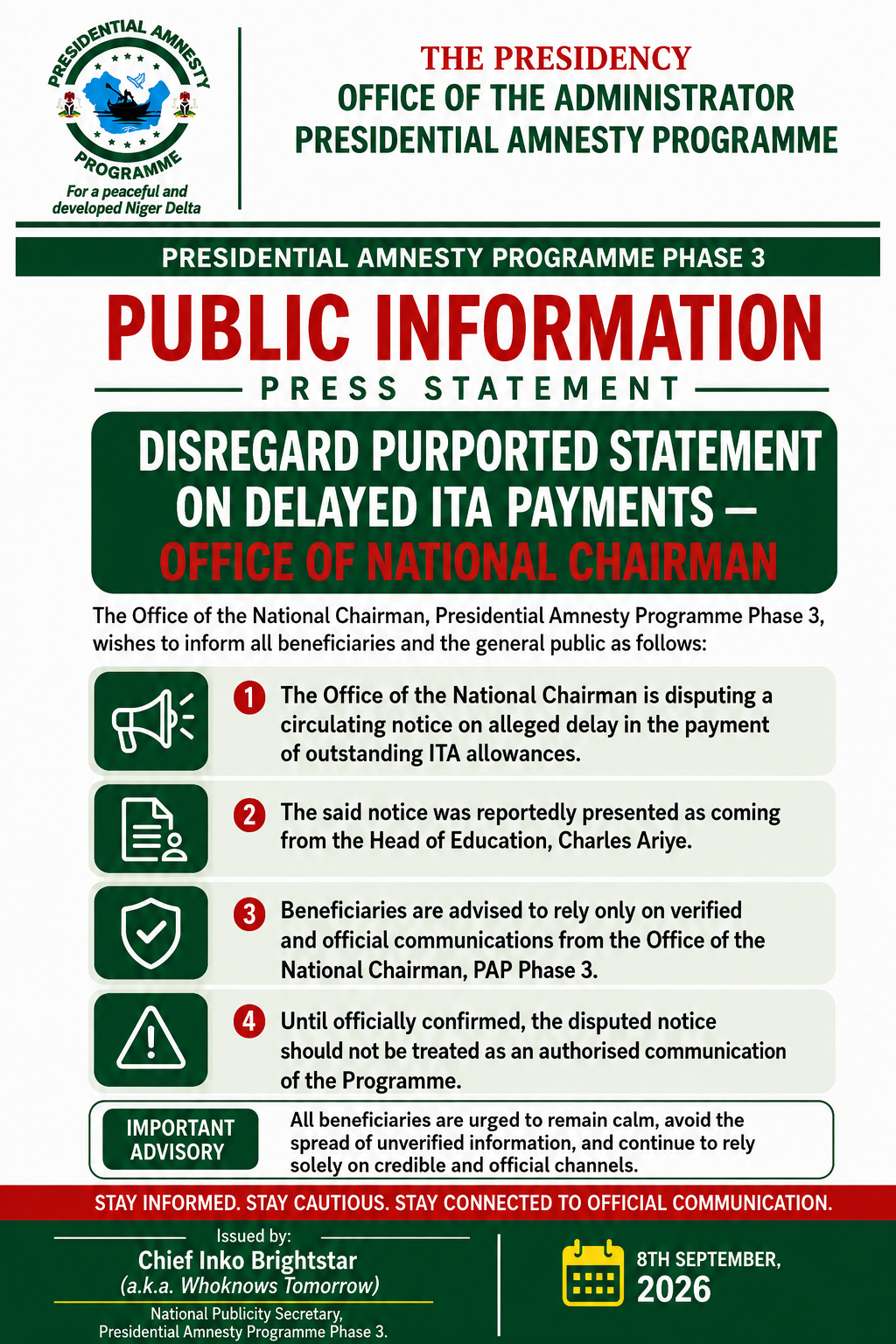
PRESIDENTIAL AMNESTY PROGRAMME PHASE 3: DISREGARD PURPORTED STATEMENT ON DELAYED ITA PAYMENTS — OFFICE OF NATIONAL CHAIRMAN
The Office of the National Chairman of the Presidential Amnesty Programme Phase 3, General Elaye ThankGod Dollar Slaboh, has called on beneficiaries a
 General News
RE: CLARIFICATION ON MY PERSONAL RELATIONSHIPS
PUBLIC NOTICErnrnRE: CLARIFICATION ON MY PERSONAL RELATIONSHIPSrnrnIt has become necessary to make this public clarification following the increasing