
Imported from the US and Canada: The Risks of Used 'Tokunbo' Vehicles on Nigerian Roads
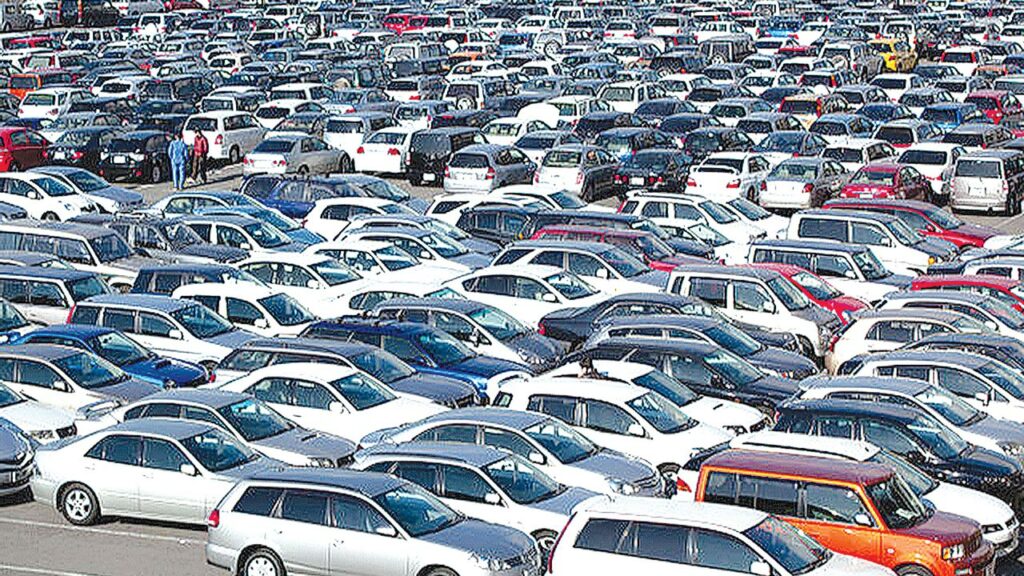
At the pinnacle of his life, 28-year-old Star Okigwe witnessed his world come crashing down, as the foreign-used Toyota he had spent 18 months saving for broke down on his way to work, revealing a dark history of being involved in a major accident abroad and poorly repaired after being shipped to Nigeria.
nThe cost of fixing it was staggering, running into hundreds of thousands of Naira, leaving him in a state of despair and regret, a plight shared by many unsuspecting Nigerians who have fallen victim to purchasing refurbished imported vehicles with hidden accident histories.
nIn 2025, Ekundayo Japheat, a businessman in his late 50s, visited a car lot in Ondo State to purchase a 2018 Toyota RAV4, but he insisted on engaging the services of a professional mechanic before making any purchase, a decision shaped by rising fear around accident imports.
nJapheat recounted an experience where a friend of his was about to buy a Toyota in Akure, only to be informed by a skilled mechanic that the vehicle had been involved in a major accident in the United States, a discovery that left his friend relieved that his money had not been wasted.
nIndustry authorities, such as the National Motor Vehicle Title Information System and the Insurance Information Institute, classify accident vehicles as those reported as heavily damaged and written off by insurers due to the high cost of repairs, also known as salvage vehicles.
nAutomobile experts point to structural integrity failures, sudden mechanical failures, compromised safety systems, hidden damage, and corrosion protection breakdown as major issues associated with such vehicles, which, if improperly repaired, are at high risk of sudden failures, even while driving.
nA study conducted by Nigerian researchers, titled: ‘A comparative analysis of road and vehicle qualities as factors of road traffic carnage in Nigeria,’ published in 2023 by BMC Public Health, found that vehicle quality could be a major determinant of road deaths, even more than road conditions.
nThe study observed that for every decrease in vehicle quality, death tolls from road traffic crashes in Nigeria increased, as the quality of roads dwindles and vehicle quality degenerates, with second-hand vehicles, often previously involved in accidents, replacing new vehicles that have become unaffordable amid inflation and a poor exchange rate.
nTo understand how these vehicles still enter the auto market in Nigeria despite these risks, a visit was made to a major vehicle trading hub in Lagos State, where activities were slow at most of the car lots on Saturday, April 11, 2026.
nAt Berger Yard, a hub for vehicle sales located near the Kirikiri Maximum Security Prison in Apapa, clusters of dealers were either playing draught or conversing idly with colleagues beside rows of neatly arranged cars, quickly rising to approach any passerby.
nIyke Onyeka, the Chairman of Higher Dealers Forum, categorised imported accident vehicles into two: Major and minor accidents, explaining that major accident cars affect critical components of a vehicle and should not be allowed into the country.
nOnyeka noted that for vehicles with minor accidents, such as damage to the headlamp, bonnet, or bumper, these are changeable components that do not significantly affect the usability of a car, and once repaired, can be sold as a complete car.
nHe stated that the price of accident vehicles is lower abroad, making them more attractive to buyers, and that indigenous Americans tend to prefer cars that have not been involved in accidents, leaving the accident vehicles for buyers in Africa, particularly Nigeria.
nAccording to Onyeka, the high exchange rate and biting economy are not responsible for the rising influx of accident vehicles, as dealers will always purchase vehicles for sale, regardless of the exchange rate, with the customer ultimately bearing the cost.
nAnother dealer, Christopher Onyebuchi, attributed the rising influx of accident vehicles to profit-driven motives, stating that dealers like him do not experience demand for major accident vehicles, as customers tend to avoid them once they discover the vehicle's history.
nOnyebuchi explained that customers can check the history of a vehicle using the VIN number, also known as the chassis number, which can reveal the vehicle's accident history, although some chassis numbers can be manipulated, particularly for vehicles bought on display in America.
nA car dealer, who wished to remain anonymous, noted that in the 1990s, European cars were popular in Nigeria, but from the 2000s onward, the US flooded the market with automatic vehicles, leading to an influx of accident vehicles into the country.
nThe dealer stated that some accident vehicles are advisable to buy, while others are not, depending on the extent of the damage, and that between 2017 and 2022, Nigerians spent over N2.3 trillion on foreign-used car imports, with a significant portion sourced from the United States.
nAccording to the National Bureau of Statistics, between 2023 and 2025, Nigerians spent N4.31 trillion on passenger car imports, with N145 billion spent in 2017, N269 billion in 2018, N580 billion in 2019, N718 billion in 2020, and N617 billion in 2021.
nFurthermore, N1.47 trillion was spent on passenger car imports in 2023, N1.26 trillion in 2024, and N1.58 trillion in 2025, highlighting the country's heavy reliance on foreign-used cars.
nFindings show that Nigeria's import system does not explicitly prohibit the importation of salvage vehicles, with Chairman of the National Association of Government Approved Freight Forwarders, Dr Segun Musa, explaining that importing vehicles follows a standard customs process involving documentation such as Form M and proforma invoices.
nMusa stated that used vehicles, including accident vehicles, are assessed based on declared condition and value, which determines duty payable, and that there is a lifespan for vehicles that can be imported, with the government creating room for accident vehicles that can be repaired.
nA repairer, known as Japan, demonstrated how severely damaged vehicles are restored in mechanic villages, where the process includes mechanical repair, panel beating, and electrical rewiring, often erasing visible signs of past damage.
nAnother repairer, Chukwuka, with over 20 years of experience, stated that he can repair a major accident vehicle and make it look okay, but the buyer would need to be aware of the vehicle's history, which can be checked using the chassis number.
nStriker, a repairer with over seven years of experience, noted that the least affected part of a vehicle in a collision is usually the driver's side, as the driver tries to save themselves, and that repairing an imported accident vehicle depends on the tools at the mechanic's disposal.
Related Stories
 General News
CELEBRATING TWO YEARS OF TRANSFORMATIONAL LEADERSHIP IN THE PRESIDENTIAL AMNESTY PROGRAMME
Tomorrow, 14TH March 2026, as we look forward to the second anniversary, we reflect on the remarkable two years since the Administrator of the Preside
 General News
PRESIDENTIAL AMNESTY PROGRAMME PHASE 3: DISREGARD PURPORTED STATEMENT ON DELAYED ITA PAYMENTS — OFFICE OF NATIONAL CHAIRMAN
The Office of the National Chairman of the Presidential Amnesty Programme Phase 3, General Elaye ThankGod Dollar Slaboh, has called on beneficiaries a
 General News
RE: CLARIFICATION ON MY PERSONAL RELATIONSHIPS
PUBLIC NOTICErnrnRE: CLARIFICATION ON MY PERSONAL RELATIONSHIPSrnrnIt has become necessary to make this public clarification following the increasing