
Imported democracy without African values has failed — Gambari
By John Alechenu
nABUJA — Former Chief of Staff to ex-President Muhammadu Buhari, Ibrahim Gambari, has argued that imported democratic systems lacking African values and characteristics have failed on the continent, urging African nations to return to indigenous governance systems and cultural principles.
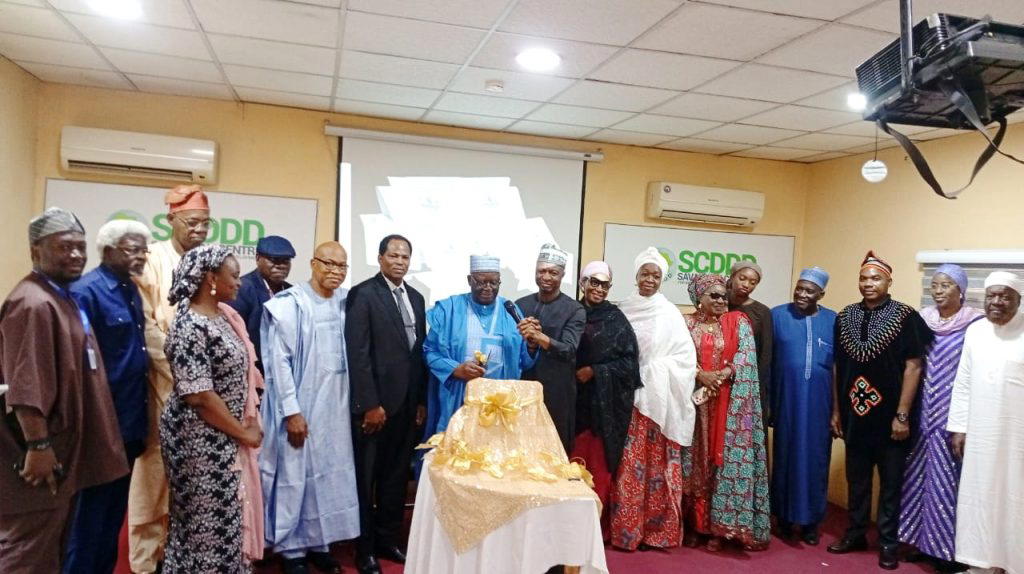
nGambari made the remarks on Tuesday at the Savannah Centre for Diplomacy, Democracy and Development in Utako, Abuja, during the launch of Renegade Africa: All It Takes to Be African, a book written by diplomat and former United Nations official, Moudjib Djinadou, founder of the Itumo Institute in Porto-Novo, Benin Republic.
nAlso present at the event was Dimas Garba, who reviewed the book.
nChairing the launch, Gambari stressed that sustainable development in Africa can only be achieved when policies and institutions are rooted in the continent’s history, cultural heritage and collective aspirations.
n“The external cannot love us more than we love ourselves. We are the ones who know where the shoe pinches because we wear it,” he said.
nAccording to him, the book raises a fundamental question about Africa’s development challenges.
n“The book asks a simple question: despite all our efforts, could it be that Africa’s shortcomings in building genuine sovereignty are first and foremost failures toward itself? If you don’t define yourself, other people will not do it for you,” he stated.
nGambari argued that Africa’s challenges are not primarily geographical or historical but stem from a form of alienation that has led the continent to undervalue its governance systems, indigenous economic philosophies, languages and collective knowledge.
n“This mimicry has made us strangers to ourselves. We have imitated, persisted in and mimicked—never adapted—values and policies external to our environment,” he said.
nDrawing a comparison with China’s political evolution, he added: “You recall the Chinese, when they adopted socialism, said ‘socialism with Chinese characteristics.’ We practice democracy without African characteristics, and then we are surprised it does not work.”
nOn economic development, Gambari said Africa remains trapped in a cycle of exporting raw materials while importing finished products, including food.
n“We must escape situations where our place in the global value chain is more chain than value. It will not change unless we add value to our production,” he said.
nHe also described Africa’s growing youth population as a major asset rather than a burden, provided governments invest heavily in education, mentorship and skills development.
nReviewer Dimas Garba said the book examines how Africa gradually abandoned its indigenous values and systems in favour of Western models following centuries of interaction with the West.
n“This abandonment was not imposed by force alone. What is more worrisome is Africa’s acceptance of Western values as an act of consciousness,” Garba said.
n“No nation can make authentic progress by negating its history. Modern Africa has forgotten its past and accepted that reality.”
nGarba explained that the book is divided into three sections: a diagnosis of African society and its “confiscated heritage”; an examination of issues through the lenses of Enlightenment thought, racism and multilateralism; and an analysis of contemporary challenges in democracy, the economy, security and education.
nSpeaking on the motivation behind the book, Djinadou said it seeks to explain why Africa has recorded limited progress despite more than six decades of independence, reforms and policy experiments.
n“We tried structural adjustment programmes. We imported multi-party democracies. We partnered with every major part of the world. None delivered the emancipation we seek,” he said.
n“The culprit is our education system. It trains us to consume ideas produced elsewhere. To appear educated, we believe we must think and act like Westerners. Africans need to understand Africa more than we know the world.”
nAccording to the author, the title Renegade Africa reflects a continent that has drifted away from its foundational values and must now reconcile modern realities with its lost heritage.
n“Africa’s progress is an African responsibility. While the world did not wait for Africa, it is now losing direction without it. We must act quickly,” he added.
n nRelated Stories
 General News
CELEBRATING TWO YEARS OF TRANSFORMATIONAL LEADERSHIP IN THE PRESIDENTIAL AMNESTY PROGRAMME
Tomorrow, 14TH March 2026, as we look forward to the second anniversary, we reflect on the remarkable two years since the Administrator of the Preside
 General News
PRESIDENTIAL AMNESTY PROGRAMME PHASE 3: DISREGARD PURPORTED STATEMENT ON DELAYED ITA PAYMENTS — OFFICE OF NATIONAL CHAIRMAN
The Office of the National Chairman of the Presidential Amnesty Programme Phase 3, General Elaye ThankGod Dollar Slaboh, has called on beneficiaries a
 General News
RE: CLARIFICATION ON MY PERSONAL RELATIONSHIPS
PUBLIC NOTICErnrnRE: CLARIFICATION ON MY PERSONAL RELATIONSHIPSrnrnIt has become necessary to make this public clarification following the increasing